333 West 52nd Street, #1007

Commercial Loft
$ 5,580 /month
1,240 SF
Space Overview
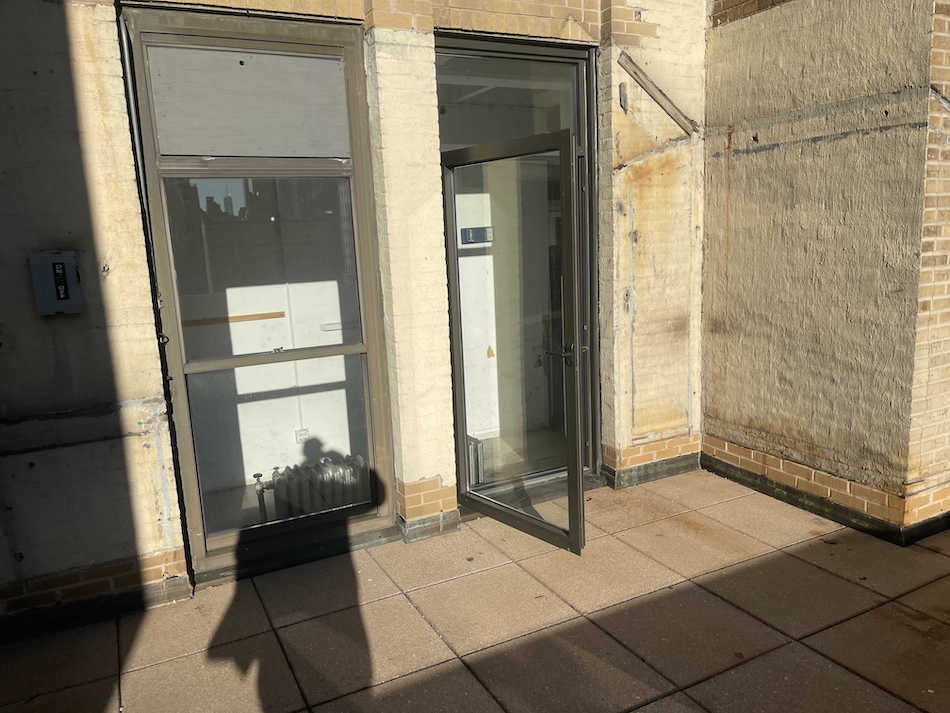
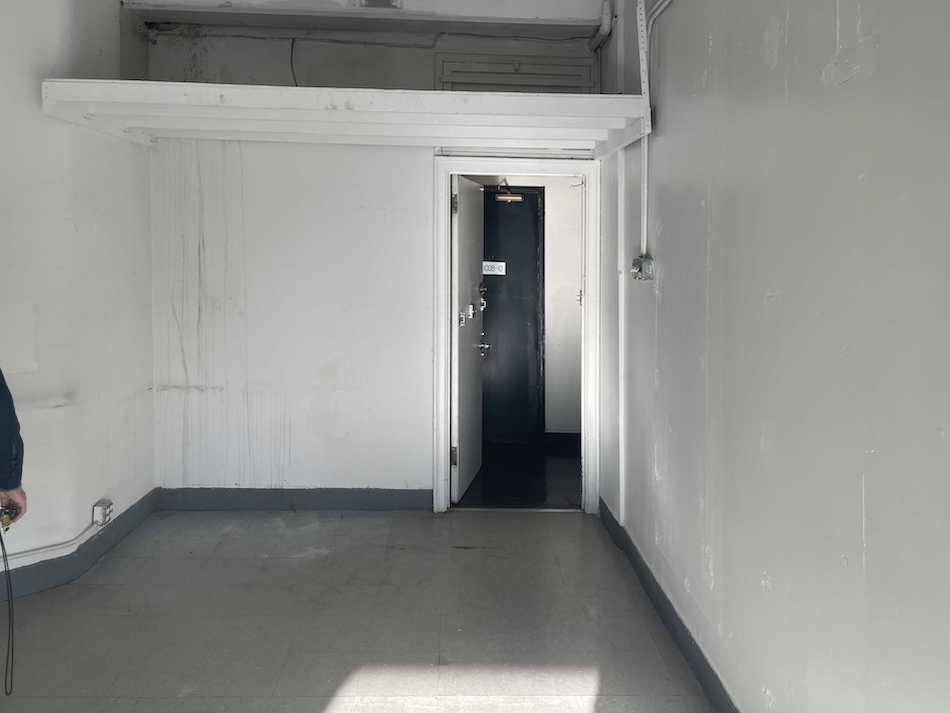
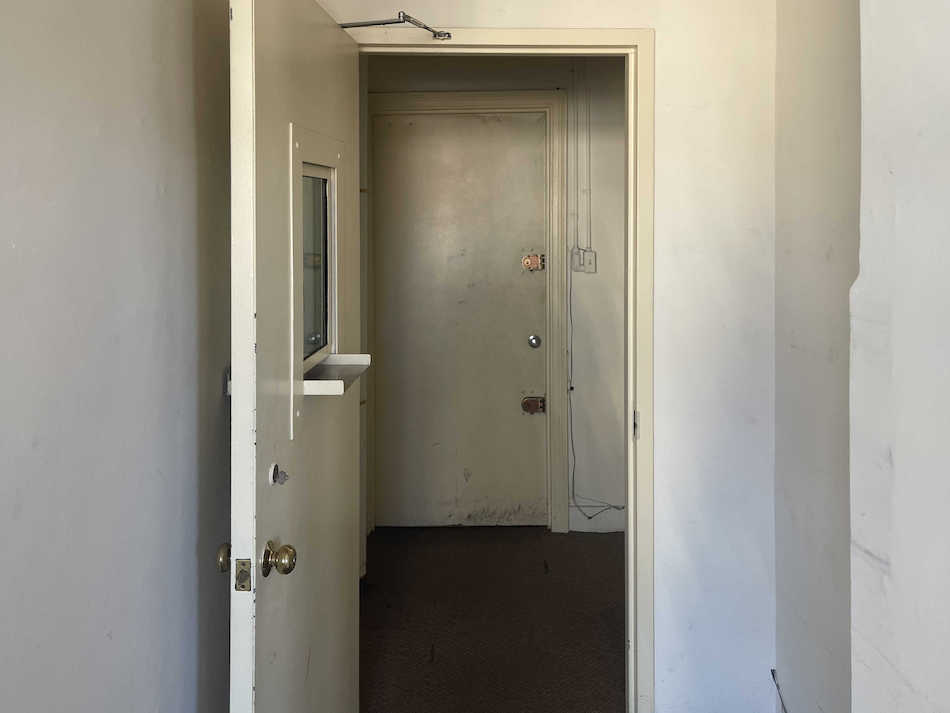
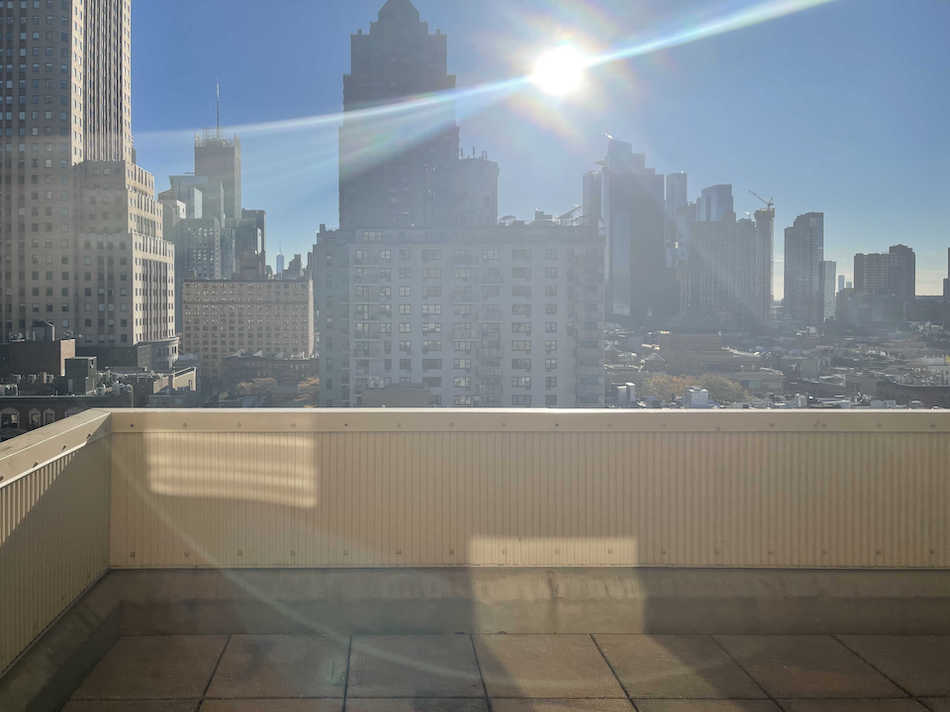
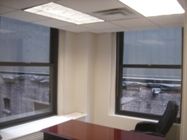
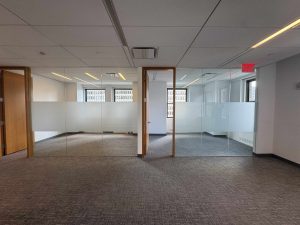
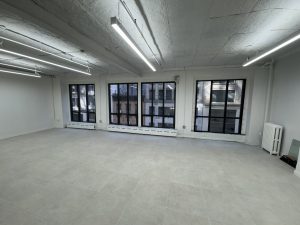
This 1,240 square foot office space on the partial 10th floor offers something hard to find in Manhattan: a private outdoor deck with southern exposure. The current layout features several windowed rooms and a south-facing terrace. Just a few blocks from the Theater District, this commercial loft space works well for creative teams or growing businesses that want natural light and outdoor access. The landlord will consider modifications for qualified tenants. Available for a 3 to 5-year lease term.
333 West 52nd Street is a 1929 Art Deco loft building designed by Arthur J. Barzaghi and owned by Abramson Brothers, a family firm that has managed Midtown properties since 1957. The building received recent upgrades, including a renovated lobby, 24/7 doorman service, and a modern security system. Its loft-style offices attract tenants in creative fields like video production, marketing, and design. Learn more about 333 West 52nd Street.
Neighborhood
Hell’s Kitchen blends Midtown convenience with a tight-knit neighborhood feel. The area sits between Eighth Avenue and the Hudson River, just blocks from Columbus Circle, Central Park, and the Theater District. Ninth Avenue delivers what locals call “Restaurant Row,” with dozens of ethnic eateries, bakeries, and cafes lining the street. The 50th Street subway station provides quick access to the A, C, and E lines, while Port Authority and Penn Station are a short walk south. Creative businesses and entertainment companies have long called this neighborhood home. Learn more about Midtown West.
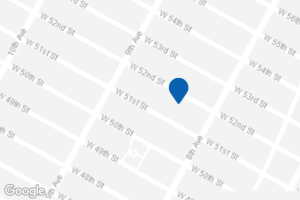
Location
Nearby Public Transportation
Property Details
Listing 58838
| Size: | 1,240 SF | Rent/SF: | $ 54 |
| Monthly Rent: | $ 5,580 | Lease Type: | Direct |
| Available: | 03/01/2025 | Lease Term: | 3-10 years |
| Suite/Floor: | #1007 | Address: | 333 West 52nd Street |
Features
| Southern Exposure | Terrace |
Listings are presented for illustrative purposes only; they may no longer be available and are provided merely as an exemplary representation of the types of spaces in a given neighborhood for a given price.


Midtown is the biggest office market on the continent. 242 million SF. 13 submarkets. Hudson Yards to the UN, Columbus Circle down to Penn Station. And inside that one giant market, a Park Avenue trophy floor and a Murray Hill loft can sit on the same subway line at totally different prices. So when somebody tells you "Midtown is expensive," they're being lazy. Midtown is whatever you make it. Where you land matters way more than whether you land here. Quick read on Q1 2026: it was the strongest first quarter Manhattan has had since 2014. Tenants signed 11.78 million SF. Availability dropped to 13.7%, the eighth straight quarter of tightening (Colliers, Q1 2026). Midtown asking rents held flat at $78.23/SF (Cushman & Wakefield, April 2026). The takeaway is simple: if you've been waiting for landlords to get desperate, that's not happening. They're not even nervous anymore. Here's what most tenants get wrong about Midtown: they shop it like one market. It isn't. It's thirteen markets stacked on top of each other, and the deal on Park Avenue has nothing to do with the deal in Murray Hill. Get the submarket right and the rest of the search gets easy. Get it wrong and you'll spend three months touring buildings that were never going to work. So what's actually happening right now? Manhattan leasing hit 11.78 million SF in Q1 2026. Strongest Q1 since 2014. Availability fell to 13.7%, the eighth straight quarter of holding flat or tightening. Asking rents up 2% to $77.55/SF (Colliers, Q1 2026). This isn't one good quarter. It's a two-year trend that just keeps showing up in the data. Midtown specifically: $78.23/SF overall, $85.28/SF Class A (Cushman & Wakefield, April 2026). Class A actually slipped sixteen cents, which sounds bad until you realize it was all sublet space hitting two buildings, 1775 and 1675 Broadway. Two buildings. The rest of the district is rock steady. Want the real proof? Look at who's signing. Deloitte took 807,000 SF at 70 Hudson Yards, the priciest lease in NYC since the pandemic at over $2.6 billion across nearly 22 years (CoStar Group via CompStak, January 2026). Citadel at 660 Fifth. Bloomberg renewed at 120 Park. Millennium expanded at 399 Park (CoStar Group, January 2026). When the smartest, most over-resourced tenants in the world are signing 20-year leases at the top of the market, you don't argue with the chart. Honest answer: it depends on where in Midtown and what class of building. Anyone giving you a single number for "Midtown rent" doesn't know what they're talking about. The range is huge. Class C in Murray Hill at the bottom. Nscale at $320/SF at One Vanderbilt at the top, the highest office rent NYC has ever recorded (JLL, Q1 2026 Manhattan Office Leasing Research, March 2026). The Class A average is $85.28/SF (Cushman & Wakefield, April 2026), but that average is hiding more than it's showing. Start with this question, because it changes everything: do you actually need a trophy address? Hedge funds, Big Law, anyone whose clients walk through your lobby every week, yes. Most other tenants, no. Most of Midtown's leasable inventory is Class B, sitting in Grand Central, Times Square / West Side, Penn Station / Garment District, and Murray Hill. Overall Midtown rent is $78.23/SF (Cushman & Wakefield, April 2026). Class B prices below that. Same neighborhood. Same subway. Much better deal. Skipping trophy is the move most savvy tenants make, and most of them don't regret it. Not sure how much space you actually need? Run your headcount through our Office Space Calculator before you tour anything. Class A averaged $85.28/SF in Q1 2026 (Cushman & Wakefield, April 2026). Practically flat from Q4 2025, off by sixteen cents only because of sublet space at 1775 and 1675 Broadway. Walk into a Class A tour right now expecting one thing: landlords who know exactly what their buildings are worth. They're not in a hurry. Lead with your credit, your term, and a clean ask. Show up like it's 2023 and you'll get a 2023 reception, which is to say not a warm one. Trophy is its own animal. Trophy availability is down 22% year-over-year (Avison Young, Q1 2026 New York Office Market Report). Supply going down, prices going up. If you genuinely need a trophy address, this is a timing problem, not a budget problem. You either move now or you wait until 2028 and pray. For a deeper look at what actually separates trophy buildings from regular Class A, see our piece on how trophy buildings set themselves apart in NYC. Where trophy actually lives: Hudson Yards (10, 30, 50, 55, 70 Hudson Yards), Park Avenue (One Vanderbilt, 425 Park, 280 Park, 200 Park, 399 Park), 5th and Madison (550 Madison, 425 Madison), the Plaza District (9 West 57th, the GM Building), and 6th Avenue / Rockefeller Center (1271 Sixth Avenue (Time-Life Building), 1221 Sixth Avenue, 30 Rockefeller Plaza). The icons: the Empire State Building and the Chrysler Building. For a deeper rundown, see our list of the top 10 Class A office buildings in Midtown. Midsize firm? Growing but not crazy yet? Don't need to impress a hedge fund every Tuesday? This is your tier, and honestly, it's where most Midtown leases get signed. Class B holds most of Midtown's leasable space. The good ones cluster in Grand Central, Midtown East, Columbus Circle, Bryant Park, and parts of Times Square / West Side. Names you'd recognize: One Grand Central Place, The Chanin Building, 30 Rockefeller Plaza, 1290 Avenue of the Americas. A lot of these landlords have spent real money on renovations and prebuilt spec suites in the last five years. Walk into a 2026 Class B building and it often looks like a 2018 Class A. Big difference for your team. Small difference for your bill. Not bad. (Quick refresher on the class system here.) On pricing, Midtown overall is $78.23/SF in Q1 2026 (Cushman & Wakefield, April 2026). Class B typically prices below that, and how far below depends entirely on the submarket and the building (Metro Manhattan internal research, May 2026). Here's the part nobody tells you: two Class B buildings two blocks apart can quote you wildly different numbers on the same Tuesday afternoon, depending on the landlord's mood, their current vacancy, and whether they like you. This is the tier where touring beats averages. This is also the tier where negotiation actually pays. If your priority is keeping costs down and you don't need a fancy lobby to land your next client, Class C is where you'll find the deals. Most of it sits in Murray Hill, the UN submarket, parts of Midtown East, and the Penn Station / Garment District. Mostly pre-war elevator buildings that haven't been renovated in a while. Honest character, no pretense. Class C works for small businesses, early-stage startups, medical and dental practices, nonprofits, back-office operations, and diplomatic missions. Here's the truth nobody else will tell you: the approved brokerages don't publish a Class C average for Midtown. So if anyone hands you a single "Class C rent" number, they're guessing or selling you something. The tier description here is Metro Manhattan internal research (May 2026), based on the deals we actually work on. Here's where most tenants give away the most money: they negotiate the asking rent, they get a small win, they sign. They never push hard on free rent or TI allowance, which is where the real value lives in non-trophy Class A and Class B Midtown deals. The ranges below are typical-market figures from our recent deals (Metro Manhattan internal research, May 2026), assuming a 5 or 10-year term. Shorter terms get proportionally smaller packages. 12 to 15-year terms can pull significantly richer ones. If you're not sure which term length actually fits your business, our breakdown of 3-year, 5-year, or 10-year lease terms walks through the trade-offs. Your actual numbers come down to credit, term, building, and how hard you push. One more thing on Class B: net effective rent typically lands well below the face rent your broker first quotes you. The math takes ten minutes to learn and it's the difference between a fine deal and a great one. Our concessions explainer walks through it. Industries cluster in Midtown for a reason. Investors find each other on Park Avenue. AI companies pile into Hudson Yards. Fashion sticks to the Garment District. There's actually a logic to it, and matching your industry, your headcount, and your budget to the right submarket can save you weeks of touring the wrong buildings. The table is the cheat sheet. If you toured Midtown five years ago, the picture in your head is out of date. The amenity game has been transformed. One Vanderbilt opened. Hudson Yards filled in. Manhattan West came online. Older Class A buildings around Grand Central started writing big checks because their neighbors did. Amenities aren't a perk anymore, they're a recruiting tool. If you want your team in the office three days a week, the building has to give them a reason to want to be there. Three tiers: Trophy tier (Hudson Yards, One Vanderbilt, 425 Park, 9 West 57th, 550 Madison): Tenant-only amenity floors, conferencing, lounges, fitness, dining. Private clubs and observation decks (The Summit, Edge). LEED Platinum. Smart-building infrastructure. Direct or near-direct access to Grand Central, Penn Station, or the 7 train. Class A core (Empire State, Chrysler, One Grand Central Place, 1271 Sixth, 30 Rock): Renovated lobbies, on-site fitness, real conferencing, modernized mechanicals, ground-floor retail and dining, walking-distance transit. Many added tenant-only amenity floors during the 2018 to 2024 capex cycle. Class B and value tier (3 Park Avenue, 286 Madison, 171 Madison, Garment District lofts): Pre-war character, big windows, customizable build-outs, modest shared amenities. Many landlords now offer fully built-out spec suites with furniture, IT, and turnkey move-in. See all Midtown buildings or filter active listings by size and price. Here's something most tenants underestimate completely: who owns your building matters as much as which building you pick. Every major Midtown landlord has a personality, and that personality shows up at the negotiation table. SL Green moves fast and pushes hard. Vornado holds firm and waits you out. Related plays the long game on Hudson Yards. Empire State Realty Trust will take smaller tenants seriously where some of the bigger names won't even take the meeting. A good broker knows what you're walking into. Background reading: biggest commercial real estate landlords in NYC. If your team is still pushing back on the office, this might be your strongest counter-argument. Midtown is the most transit-connected office submarket on the planet. Three major hubs (Grand Central, Penn Station, Port Authority Bus Terminal) anchor 14 subway lines, three commuter railroads, PATH to New Jersey, and intercity bus and rail. Most of your team can probably get here without a transfer. That's a real talking point when you're trying to win the return-to-office conversation. Use our Commute Calculator to check specific addresses.
Learn more about Midtown ManhattanNearby Office Rentals


Featured Listings




Choose a convenient date for your tour and we will contact you shortly!