


Case Study: DFW Capital Partners’ Strategic Manhattan Relocation
The hustle and bustle of the business world requires more than just strategy—it requires vision, dedication, and, sometimes, a strategic change of address.



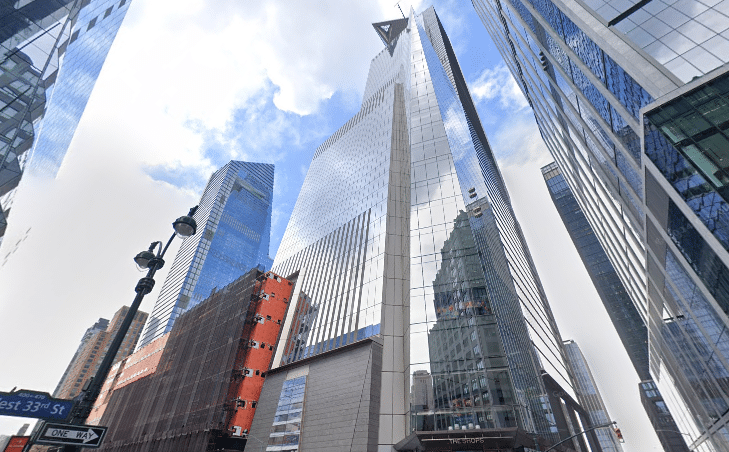
Walk west on 33rd Street and the city flips. The brick and the fire escapes drop away, and you hit a wall of glass that wasn’t there fifteen years ago. That’s Hudson Yards: twenty-eight acres of new towers built over a live rail yard, and somehow, in under a decade, it became the address big companies chase when they want to look like the future. BlackRock runs its whole operation out of one building here. So do KKR, Meta, Pfizer, Wells Fargo, and L’Oreal. In early 2026, Deloitte signed the biggest office lease the city had seen since the pandemic, around 800,000 square feet, in a tower that isn’t even finished.
One thing to get straight before you fall for the skyline: nothing here is cheap. It’s wall-to-wall Class A and trophy space, the rents sit near the top of anything in Manhattan, and almost nothing is sitting empty. The submarket was under 10 percent available at the end of 2025, about as tight as Midtown gets, and the best towers are tighter than that. So if what you really want is exposed brick, a freight elevator, and a rent that won’t make your CFO flinch, we will save you the tours and say it now: look elsewhere. But if you want the newest office space in the city sitting on top of the best train access on the West Side, keep reading.
One rule has run the New York office market since everyone came back from working at home: companies want the newest, nicest space near a train, and they’ll pay whatever it takes to get it. Hudson Yards was built for that exact company. The market has rewarded it accordingly.
And the market is having a moment. Manhattan leased more office space in the first quarter of 2026 than in any first quarter since 2014 (Colliers), and what’s available keeps shrinking. Midtown Class A rents climbed back to roughly $85 a foot (Cushman & Wakefield), and the very best buildings are effectively sold out, with prime Midtown vacancy down at 2.9 percent (CBRE). Hudson Yards sits at the top of that heap. Its problem isn’t empty desks. It’s that there’s barely a desk to be had.
Let’s talk money, because here the conversation is short and a little brutal. There’s no value tier to fall back on. It’s almost all Class A, and what you pay comes down mostly to which lobby you walk through.
The blended submarket figure looks almost reasonable, low 90s a foot for Class A, but that average gets dragged down by the older Penn Station buildings filed under the same name. Inside the towers it’s another world. Brokers had the Hudson Yards core around $137 a foot last year (CBRE), and direct space in the marquee buildings runs from the low 120s into the 150s. The top floors of 70 Hudson Yards have been floated near $200. So the honest question isn’t what Hudson Yards costs. It’s whether you actually need to be in the trophy core.
For some tenants the answer is obviously yes. A bank with clients in the lobby every morning, a law firm recruiting against the biggest names, a company that needs a headquarters that photographs well, they pay the premium and never look back. Everyone else does fine in a renovated building on the edge, or they walk ten minutes to Chelsea or the Penn District and Garment area and pay far less for the same trains. Whichever camp you’re in, work out how much room you actually need before you fall for a view. Our Office Space Calculator sorts that in a few minutes.
| Building / cluster | Class / tier | Asking rent profile | Availability | Typical SF for new leases | Tier |
|---|---|---|---|---|---|
| 30 & 50 Hudson Yards (core) | Trophy | High $100s to $150+; top floors higher | Low single digits | 10,000-100,000+ SF | Trophy |
| 10 & 55 Hudson Yards | Class A / trophy | ~$120 to $150/SF | Low single digits | 5,000-50,000+ SF | Trophy / A |
| 70 Hudson Yards (2028) | New trophy | Upper floors quoted near $200/SF | Pre-leasing | 20,000-100,000+ SF | Trophy |
| Manhattan West (1, 2, 5 MW) | Class A / trophy | ~$90 to $140/SF | Single digits to low teens | 5,000-75,000+ SF | Trophy / A |
| The Spiral (66 Hudson Blvd) | Trophy | ~$130 to $150+/SF | Mid single digits | 10,000-100,000+ SF | Trophy |
| Hudson Yards edge (441 Ninth Ave) | Renovated A / B | ~$70 to $95/SF | Low to mid teens | 2,500-30,000 SF | A / B |
| Penn Plaza submarket (context) | Class A blended | $90.52 Class A average | 9.9% | Varies | Mixed |
Penn Plaza / Hudson Yards Class A average of $90.52/SF and 9.9% availability from Transwestern, Q4 2025 (via Commercial Observer, February 2026). Building- and cluster-level asking ranges, availability bands, and tiers are Metro Manhattan internal research (May 2026); approved firms publish the submarket figure but do not publish per-building asking rents. CBRE tracked the Hudson Yards core at roughly $137/SF and about 4% vacancy in late 2024 (via CoStar). The 70 Hudson Yards figure (near $200/SF on upper floors) is a marketed pre-leasing quote (New York YIMBY, 2025), not a submarket average.
For all practical purposes, this is a trophy market, and the buildings that define it are some of the newest and most expensive ever put up in this city.
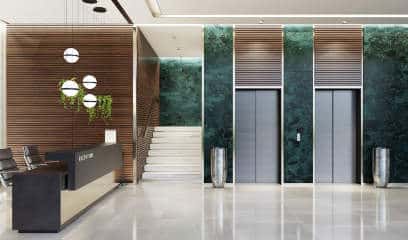
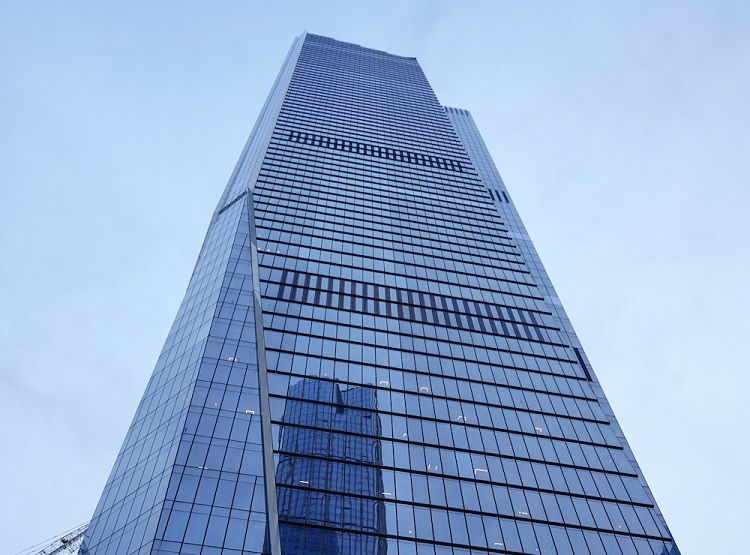
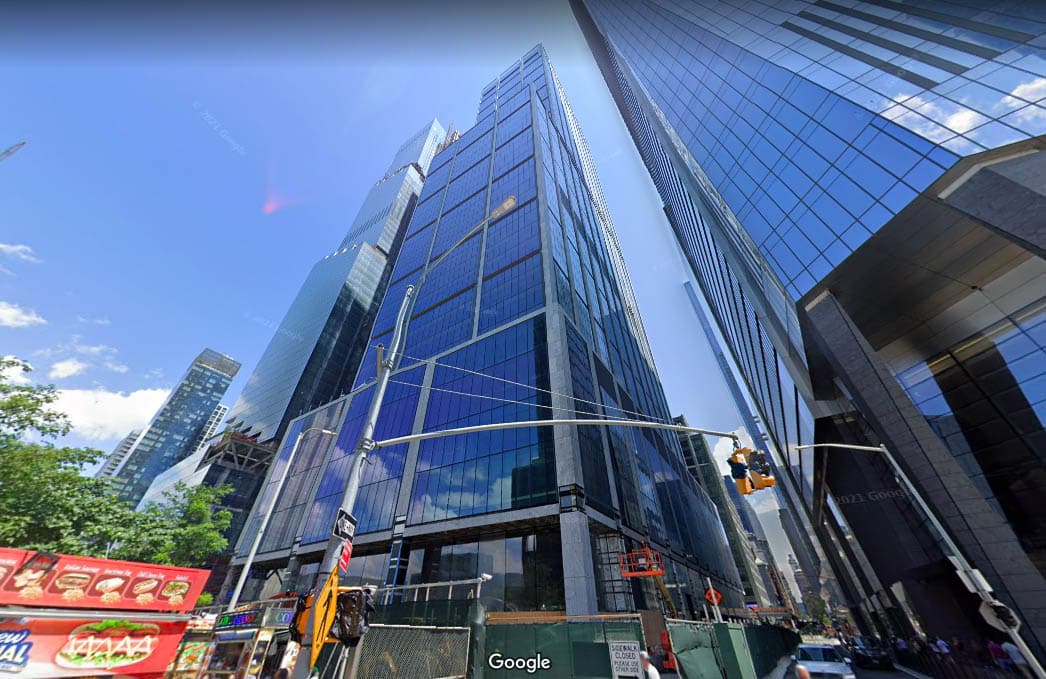
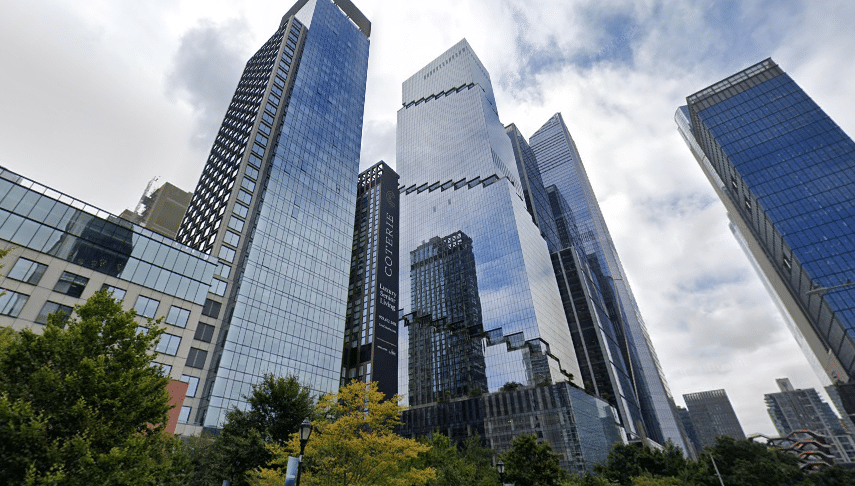
Start with 50 Hudson Yards, the biggest building in the neighborhood at nearly 3 million square feet and, at a reported $3.9 billion, the priciest office tower ever built in New York. Foster + Partners designed it, it opened in 2022, and it holds BlackRock’s global headquarters, nineteen floors of Meta, plus Truist, ServiceNow, and XTX Markets. Next door, 30 Hudson Yards runs 1,296 feet into the sky with the Edge observation deck cantilevered off its side, and houses KKR, Warner Bros. Discovery, Wells Fargo, and a roster of banks and law firms. Those two are the gravity well everything else orbits.
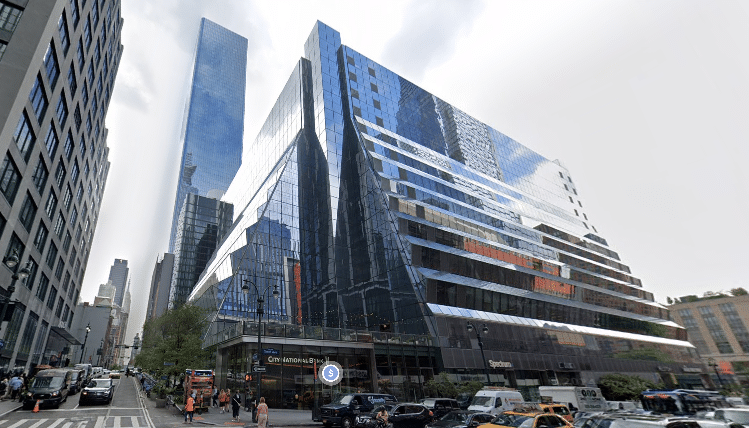
The rest fills in around them. 10 Hudson Yards, the first one up, has wide column-free floors and a little bridge straight onto the High Line; L’Oreal, Tapestry, SAP, and BCG sit inside. 55 Hudson Yards is the boutique one, where the hedge funds and law firms cluster: Point72, Silver Lake, Milbank, and the rest. A block over at Manhattan West, Brookfield landed Skadden, EY, Accenture, KPMG, Amazon, and JPMorgan. And up on the boulevard, Tishman Speyer’s Spiral, with greenery tumbling down its terraces, anchors Pfizer and was nearly full by early 2025.
If you’re trying to work out what really separates a true trophy building from ordinary Class A, we get into that in how trophy buildings set themselves apart, and we rank the field in our top Class A buildings in Midtown.
Most neighborhoods we write about have a deep bench of older, cheaper, character-filled space. Hudson Yards basically skipped that. It went up all at once, brand new, for big corporate tenants, so the worn-but-charming Class B and C lofts (here’s what Class A, B, and C actually mean) that fill Midtown South or the Financial District never really got a foothold here.
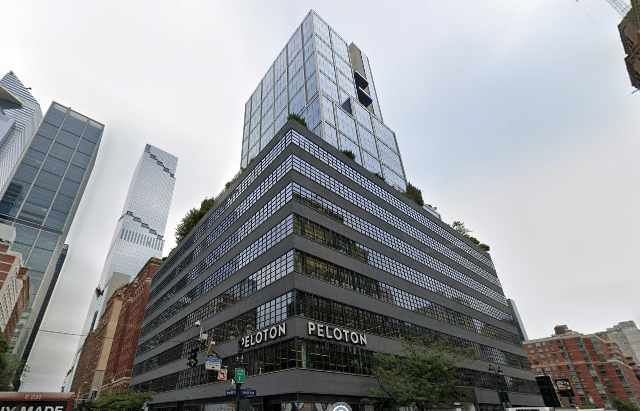
There are a few relative bargains if you know where to look. The edge, out toward Ninth Avenue and Penn, has a handful of renovated buildings priced under the towers; Hudson Commons at 441 Ninth Avenue, gutted and rebuilt with floor-to-ceiling glass and its own lounge, is the one people mean. But if the budget is what matters and you don’t need “Hudson Yards” on your letterhead, the honest move is to walk a few blocks. Chelsea is right downstairs. The Penn District and the Garment area sit on the same trains for less. And if it’s real exposed-brick loft space you’re after, that’s a SoHo or Chelsea hunt, not this one. Our best neighborhoods for small businesses guide weighs the options, and if you’re outgrowing a coworking desk, making the jump to your own office is the walk-through.
Even up here, there’s a deal to be cut, especially with good credit and a long lease. The usual mistake is to fight hard on the headline rent, win a couple of dollars, sign, and never push on the two things that actually move the needle: months of free rent, and the money the landlord puts toward your build-out. That’s where the real value hides.
The ranges below come from deals we’ve actually done (Metro Manhattan internal research) and assume the 7-to-15-year terms that are normal for trophy space. Go shorter and they shrink. If you’re weighing how long to commit, our 3, 5, or 10-year lease term breakdown lays out the math.
| Building class | Free rent (typical) | TI allowance (typical) | Notes |
|---|---|---|---|
| Trophy core (30, 50, 55, The Spiral) | 8 to 14 months free | $100 to $160/SF and up | The richest TI checks in the city, but the thinnest free rent, because there's a line out the door. |
| Standard trophy and Class A (10 Hudson Yards, Manhattan West) | 10 to 16 months free | $90 to $140/SF | The sweet spot, a marquee lobby with concessions that still mean something. |
| The edge (renovated A and B) | 12 to 18 months free | $60 to $100/SF | This is the one stretch of the neighborhood where you hold real leverage. |
Source: Metro Manhattan internal research (May 2026), based on recent Hudson Yards and Manhattan West lease transactions. Ranges assume 7- to 15-year terms normal for trophy space; shorter terms get smaller packages. Deal-specific concessions vary materially by building, floor, tenant credit, and lease term.
Hudson Yards pulls a particular crowd: companies with money, and a war for talent to win. Finance and the big professional-services firms set the tone, with tech, media, pharma, and law filling in. Because it’s nearly all new Class A, the buildings don’t sort by industry as rigidly as older pockets of the city, but lining up your business and your headcount with the right tower will still save you a month of tours that go nowhere. Here’s the cheat sheet.
| Industry | Best-fit buildings / clusters | Typical rent range | Example buildings |
|---|---|---|---|
| Asset Management / PE / Hedge Funds | Trophy core, The Spiral | $130 to $200/SF | 50 Hudson Yards, 55 Hudson Yards, 30 Hudson Yards |
| Banks / Financial Services | Trophy core, Manhattan West | $120 to $175/SF | 30 Hudson Yards, 50 Hudson Yards, 5 Manhattan West |
| Professional Services / Consulting / Accounting | 70 Hudson Yards, trophy core, Manhattan West | $110 to $200/SF | 70 Hudson Yards (Deloitte), 1 & 2 Manhattan West (EY, KPMG), 10 Hudson Yards (BCG) |
| Big Law / International Law | Manhattan West, trophy core | $120 to $175/SF | 1 Manhattan West (Skadden, Cravath), 55 Hudson Yards (Milbank), The Spiral (Debevoise) |
| Technology / SaaS / AI | Trophy core, Manhattan West | $100 to $160/SF | 50 Hudson Yards (Meta, ServiceNow), 5 Manhattan West (Amazon), 10 Hudson Yards |
| Media / Advertising | 30 Hudson Yards, 10 Hudson Yards | $110 to $160/SF | 30 Hudson Yards (Warner Bros. Discovery, CNN), 10 Hudson Yards (VaynerMedia) |
| Pharma / Life Sciences | The Spiral | $130 to $160/SF | The Spiral (Pfizer) |
| Consumer / Fashion / Beauty | 10 Hudson Yards | $110 to $150/SF | 10 Hudson Yards (L'Oreal, Tapestry) |
| Midsize / Value-seeking / Creative | Hudson Yards edge | $70 to $95/SF | 441 Ninth Avenue (Hudson Commons); nearby Chelsea and Penn District buildings |
Building and rent fits are Metro Manhattan internal research (May 2026).
A word for the smaller shops: this neighborhood wasn’t built for you, and there’s no shame in admitting it. The floors are big, the rents are bigger, and the leases are written for companies ten times your size. If you’re under about 5,000 feet and you’re set on the area, your best shots are the edge and the sublease market, where somebody else’s leftover space can occasionally slip you into a great building for less. Skim the questions worth asking before you sign first. Otherwise, a few blocks east or south will treat your budget a lot better.
Out here, amenities aren’t a perk, they’re the sales pitch, and they’re aimed squarely at the people you’re trying to get back to the office. The place was built as its own little city: a hundred-plus shops and restaurants, the Vessel (reopened in 2024 behind new mesh, and again for the season in spring 2026), the Edge deck, a luxury hotel, parks, and the river path right out back. The towers one-up each other on amenity floors, terraces, gyms, conference centers, and big sunlit floors with no columns in the way. Roughly three tiers:
Trophy tier (30, 50, 55 Hudson Yards; The Spiral): private amenity and conference floors, terraces, restaurants worth eating at, fitness, the full smart-building works, LEED on the wall, and a covered walk to the 7 train. This is the ceiling of the New York market.
New and standard trophy (70 Hudson Yards, 10 Hudson Yards, 1 and 2 Manhattan West): column-free floors, generous terraces, current systems, and amenity packages built for the way people work now. 70 Hudson Yards pushes it further: all-electric and zero-carbon, a members-style amenity floor, a media studio, even crash suites for staff flying in overnight.
The edge (441 Ninth Avenue and the renovated buildings near it): refreshed lobbies, tenant lounges, conference rooms, bike storage, and floor-to-ceiling glass, all for noticeably less than the towers.
Implementation note: link each building name above to its Metro Manhattan building profile where one exists; 70 Hudson Yards may not have a profile yet.
See all Hudson Yards buildings or filter active listings by size and price.
Who your landlord is matters almost as much as which building you pick, and out here the list is short. The core belongs to Related and Oxford, the two firms that dreamed up the whole project, usually with Mitsui Fudosan’s money in the mix. Brookfield, with Qatar’s sovereign fund, owns Manhattan West. Tishman Speyer owns The Spiral. A couple of smaller names hold buildings out on the edge. They all bargain differently, and a broker who’s closed deals with them knows who will fund your build-out and who will dig in on every clause. If you want the lay of the land, here are the biggest office landlords in NYC.
| Landlord | Notable Hudson Yards properties | Approx. portfolio | Typical lease profile |
|---|---|---|---|
| Related Companies (with Oxford Properties) | 10, 30, 50, 55, and 70 Hudson Yards; master developer of the 28-acre district | ~18M SF at Hudson Yards (Phase 1) | 10,000+ SF, 10+ year |
| Oxford Properties Group | Co-owner and developer across the Hudson Yards towers | JV interest across the district | 10,000+ SF, 10+ year |
| Brookfield Properties (with QIA) | Manhattan West: 1, 2, 4, and 5 Manhattan West, plus the Eugene and Pendry | ~7M SF at Manhattan West | 10,000+ SF, 10+ year |
| Tishman Speyer | The Spiral (66 Hudson Boulevard) | ~2.85M SF (single asset) | 10,000+ SF, 10+ year |
| Mitsui Fudosan America | 90% owner of 50 Hudson Yards; partner at 55 Hudson Yards | Capital partner | Institutional |
| Cove Property Group (with Norges Bank) | Hudson Commons (441 Ninth Avenue) | ~700K SF (single asset) | 5,000+ SF |
| Moinian Group | 3 Hudson Boulevard (planned, on hold) | Pre-development | Pre-development |
Portfolio figures are approximate and limited to Hudson Yards and Manhattan West holdings. Several owners listed (Brookfield, Tishman Speyer, Related) hold much larger portfolios across Midtown and Downtown. 3 Hudson Boulevard is a planned Moinian tower that has been on hold; it is included for orientation. Metro Manhattan internal research (May 2026).
Transit is half the reason this neighborhood exists at all; the city literally extended a subway line to build it. The 7 train stops right underneath, Penn Station is a few blocks east, and for a far-West-Side address the reach is genuinely excellent. It’s also the strongest card you can play when you’re trying to talk a team into coming back in. Plug a home address into our Commute Calculator and let the numbers do the arguing.
| From | To Hudson Yards | Mode |
|---|---|---|
| Hoboken, NJ | 15 to 25 min | PATH to 33rd St plus walk, or ferry |
| Jersey City (Exchange Place) | 20 to 30 min | PATH plus walk |
| Newark, NJ | 30 to 40 min | NJ Transit to Penn plus walk |
| Long Island City, Queens | 12 to 20 min | 7 train direct |
| Grand Central / Midtown East | 10 to 15 min | 7 train direct |
| Financial District | 25 to 35 min | A/C/E or 1/2/3 plus transfer |
| Downtown Brooklyn | 30 to 40 min | A/C or 2/3 plus transfer |
| Williamsburg, Brooklyn | 30 to 40 min | L plus 7 transfer |
| Hicksville, NY (Long Island) | 55 to 70 min | LIRR to Penn / Moynihan plus walk |
| Stamford, CT | 75 to 90 min | Metro-North to Grand Central plus 7 train |
Expensive. The wider Penn Plaza submarket that includes Hudson Yards averaged about $90 a foot for Class A at the end of 2025 (Transwestern), but the towers themselves run from the low 120s into the 150s, and the top of 70 Hudson Yards has been floated near $200. For comparison, the average across all of Manhattan was about $73 a foot in early 2026 (Cushman & Wakefield).
It’s the newest district in the city, built from scratch with trophy towers, big open floors, and the amenities large companies want, and that space is scarce and in heavy demand. The flight to quality has funneled tenants right here. Brokers had the core around $137 a foot with vacancy near 4 percent at last read (CBRE), about as tight and pricey as Manhattan gets.
In 2025 Deloitte signed for roughly 800,000 square feet at 70 Hudson Yards, a 22-year lease worth about $2.6 billion and the largest corporate move in New York since 2020 (Commercial Observer). The firm is leaving 30 Rockefeller Plaza to anchor the new tower, which Related and Oxford are building as the city’s first zero-carbon office skyscraper, with move-ins around 2028. It was also the first ground-up office tower Manhattan had launched in more than five years.
BlackRock and Meta are at 50 Hudson Yards; KKR, Warner Bros. Discovery, and Wells Fargo at 30; L’Oreal, Tapestry, SAP, and the Boston Consulting Group at 10; and Point72, Silver Lake, and Milbank at 55. Pfizer anchors The Spiral, Amazon and JPMorgan sit at Manhattan West, and Deloitte will anchor 70 Hudson Yards when it opens in 2028.
Not really. The neighborhood was built new and almost entirely Class A, so the older, cheaper space that defines other parts of the city barely exists here. The closest you’ll get is a renovated building on the edge, like Hudson Commons at 441 Ninth Avenue, or a short walk to Chelsea, the Penn District, or the Garment area, where the same trains cost a lot less.
Tight. The Penn Plaza submarket that includes Hudson Yards was under 10 percent available at the end of 2025 (Transwestern), and the trophy towers were closer to 4 percent (CBRE). Across Midtown, the fifty best buildings are now under 4 percent available (Newmark).
A $12 billion casino from Related, Oxford, and Wynn was planned for the empty Western Rail Yards, but it fell apart in May 2025 after the neighborhood pushed back. A month later the City Council approved a different plan and the financing for the $2 billion deck over the tracks: up to 4,000 apartments, a 6.6-acre park, a school, a hotel, and more than 2 million feet of office. It’s a multi-year build that should run toward the end of the decade.
The 7 train stops right under the neighborhood at 34th Street-Hudson Yards and runs to Times Square, Grand Central, and Queens. Penn Station and the Moynihan Train Hall, a few blocks east, carry the Long Island Rail Road, Amtrak, NJ Transit, and several subway lines. The Lincoln Tunnel, the West Side Highway, and the Hudson River ferries are all close.
It can be, if the budget works. Meta takes nineteen floors at 50 Hudson Yards, Amazon is at Manhattan West, and the big open floors suit teams that are growing fast. AI companies drove a big share of Manhattan leasing in early 2026, and trophy West Side space is part of that, though smaller or more cost-conscious tech tenants often do better over in Midtown South.
They’re next-door neighbors that lease as one district, but different firms own them. Hudson Yards proper (10, 30, 50, 55, and 70) is Related and Oxford’s project over the rail yards; Manhattan West (1, 2, 4, and 5) is Brookfield’s block just east. Both are trophy Class A, share the same trains, and chase the same tenants.
Accessibility Tools