






Sublease, Coworking, or Direct Lease: A San Francisco Startup’s First New York Office Space
Let’s say your Series A closed in the spring.



Three years ago the knock on Hudson Square was that nobody wanted it. Trinity Church and its partners had just spent a fortune rebuilding thirteen old printing houses for a tech office wave that stopped cold when the pandemic hit, which left a beautiful neighborhood full of expensive empty floors. Brokers called it a glut, and they weren’t wrong.
Then Manhattan ran out of space. Not all space, just the kind anyone actually wants: big, modern, contiguous, in a building someone recently spent real money on. By this spring, Colliers counted roughly ten blocks over 100,000 square feet available citywide in the next year. Two of them sat right here.
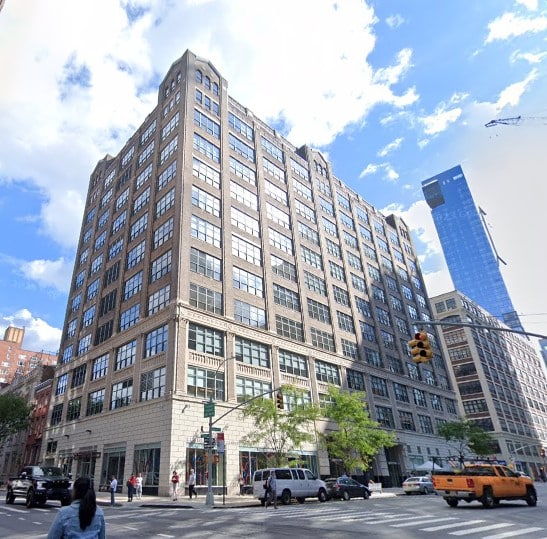
What happened next was inevitable. PayPal took 261,000 feet at 345 Hudson. Google renewed 411,000 at 315 Hudson. Tennr grabbed another 125,000. Then in July, Anthropic leased all 466,000 square feet of 330 Hudson, the entire building, roughly thirty times the office it had before.
South of Canal, Tribeca plays a quieter game entirely. Citigroup’s 2.6-million-foot campus on Greenwich anchors it, the loft stock is landmarked and scarce, and vacancy sits at 15.7%. The two neighborhoods share a page, a subway line, and a hyphen. They are not the same market.
Working out which side of Canal Street you belong on is most of the job, and it is what we do all day. If you would rather see what is open before reading another word, start with the listings.
For most of Manhattan, high availability is a problem to explain away. In Hudson Square it turned into the entire business plan.
Colliers had the neighborhood at 19.4% availability at the end of the first quarter, third-highest in the city. Ordinarily that reads as a distress signal. This year it read as opportunity, because the rest of Manhattan tightened to 13.0% availability, the lowest since October 2020, and a tenant needing a real block had almost nowhere else to go.
CBRE’s Paul Amrich, who runs leasing on the thirteen-building Hudson Square Properties portfolio, said he had never seen Manhattan this short on quality supply in a thirty-year career. When the good space vanishes everywhere else, the districts sitting on it stop being also-rans and start being the only game.
The leasing proves it. JLL clocked Hudson Square volume more than doubling between 2024 and 2025, then asking rents climbing better than 17% in three years, from $77.12 at the start of 2023 to $90.50 this spring. Amrich’s partner Howard Fiddle expects virtually all thirteen buildings leased within a year.
Four Forces to Monitor
Anyone who answers that with one number is guessing, or selling. On these blocks a rebuilt floor on Hudson Street and a prewar loft below Canal can be eight minutes apart and thirty dollars apart.
The honest breakdown starts with Hudson Square at roughly $90.50 a foot on average (JLL, Q1 2026). That sits about nine dollars above Midtown South‘s $81.14 overall (Cushman & Wakefield, Q2 2026), which tells you the rebuilt Hudson Street stock now prices like Class A rather than like the loft district it grew out of.
Our own neighborhood study, as of August 2025, put Hudson Square Class A at $81.22 aggregate against 29.6% vacancy, and Tribeca at $74.12 aggregate against 40.8%. Treat the Tribeca figure carefully. Direct inventory down there is so thin that a single listing swings the average, which is exactly why touring beats averages.
Practically, expect rebuilt Hudson Street Class A in the high $80s and $90s, boutique Tribeca product asking past $100, Varick Street loft in the $60s and $70s, and older prewar space below that. Before you tour anything, run your headcount through our office space calculator so you are chasing the right footprint.
| Area | Class A Profile | Class B / C Coverage | Availability | Typical SF for New Leases | Tier |
|---|---|---|---|---|---|
| Hudson Street spine | Rebuilt Class A (345 Hudson, 330 Hudson, 315 Hudson), high $80s to $90s | Limited; some renovated loft | Tightening fast from ~19% | 10,000 to 465,000 SF | Trophy / A |
| Corporate campuses | Google (550 Washington), Disney (7 Hudson Square) | None | Effectively 0% | Not available | Trophy |
| Varick Street corridor | Select renovated Class A | Deep Class B loft inventory | About 14 to 19% | 2,000 to 40,000 SF | Class A / B |
| North Tribeca | Boutique Class A (15 Laight), asking past $100 | Class B loft and prewar | About 14 to 18% | 1,500 to 18,000 SF | Class A / B |
| Tribeca core | Owner-occupied (388 Greenwich); little to lease | Class B and C prewar dominate | About 15 to 18% | 1,000 to 12,000 SF | Value / B |
| Submarket context | Hudson Square $90.50 avg; Tribeca $74.12 Class A aggregate | n/a | HS 19.4% avail; Tribeca 15.7% vac | Varies | Mixed |
Hudson Square average asking rent ($90.50/SF) and availability (19.4%) are JLL and Colliers data for Q1 2026 via Commercial Observer (May 25, 2026). Tribeca vacancy (15.7%) is Cushman & Wakefield, Q1 2026, via Bisnow (April 28, 2026). Tribeca Class A aggregate ($74.12/SF, 40.8% vacancy) and Hudson Square Class A aggregate ($81.22/SF, 29.6% vacancy) are Metro Manhattan, Class A Office Rents in New York City by Neighborhood (as of August 1, 2025), and should be refreshed at the next update. Area-level profiles, coverage descriptors, and availability ranges are Metro Manhattan internal research (July 2026); the brokerages publish Hudson Square and Tribeca separately but not these per-area breakouts. Rents are asking rents, before concessions.
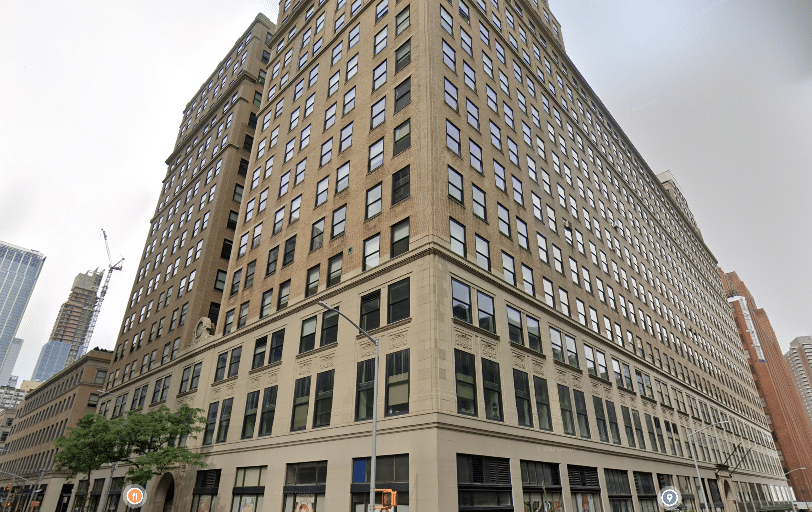
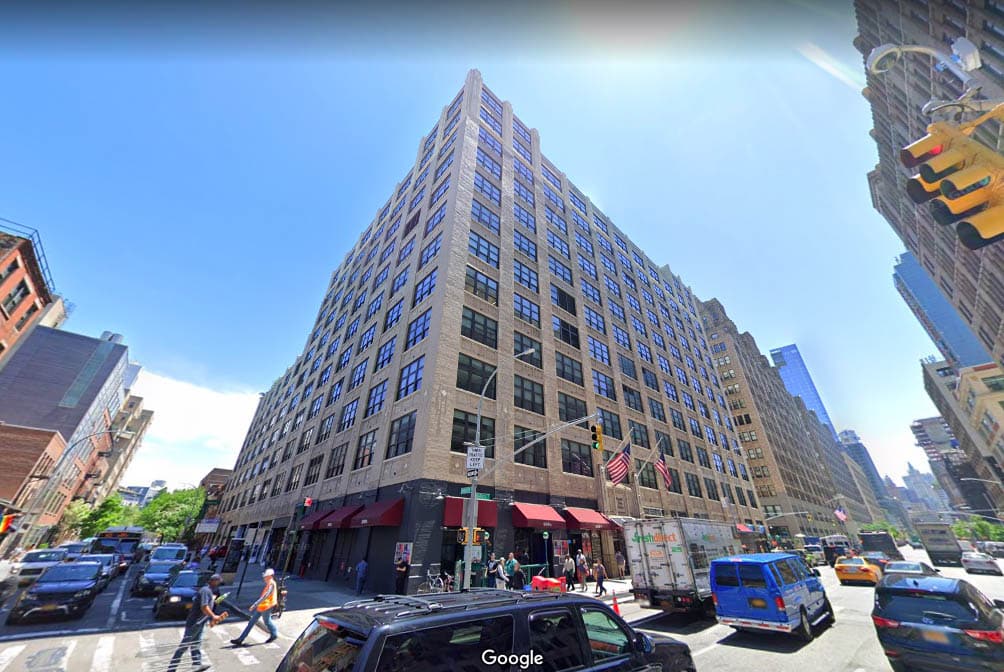
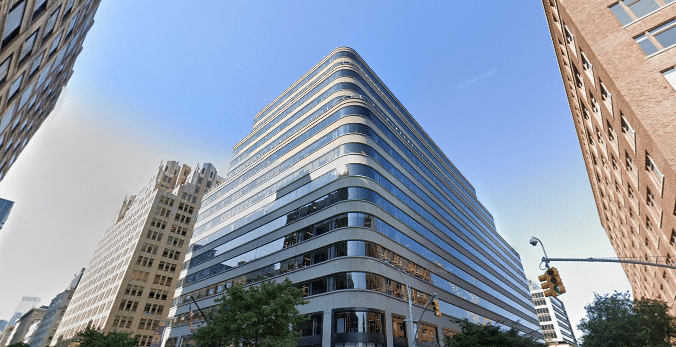
Class A here means Hudson Street, and the building everyone points at is 345 Hudson. Hudson Square Properties spent close to $600 million over four years turning a 1931 printing plant into an 860,000-foot tower, then bridged it into the ground-up 555 Greenwich next door, and the pair became New York’s first fossil-fuel-free office complex on a shared geothermal loop.
That complex is where the money went this year. PayPal signed 261,000 feet across three floors on a ten-year deal for a new flagship workplace, opening in 2027, joining Fanatics, Audacy, and Lerer Hippeau. Tennr then subleased 125,000 feet in April, taking down most of the block Google had been shopping since early 2025.
Across the street, 330 Hudson is now Anthropic’s, all sixteen floors of it. AEW bought the building for $385 million in 2018, and the lease covers roughly 466,000 feet with room for 1,700 people. Down the block, Jack Resnick & Sons kept Google at 315 Hudson on a 411,000-foot renewal.
If you are trying to separate a genuine trophy from a building that merely charges like one, our guide to what actually sets trophy buildings apart is worth twenty minutes before you sign anything, and so is our rundown of the best Class A towers in Midtown if you are weighing this against uptown.
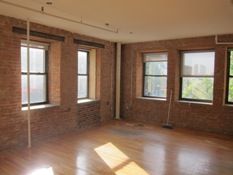
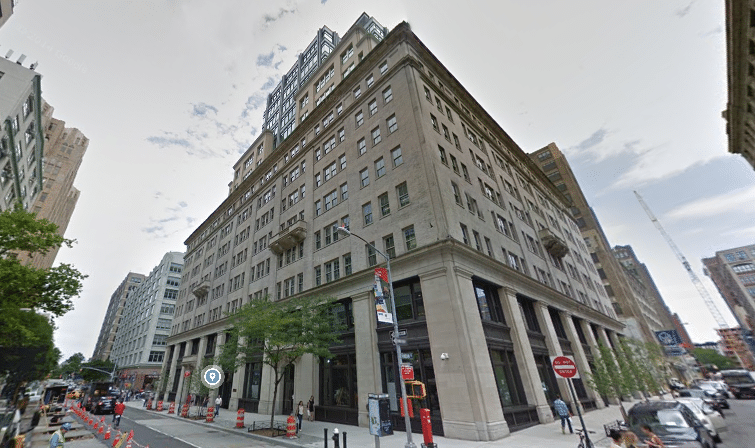
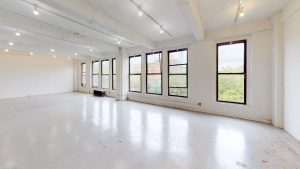
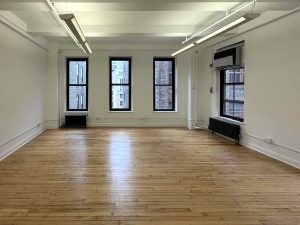
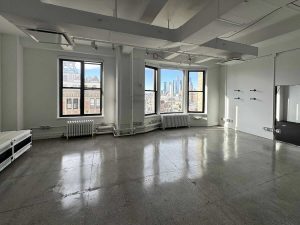
Strip away the headlines and most leasing here still happens in the old loft buildings, which is good news, because the stock is superb. Varick Street is lined with prewar printing houses that Hudson Square Properties has been steadily renovating: 75 Varick, 160-170 Varick, 200 Varick, and 225 Varick.
These are not consolation prizes. Horizon Media renewed roughly 360,000 feet at 75 Varick, Notion renewed there too, and 225 Varick is where Brooklinen landed on a ten-year, 32,000-foot deal after leaving Dumbo. Red Antler made the same move into 160 Varick. The buildings work because the floors are big, bright, and genuinely characterful.
One piece of advice worth more than the letter grade: ignore the B. A renovated loft on Varick can wear a B and still out-ask a Class A tower in plenty of Midtown, because what you are buying is ceiling height, light, and a usable plate, not a letter an appraiser typed into a spreadsheet.
Two lofts on the same block will quote you wildly different numbers on the same afternoon, so tour them yourself and do not put much faith in the average. This is the same loft stock that pulls tenants into SoHo and Chelsea, often at similar money.
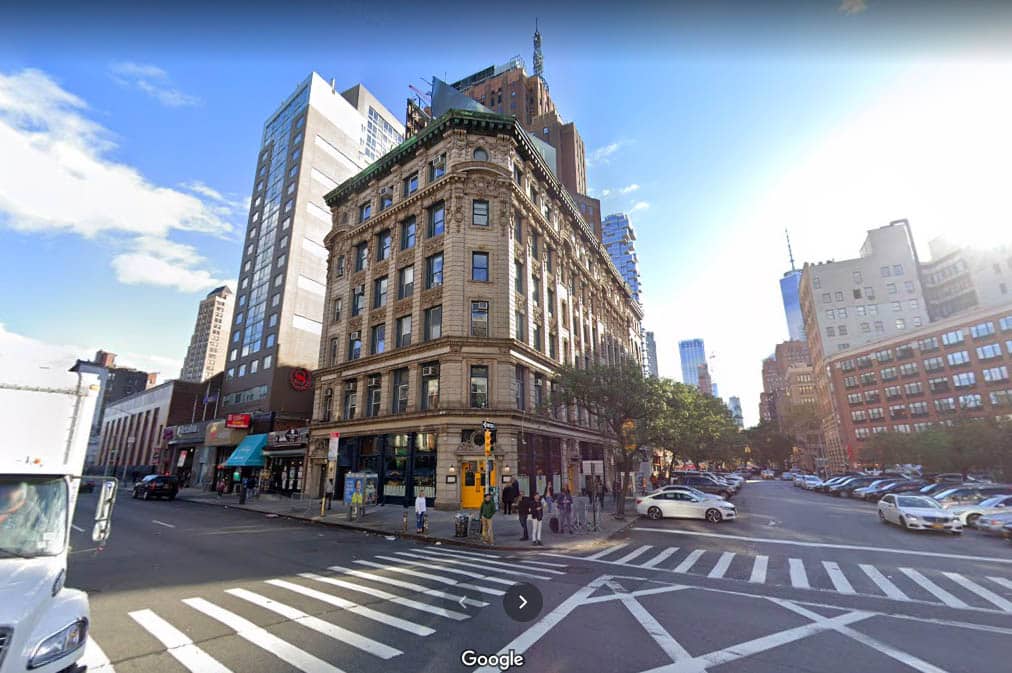
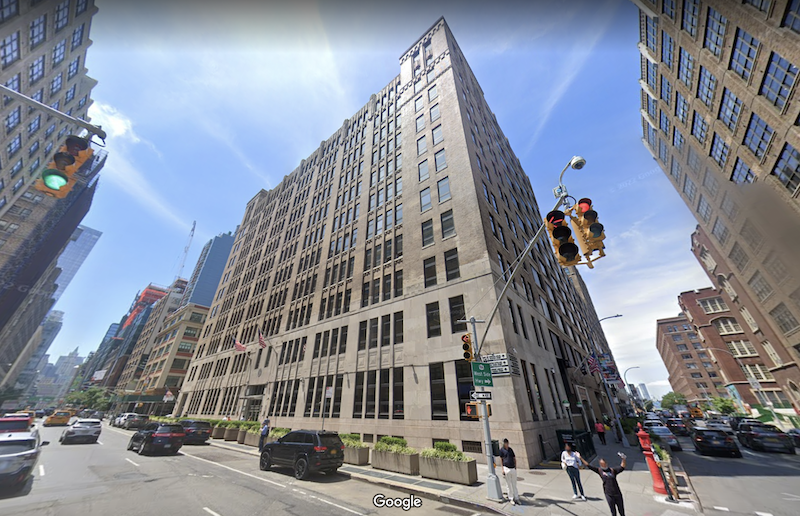
The real bargains sit below Canal and along the edges: older prewar on the Tribeca side streets, the upper floors of 401 Broadway and 285 West Broadway, and the smaller buildings around Franklin and Worth. This is where small firms, nonprofits, and early-stage companies get the neighborhood without the Hudson Street invoice.
Two honest warnings before you get excited. Nobody publishes a clean Class C average for this submarket, so if a landlord hands you one precise figure as settled fact, keep your guard up. The cheap space is also thinning as owners renovate their way upmarket, so the window that is open today is narrower than it was two years ago.
Worth knowing: Manhattan sublet inventory shrank 22% over the past year and now sits about 9% below pre-pandemic levels (Colliers, Q2 2026). The cut-rate sublets that saved tenants in 2023 are disappearing, so if price is driving you, move. Read the sublease and assignment clauses before you count on one.
This is the part of the deal where tenants leave the most on the table. They fight over the asking rent, claw back a couple of dollars, feel good about it, then completely ignore the two levers that actually move the math: free rent and the build-out money.
The market has tightened, so the giveaways are not what they were. Manhattan free rent averaged 12.4 months in the first half of 2026, the lowest since 2019, while improvement allowances plateaued near $140 a foot (Colliers, Q2 2026). There is still real room to negotiate, particularly off the Hudson Street spine.
Roughly what recent deals look like on a five or ten-year term, keeping in mind that shorter terms earn less and longer terms earn more (Metro Manhattan internal research, July 2026):
| Building class | Free rent (typical) | TI allowance (typical) | Notes |
|---|---|---|---|
| Rebuilt Class A (345 Hudson, 330 Hudson, 315 Hudson) | 8 to 12 months free | Strong improvement dollars | The thinnest concessions in the submarket now that the big blocks are going. |
| Boutique Tribeca Class A (15 Laight and similar) | 10 to 14 months free | Healthy allowances | A building that has sat empty a long time has more give in it than the asking rent suggests. |
| Class B loft (the Varick corridor) | 12 to 16 months free | Prebuilt suites common | Prebuilt suites all over the place, and a 10-year term is your leverage. |
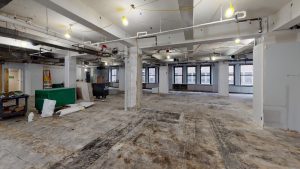
| Class C and value (Tribeca side streets) | 12 to 18 months free | Often already built out | Much of it already built out and ready to move into. |
Two things to settle before you sit down. Your effective rent almost always lands well below the face rent once you count the free months, which our breakdown of landlord concessions walks through. A build-out check is only worth what it actually builds, so nail down who is paying for it first.
If term length is your sticking point, our guide to three, five, and ten-year leases lays out the tradeoffs, and our take on lease clauses covers the language that quietly costs you three years in.
The building picks the tenant here as much as the other way around. Hudson Street pulls AI, tech, and fintech at scale. The Varick lofts pull agencies, design shops, and consumer brands. Tribeca pulls finance, law, and anyone who wants the address more than the floor plate. Find your row below and your search shrinks before you tour a thing.
| Industry | Best-Fit Areas | Class Fit | Example Buildings |
|---|---|---|---|
| Artificial Intelligence / Machine Learning | Hudson Street spine | Trophy / A | 330 Hudson (Anthropic), 345 Hudson (Tennr) |
| Technology / Software | Hudson Street spine, Varick corridor | Class A / B | 315 Hudson (Google), 75 Varick (Notion), 345 Hudson |
| Fintech / Payments | Hudson Street spine | Trophy / A | 345 Hudson and 555 Greenwich (PayPal), 95 Morton |
| Media / Advertising / Production | Varick corridor, Hudson Street | Class A / B | 75 Varick (Horizon Media), 435 Hudson (RadicalMedia), 375 Hudson, 200 Varick |
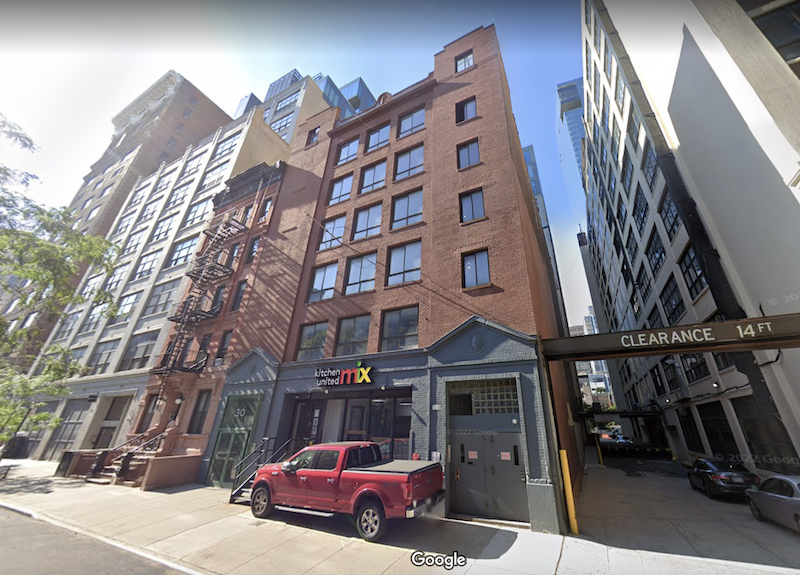
| Design / Brand / Creative | Varick corridor, North Tribeca | Class B | 160-170 Varick (Red Antler), 225 Varick (Brooklinen), 30 Vandam |
| Consumer Brands / E-commerce | Varick corridor, Hudson Street | Class A / B | 225 Varick, 345 Hudson (Fanatics), 200 Varick |
| Financial Services | Tribeca core, North Tribeca | Trophy / A | 388 Greenwich (Citigroup, owner-occupied), 15 Laight, 101 Ave of the Americas |
| Law Firms (boutique and midsize) | Tribeca core, North Tribeca | Class A / B | 40 Worth, 99 Hudson, 401 Broadway |
| Data / Telecom / Infrastructure | Tribeca core | Specialized | 60 Hudson (Western Union Building), 32 Ave of the Americas |
| Healthcare / Medical Offices | North Tribeca, Tribeca core | Class B / C | 401 Broadway, 299 Broadway, 40 Worth |
| Startups / Small Business (under 20) | Tribeca side streets, Varick corridor | Class B / C | 285 West Broadway, 99 Hudson, 30 Vandam, 401 Broadway |
| Nonprofits / Arts / Associations | Tribeca core, North Tribeca | Class B / C | Prewar loft around Franklin, Worth, and West Broadway |
| Retail / Showroom | Hudson Street, Varick, West Broadway | Ground floor | 555 Greenwich, 7 Hudson Square base, Hudson Street corridor |
Industry and class fits are Metro Manhattan internal research (July 2026). Vertical landing pages: Financial Services, Law Firm Offices, Medical Offices, Retail/Stores. Loft, sublet, and startup/tech pages are linked in the sections above. Tenant names reflect publicly reported leases through July 2026 and change; confirm at tour time.
Running a small team? This is not the cheap end of Manhattan, and I will not insult you by pretending otherwise. The Tribeca side streets and the older Varick stock still make it reachable, and the neighbors you get at that size are not available anywhere else in the city.
If you are still choosing between areas, our guide to the best NYC neighborhoods for small businesses is the place to start. If you are finally trading a shared desk for your own door, we walked through how to make that leap without regretting it.
Two things here that money cannot manufacture: a stock of prewar printing houses with floor plates nobody would build today, and a river at the end of every block. The new arrivals set the amenity bar high, so the older buildings answered the only way they could, by gut-renovating and filling up with move-in-ready suites. It breaks into three tiers.
Rebuilt Class A on Hudson Street. 345 Hudson and 555 Greenwich share roughly 100,000 square feet of amenities across the Hudson Square Properties portfolio: rooftop terraces, lounges, wellness space, and a fossil-fuel-free geothermal system that is the only one of its kind in a New York office complex. 330 Hudson and 315 Hudson round out the tier.
The campuses you cannot rent. Google’s $2.1 billion St. John’s Terminal is a 1.7-million-foot campus with the city’s largest public rooftop, and Disney’s 1.2-million-foot Robert A. Iger Building at 7 Hudson Square holds ABC News, ESPN, and WABC studios behind a green terracotta facade. Neither leases. Both are why the rest of this leases.
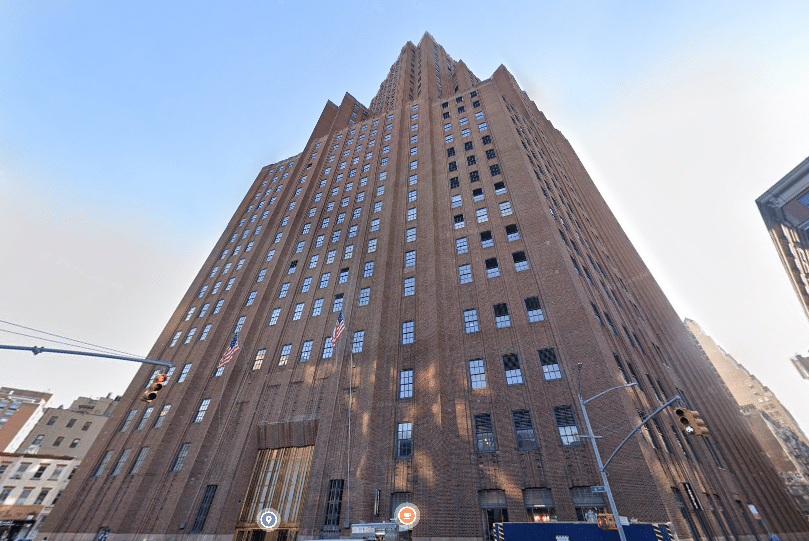
Loft and value on Varick and below Canal. Prewar bones, oversized windows, attended lobbies, and a growing bench of prebuilt suites. Then the outliers: 60 Hudson, the old Western Union Building, is one of the most important carrier hotels on the planet, and 32 Avenue of the Americas holds a 569,000-foot data center behind an Art Deco lobby.
See all Midtown South buildings, or filter live listings by size and price.
Who holds the keys matters as much as which building you pick, because no two owners here play the same game.
Hudson Square Properties is the one you will deal with most. Trinity Church holds the majority stake alongside Norges Bank Investment Management and Hines, and the venture runs thirteen buildings and 6.3 million square feet. It kept spending straight through the pandemic while other owners wrote their assets down, and that patience is paying now.
What that means across the table is less desperation than you would like. These are not owners who need your deal this quarter.
Around them the field is unusually lopsided. AEW owns one building and just leased all of it. Jack Resnick & Sons is a family shop with one very large tenant. Hyundai owns a boutique tower it has never occupied and hired SL Green to fix that. Citigroup and Google simply own their own buildings and are not renting you anything.
The real value of a tenant broker down here is knowing which of these owners deals straight and which one grinds you on the last dollar, and that knowledge does not appear on a listing site. Our rundown of the biggest landlords in NYC maps the wider field.
| Landlord | Notable Properties Here | Approx. Portfolio | Typical Lease Profile |
|---|---|---|---|
| Hudson Square Properties (Trinity Church NYC, Norges Bank Investment Management, Hines) | 345 Hudson and 555 Greenwich, 75 Varick, 160 and 225 Varick, 205 Hudson, 435 Hudson | 13 buildings, ~6.3M SF here | Class A and loft, 5,000+ SF, 10+ yr |
| Trinity Church Wall Street (ground lessor) | Land under 7 Hudson Square (Disney) and 122 Varick | ~15 acres of Manhattan; $6B endowment | 99-year ground leases |
| AEW Capital Management | 330 Hudson Street | 465,630 SF here (bought 2018 for $385M) | Full-building and large blocks |
| Jack Resnick & Sons | 315 Hudson Street | ~410K SF leased to Google here | Class A, 10,000+ SF |
| Hyundai Motor Group (leased by SL Green) | 15 Laight Street | 109,000 SF (single asset) | Boutique Class A, 11,000 to 18,000 SF |
| Google (owner-occupier) | 550 Washington Street (St. John's Terminal) | $2.1B purchase; 1.7M SF NYC campus | Not available |
| Citigroup (owner-occupier) | 388 and 390 Greenwich Street | ~2.6M SF | Not available |
| Silverstein Properties (developer) | 7 Hudson Square (built for Disney) | 1.2M SF | Single-tenant; no availability |
Portfolio figures are approximate. Several of these owners hold far larger books elsewhere in Manhattan, and ownership and management change, so confirm at lease time. Hudson Square Properties portfolio size (13 buildings, 6.3 million SF) is Trinity Church Wall Street (2025). AEW's 2018 purchase price ($385 million) is Crain's New York Business (July 8, 2026). Metro Manhattan internal research (July 2026).
The transit story splits the same way the market does. Hudson Square is a west-side subway neighborhood with one local line and two more a short walk east, which suits a team living in Manhattan or close-in Brooklyn. Tribeca is genuinely well connected, with a dozen lines converging around Canal and Chambers.
The honest catch for both: there is no commuter rail. A suburban roster riding Metro-North or the LIRR is looking at a transfer and a subway ride, so if half your people come in from Westchester, be realistic. Settle the argument with our commute calculator and everyone’s home address rather than a hunch.
The other thing nobody mentions on a tour: the Holland Tunnel empties out onto Canal, Hudson, and Varick, and at 5pm on a Thursday it shows. Ask which side of the building your floor faces.
| From | To Canal St / Varick | Mode |
|---|---|---|
| SoHo / Greenwich Village | 5 to 10 min | Walk, or 1 from Houston |
| Financial District | 10 to 15 min | 1 to Franklin, or walk |
| Union Square | 10 to 15 min | 1 from 14th St, or walk |
| Penn Station | 15 to 20 min | 1 local |
| Grand Central | 25 to 30 min | 4/5/6 to Brooklyn Bridge plus walk, or S to Times Sq plus 1 |
| Hudson Yards | 20 to 25 min | 7 to Times Sq plus 1, or 1 direct from 34th |
| Downtown Brooklyn | 20 to 30 min | A/C or 2/3 to Chambers |
| Williamsburg, Brooklyn | 25 to 35 min | L to Union Square plus 1 |
| Long Island City, Queens | 30 to 40 min | E to Spring, or 7 plus transfer |
| Hoboken / Jersey City | 25 to 35 min | PATH to Christopher St or WTC plus walk |
| Newark, NJ | 40 to 50 min | PATH to WTC plus walk |
| Hicksville, NY (Long Island) | 65 to 80 min | LIRR to Penn plus 1 |
| Stamford, CT | 75 to 90 min | Metro-North to Grand Central plus subway |
Hudson Square averages roughly $90.50 a foot as of Q1 2026 (JLL), about nine dollars above Midtown South’s $81.14 overall (Cushman & Wakefield, Q2 2026). Tribeca is harder to pin down, since our August 2025 study put Class A at $74.12 aggregate on thin inventory. Rebuilt Hudson Street floors ask in the high $80s and $90s; Varick loft runs lower.
Because it had space when nobody else did. Colliers put Hudson Square availability at 19.4% at the end of Q1 2026, third-highest in the city, just as Manhattan tightened to 13.0% and the large blocks vanished. Anthropic, Google, PayPal, and Tennr all signed here in the last seven months.
No, and shopping them as one market will cost you. Hudson Square runs from Clarkson down to Canal, west of Varick, and it is the big-floor district: rebuilt printing houses, corporate campuses, and blocks up to 465,000 feet. Tribeca is the triangle below Canal, where the loft is landmarked, the floors are small, and the asks are higher per foot.
The entire 16-story building, roughly 465,630 square feet, from AEW Capital Management, reported in July 2026. That is more than thirty times the 15,000 feet the company held at 155 Sixth Avenue, in space built for about 1,700 people. Deloitte and other tenants phase out through September 2028, so the move happens in stages.
Hudson Square ran 19.4% availability at the end of Q1 2026 (Colliers), while Tribeca’s roughly 5 million feet of office stock carried 15.7% vacancy (Cushman & Wakefield). Both are falling. Note that availability and vacancy measure different things, so do not read the two numbers as a head-to-head. Manhattan overall sat at 13.0% availability in Q2 2026 (Colliers).
The Hudson Street spine, without much debate. 330 Hudson is now Anthropic’s whole building, 315 Hudson is Google’s New York anchor, and 345 Hudson holds Tennr and PayPal. Smaller teams should look at the Varick lofts at 75, 160, and 200, which deliver the same neighbors for real money less. Our startup and tech space page covers the wider search.
Below Canal, mostly: the Tribeca side streets, the upper floors of 401 Broadway and 285 West Broadway, and the smaller buildings around Franklin and Worth. Many of those landlords keep prebuilt suites, so a small team can sign and move fast. If you want to go cheaper still, Downtown and the Financial District run well below this submarket.
Class here tracks how much an owner recently spent more than it tracks age. Class A means the rebuilt Hudson Street towers and the boutique product below Canal, while B and C means prewar loft along Varick and the Tribeca side streets. A renovated loft wearing a B can out-ask Class A elsewhere, as our building class explainer gets into.
Hudson Square Properties, the joint venture of Trinity Church, Norges Bank Investment Management, and Hines, controls thirteen buildings and about 6.3 million square feet, which makes it the whole ballgame. Beyond that: AEW at 330 Hudson, Jack Resnick & Sons at 315 Hudson, Hyundai at 15 Laight with SL Green leasing it, and Google and Citigroup occupying their own campuses.
The 1 runs right under Varick with stops at Houston, Canal, Franklin, and Chambers, and the C and E sit two blocks east at Spring. Canal Street adds the A, N, Q, R, W, 6, J, and Z, while Chambers picks up the 2 and 3. PATH is a walk away. No commuter rail.
In a market this tight, yes. The best space below the trophy tier moves fast and often never reaches the public listing sites, so a tenant broker gets you through the door and negotiates the concessions for you. The landlord pays the commission, so it costs you effectively nothing.
Before you tour, skim the essentials to ask before leasing and the key terms to get into your lease offer.
Accessibility Tools