Manhattan Office Space by Neighborhood
Four major markets and thirty one neighborhoods. Asking rents, building stock, and who actually leases where, so you can rule out the wrong market before you tour.
Four major markets and thirty one neighborhoods. Asking rents, building stock, and who actually leases where, so you can rule out the wrong market before you tour.
The spread between them is wider than most tenants expect. The same 5,000 SF requirement prices out roughly $25 per square foot apart depending on whether you land in Midtown South or Downtown, and that is before concessions. Building stock, floorplate size, and who your neighbors are change just as much.
Each major market page below covers building class mix, typical tenant profile, and current availability, and links through to the neighborhoods inside it. For questions specific to your search, call (212) 444-2241.
Four markets, and they behave differently enough that treating Manhattan as one is how tenants end up overpaying for the wrong building. The table below sorts them by what you are actually getting.
| Major market | Asking rent (average / Class A) | Building stock | Who leases here |
|---|---|---|---|
| Midtown | $76.98 / $88.50 per SF | The deepest Class A tower inventory in the country, plus real value-tier Class B and C in the Murray Hill, United Nations, and Penn Station neighborhoods | Finance, law, corporate headquarters, professional services |
| Midtown South | $81.14 / $104.50 per SF | Converted loft floors, mostly Class B, where the best buildings out-price Class A towers elsewhere in Manhattan | Tech, AI, creative, advertising, fashion |
| Downtown | $56.66 / $63.60 per SF | Trophy Class A at the World Trade Center, and the deepest prewar Class B value stock in Manhattan across the Financial District and City Hall | Finance, law, nonprofits, cost-driven tenants of every kind |
| Uptown | Not broken out as a separate CBD market. Thin supply keeps pricing higher than most tenants expect | Small-floorplate boutique buildings, largely Class B, with limited inventory at any given time | Medical practices, education, nonprofits, small professional firms |
Asking rent is the number in the listing, not the number you pay. Tenant improvement allowances, free rent, and operating expense pass-throughs change your real cost of occupancy, often by more than the rent line itself, and the size of those concessions varies by market, by neighborhood, by building, and by landlord. Two spaces asking the same rent in the same neighborhood can land more than $10 per square foot apart once the package is negotiated.
Before you tour, run your headcount through our Office Space Calculator so you are shopping for the right size, and check your team’s travel time with the Commute Calculator.
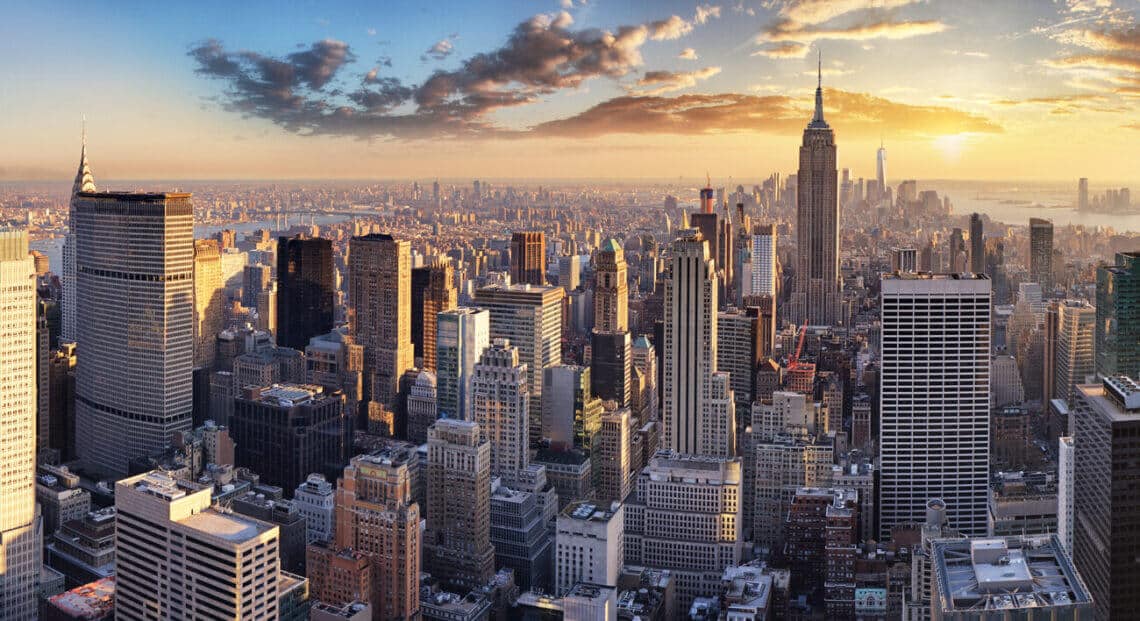
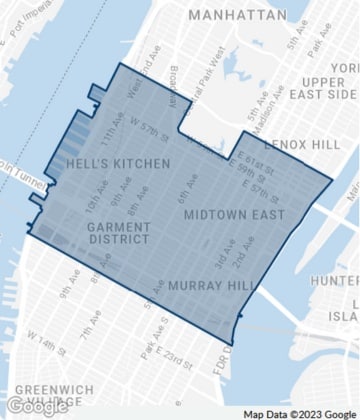
Midtown is the deepest office market in the country and the default answer for finance, law, and corporate headquarters, averaging $76.98 per square foot and $88.50 for Class A (Cushman & Wakefield, Q2 2026). It is also more varied than its reputation suggests. Every neighborhood inside it has its own architecture and building stock, and outside of towers like One Vanderbilt most of the inventory went up between the 1930s and the 1970s. What it does have is the transportation triangle, the informal stretch between Port Authority, Penn Station, and Grand Central, where accessibility is close to unbeatable.
The variable that matters most here is size, not price. If you want 800 to 2,000 SF within a block or two of Grand Central, expect a short list, because those towers run 300,000 to two million square feet and rarely divide down that small. The good news is that the answer is a few blocks away. Move west of Fifth Avenue into the Garment District and it changes completely: smaller former loft buildings with a deep inventory of small space. Murray Hill and the United Nations neighborhood carry the same value-tier stock. Most tenants never learn Midtown has genuinely affordable space at all.
Fifth and Madison are the addresses people picture when they think of a New York office. One made the advertis…
Learn more about 5th Avenue/Madison Avenue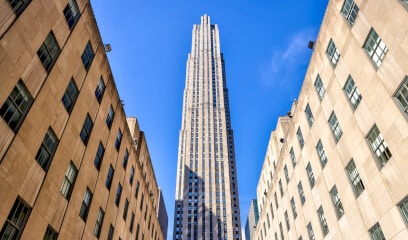
Stand at 50th and Sixth, where a tour bus and a managing partner fight for the same crosswalk. This is the add…
Learn more about 6th Avenue/Rockefeller Center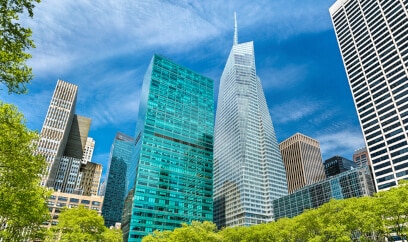
Bryant Park is the rare Midtown address that looks onto a real park instead of another building. Nine and a ha…
Learn more about Bryant Park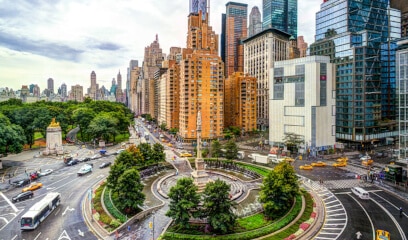
Columbus Circle is the rare Midtown address where you can walk out of a meeting and into Central Park. People …
Learn more about Columbus Circle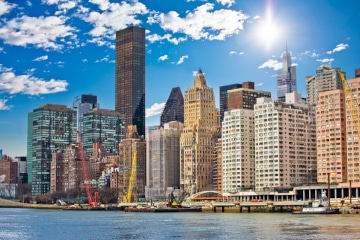
Midtown East is the New York you’ve seen in a hundred establishing shots: the Chrysler Building’s steel crown,…
Learn more about East Side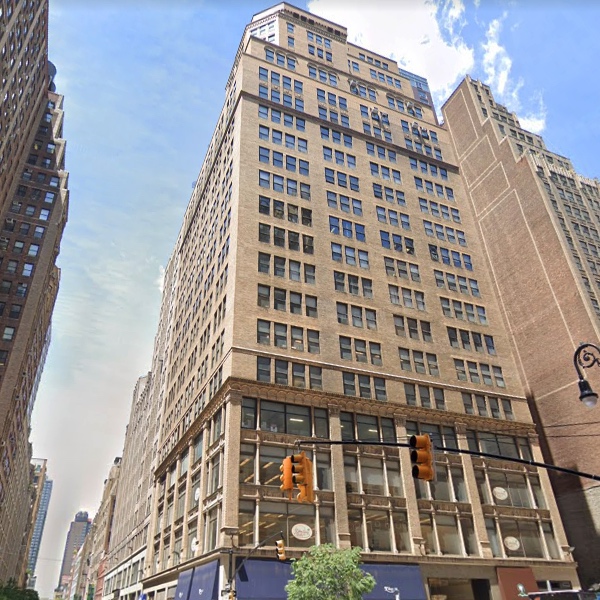
Here is the thing nobody tells you about this submarket: it is really two markets wearing one name. On top of …
Learn more about Garment District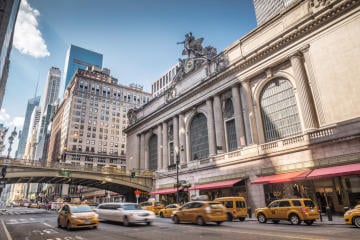
Most people pick Grand Central for one reason: the commute. Then they sign a lease and discover everything els…
Learn more about Grand Central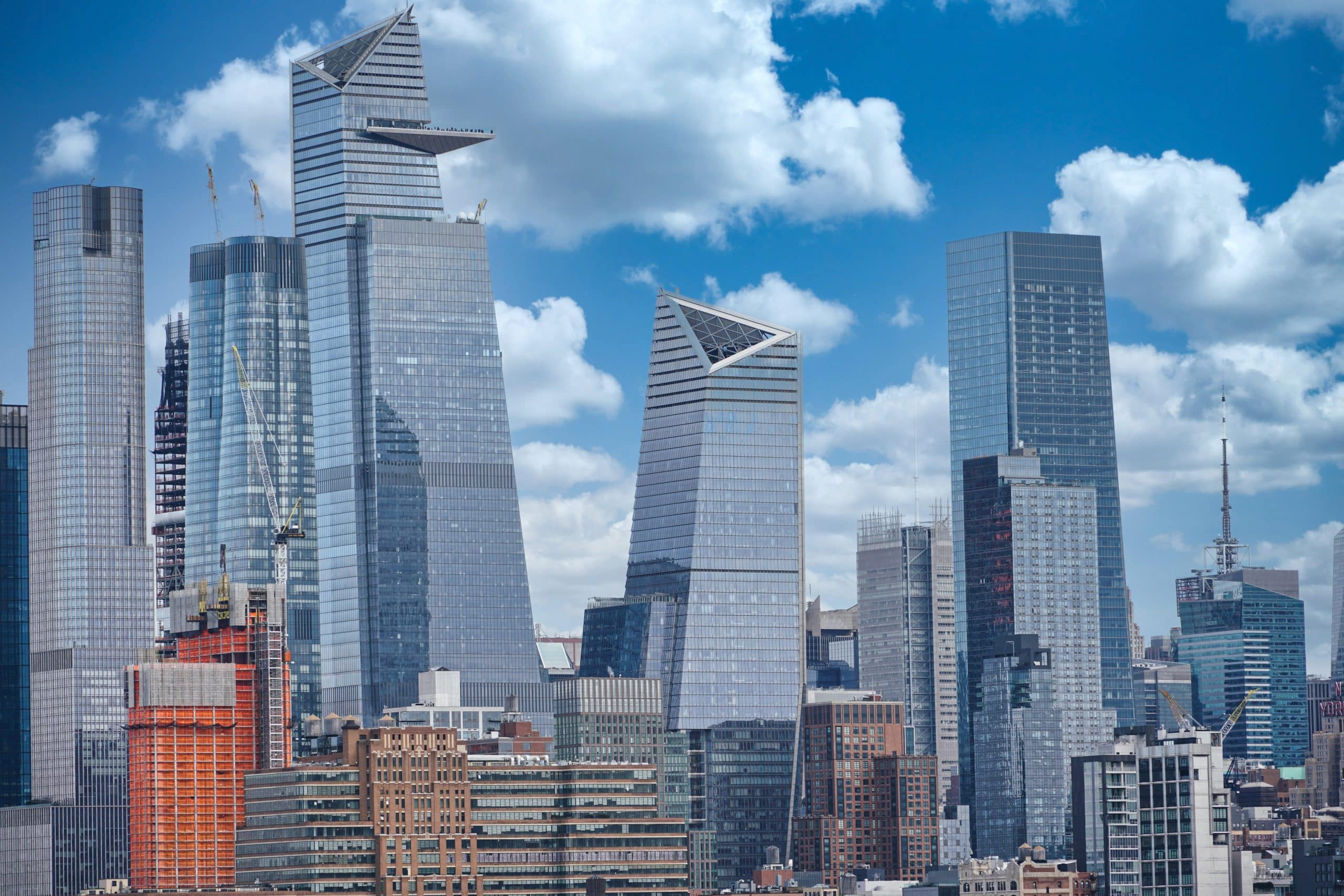
Walk west on 33rd Street and the city flips. The brick and the fire escapes drop away, and you hit a wall of g…
Learn more about Hudson Yards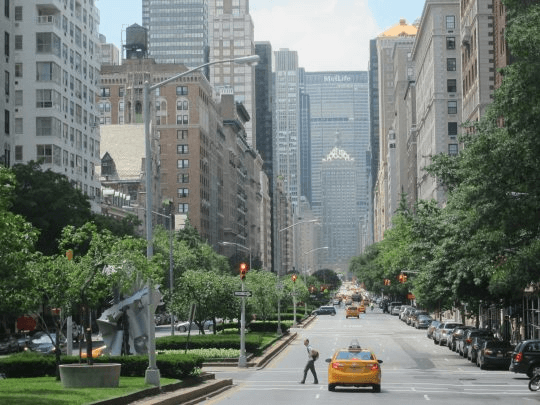
Midtown East is the New York you’ve seen in a hundred establishing shots: the Chrysler Building’s steel crown,…
Learn more about Midtown East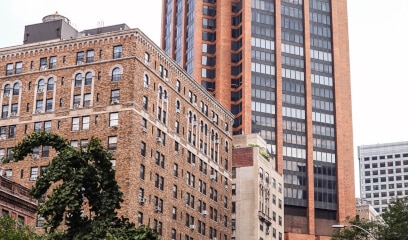
Murray Hill sits just below and east of Grand Central, a pocket of brownstones, walk-ups, and prewar office bu…
Learn more about Murray Hill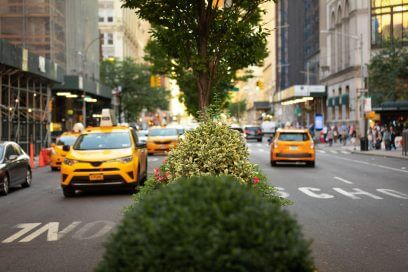
Park Avenue is the address American business built for itself. Fourteen blocks of glass and bronze running fro…
Learn more about Park Avenue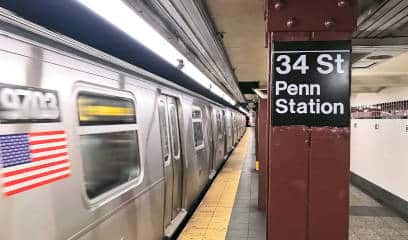
Here is the thing nobody tells you about this submarket: it is really two markets wearing one name. On top of …
Learn more about Penn Station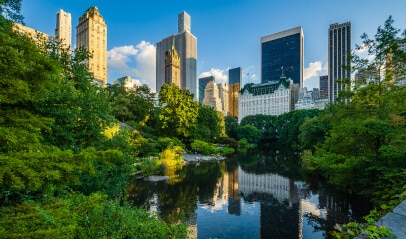
The Plaza District is the most expensive office market in New York. It covers Park Avenue’s Hedge Fund Alley…
Learn more about Plaza District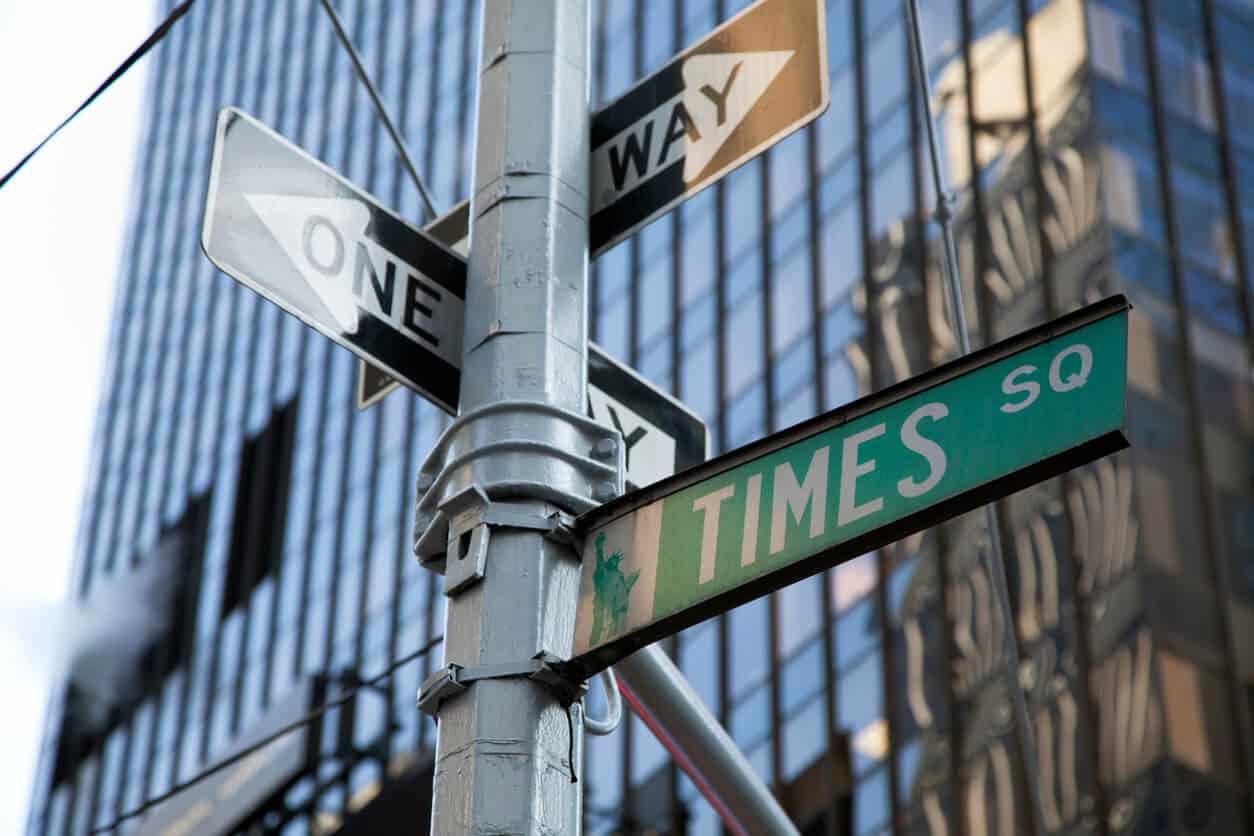
Everybody knows Times Square. Almost nobody thinks of it as an office market, which is exactly the mistake wor…
Learn more about Times Square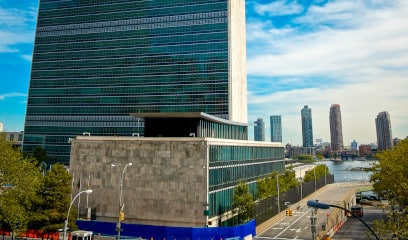
Three blocks east of Grand Central, Midtown finally goes quiet. The crowds thin, the sidewalks open up, and yo…
Learn more about United Nations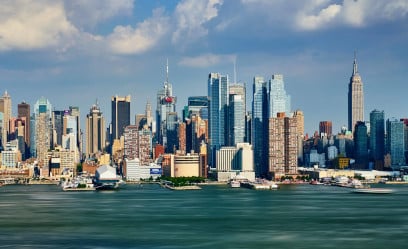
Everybody knows Times Square. Almost nobody thinks of it as an office market, which is exactly the mistake wor…
Learn more about West Side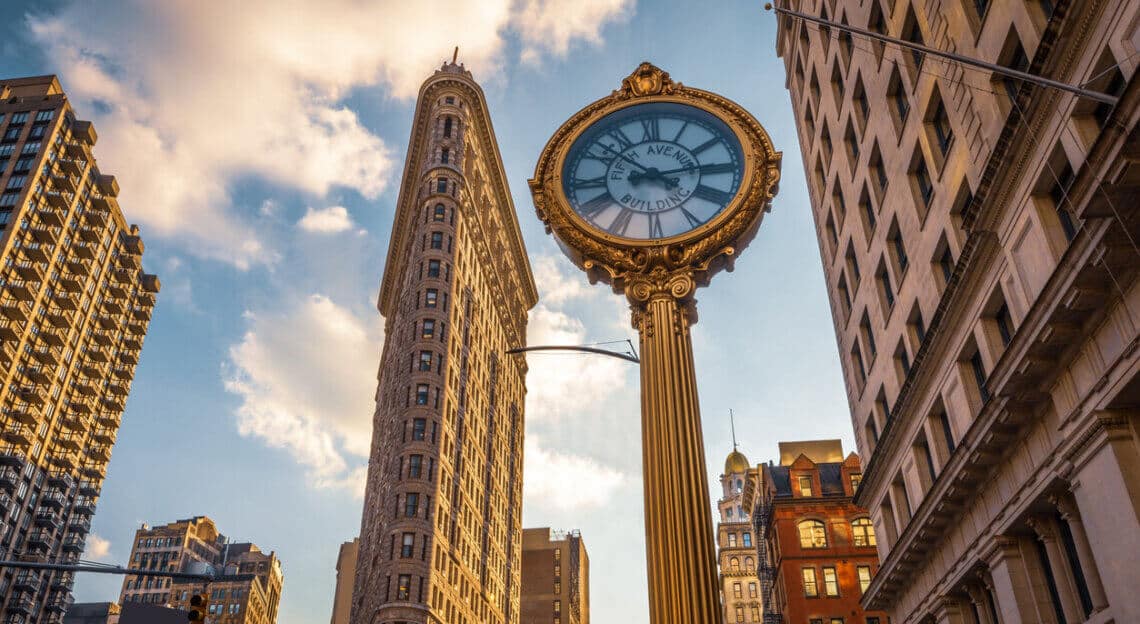
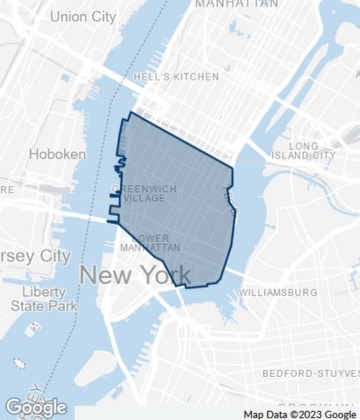
Midtown South is loft country and the most expensive Class A market in Manhattan at $104.50 per square foot, ahead of both Midtown and Downtown (Cushman & Wakefield, Q2 2026). The all-class average is $81.14. This was manufacturing, and when the factories left the floors were converted, which is why the city’s deepest loft inventory sits here: high ceilings, big windows, and open plans that new construction does not reproduce. A well-located Class B loft in Flatiron or SoHo routinely out-prices a Class A tower elsewhere.
Creative firms have always wanted that space. What has changed is that conservative industries, finance included, now ask us for open collaborative floors and come here to find them. If your budget does not reach, the answer is usually not to compromise on the space. Look instead at the loft buildings in the Garment District and at the boutique loft stock in Murray Hill. In deals we have done, the same industrial feel in those neighborhoods has come in 40 to 50 percent below Midtown South, and those tenants have been delighted, because once they moved in the physical environment mattered far more to their team than the name of the neighborhood on the lease.
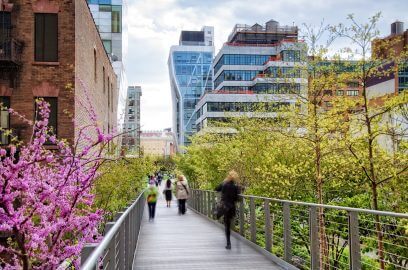
Chelsea office space is what you lease when you want loft character and a serious address without paying glass…
Learn more about Chelsea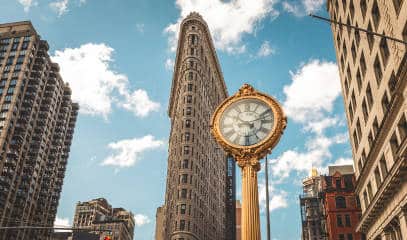
Flatiron is where the AI money is going. Not the only place, but the loudest one. For two years now the fastes…
Learn more about Flatiron
Gramercy Park is where you land when you want a real Manhattan address and prewar bones, but you have no inter…
Learn more about Gramercy Park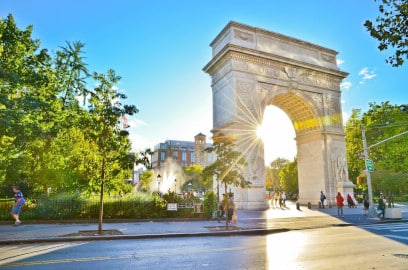
Greenwich Village is a college town that happens to have an office market, and once you look at it that way th…
Learn more about Greenwich Village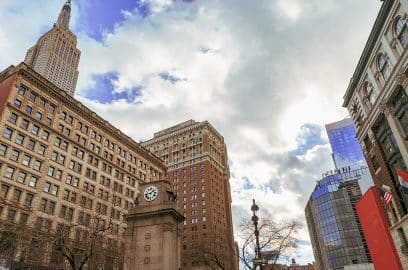
Everybody’s been to Herald Square. You just probably weren’t thinking about office space when you were there, …
Learn more about Herald Square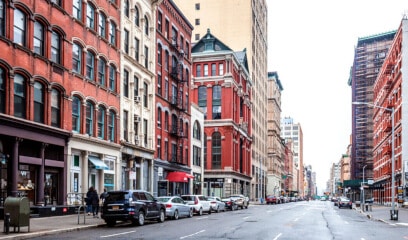
Three years ago the knock on Hudson Square was that nobody wanted it. Trinity Church and its partners had just…
Learn more about Hudson Square/Tribeca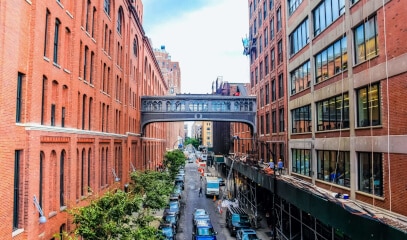
Manhattan has always handled demand the same way, which is by knocking something down and building it taller. …
Learn more about Meatpacking District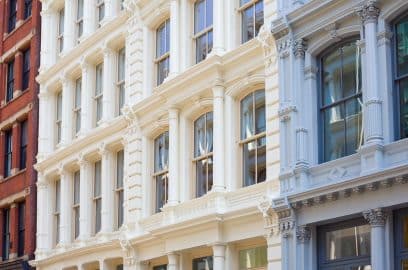
Walk down Greene Street on a Saturday and you’d swear nobody could afford an office here. Every ground floor i…
Learn more about Noho/Soho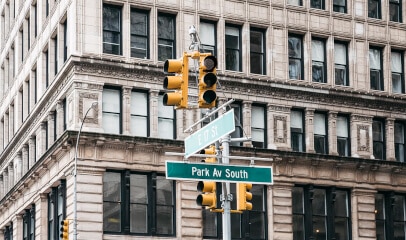
Fifth and Madison are the addresses people picture when they think of a New York office. One made the advertis…
Learn more about Park Avenue/Madison Square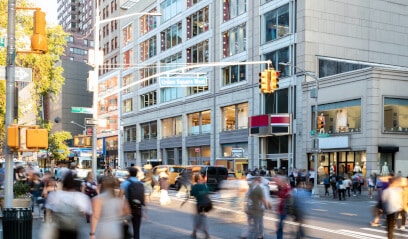
Everybody in New York already knows how to get to Union Square. That sounds like a small thing until you’re th…
Learn more about Union Square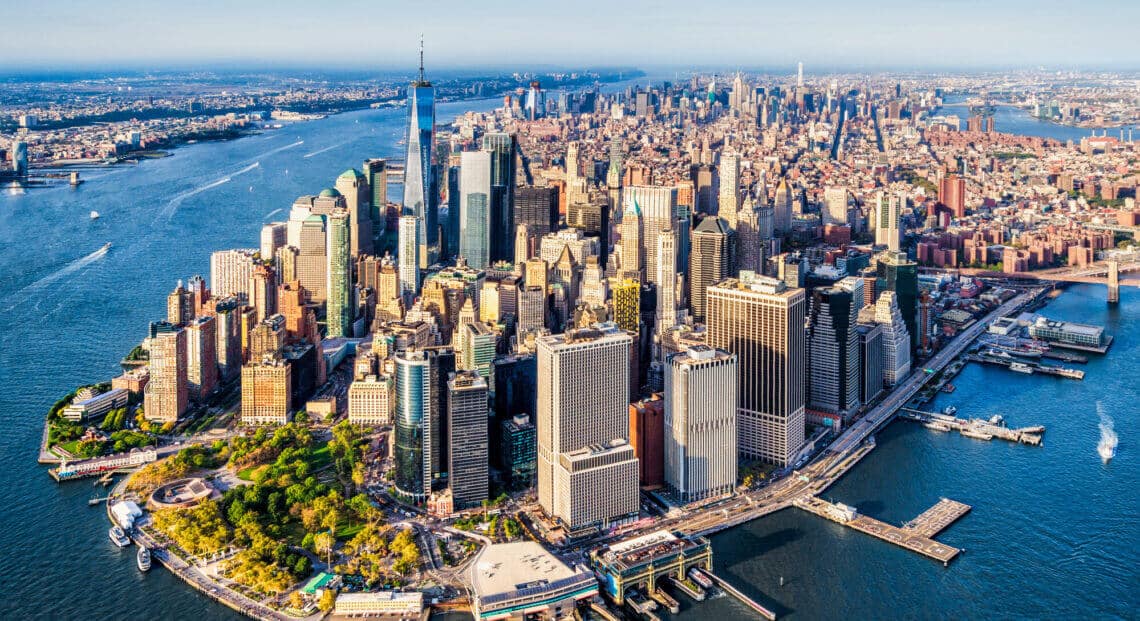
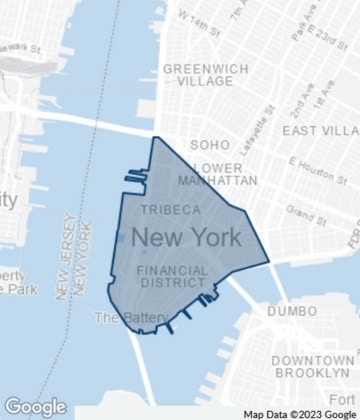
Downtown is the value play at $56.66 per square foot on average and $63.60 for Class A (Cushman & Wakefield, Q2 2026), roughly $20 below Midtown for the same building class and, in many cases, the same trains. It also stopped being a finance-only neighborhood a long time ago. Media, tech, advertising, and law all have real footprints here now, and trophy space at the World Trade Center prices like Midtown while prewar Class B stock in the Financial District and City Hall is the cheapest quality inventory on the island.
What does not show up in the asking rent is that Lower Manhattan is where the city concentrates its commercial real estate incentive programs. The Commercial Revitalization Program alone passes a real estate tax rebate of up to $10 per square foot over five years from the landlord through to the tenant, and relocation and energy credits sit alongside it. Most tenants we meet have never heard of any of them, which means the real cost of a Downtown lease is often lower than the number on the term sheet. Our guide to NYC government incentive programs covers who qualifies.
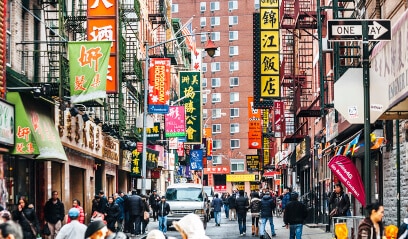
Two blocks south of the courthouses and one bridge ramp from Brooklyn, Lower Manhattan runs out of expensive. …
Learn more about Chinatown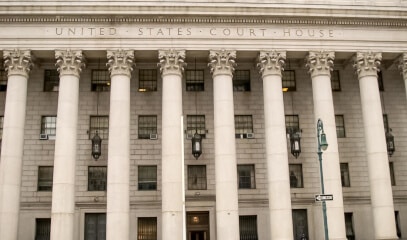
City Hall office space is the last real bargain in Lower Manhattan, and most tenants walk right past it on the…
Learn more about City Hall/Insurance
Civic Center office space is what you lease when your business lives and dies by the courts and City Hall. Thi…
Learn more about Civic Center
The Financial District is the oldest office market in New York and known as the home to Wall Street, the New Y…
Learn more about Financial District
This is the most expensive place to lease an office in Lower Manhattan, and it isn’t a close call. The World T…
Learn more about WTC/World Financial
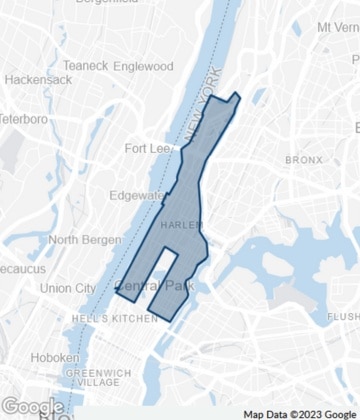
Uptown is the smallest of the four markets and the only one not broken out separately in CBD rent reporting. Correct one assumption before you start: it is not the cheap option. The Upper East Side and Upper West Side are residential neighborhoods with very little commercial stock, and thin supply against steady demand keeps rents high and searches long.
The two sides differ by what drives the demand. Lenox Hill, the Hospital for Special Surgery, and Weill Cornell all sit on the East Side, so medical practices cluster around them. Harlem is nonprofit territory, mostly along the 125th Street corridor, and it is more expensive than tenants expect for the same scarcity reason. When those numbers do not work, we often show these groups budget space Downtown around the Civic Center and City Hall, where Lower Manhattan’s government incentives apply.
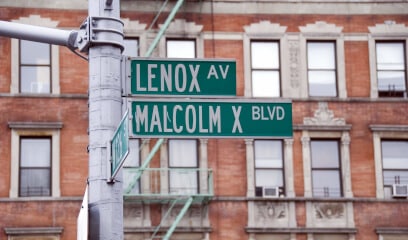
You’ve seen the rents and you’re hunting for the catch. There is one, and it has nothing to do with the neighb…
Learn more about Harlem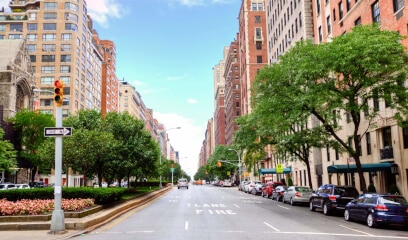
Nobody built the Upper East Side for offices. It’s a residential neighborhood with five hospital systems bolte…
Learn more about Upper East Side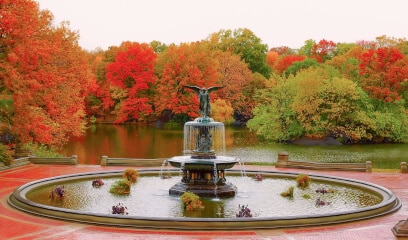
Most people who rent office space on the Upper West Side already live here. That isn’t a coincidence, and it…
Learn more about Upper West SideDowntown, by a clear margin. It averages $56.66 per square foot against $76.98 in Midtown and $81.14 in Midtown South (Cushman & Wakefield, Q2 2026). Within Downtown, prewar Class B stock in the Financial District and around City Hall is the cheapest quality inventory in Manhattan. Uptown is not the cheap alternative people assume it is. Supply there is thin enough that pricing holds up despite the market being small.
Building stock, mostly. Midtown is tower space: Class A high-rises with conventional floorplates, elevator banks, and lobby security. Midtown South is loft space, converted factory and warehouse floors with high ceilings, big windows, and open plans. Midtown suits finance, law, and corporate headquarters. Midtown South suits tech, creative, and fashion. Midtown South Class A now asks more per square foot than Midtown Class A.
Finance and law concentrate in Midtown, along Park and Sixth Avenues, and in the Financial District when court access matters. Tech, AI, and creative firms concentrate in Midtown South, through Flatiron, Chelsea, and SoHo. Medical practices go where their patients are, which usually means the Upper East Side, the Upper West Side, or near a hospital system. See the commercial space by use type guide for the requirements specific to your business.
Manhattan averaged $72.83 per square foot in Q2 2026, and $84.79 for Class A (Cushman & Wakefield). By major market, Midtown South is the most expensive Class A market at $104.50, Midtown Class A runs $88.50, and Downtown Class A runs $63.60. See Table A above, or the individual market page for a closer breakdown.
Midtown, because Grand Central and Penn Station both sit inside it, which matters most for teams commuting from Westchester, Connecticut, New Jersey, and Long Island. Downtown is strongest for Brooklyn and PATH commuters, with the Fulton Center and Oculus hubs. Midtown South is well served by subway but has no commuter rail terminal of its own. Run your team’s actual travel times through the Commute Calculator before you commit.
Most well-priced space, especially in older and off-market buildings, never reaches public listing sites. A tenant representation broker works only for you, with no building of their own to fill, and the landlord pays the commission, so representation costs your business nothing.
Accessibility Tools