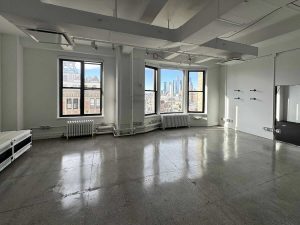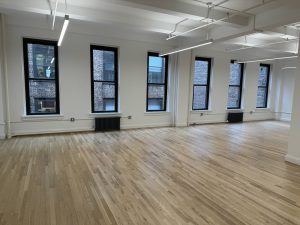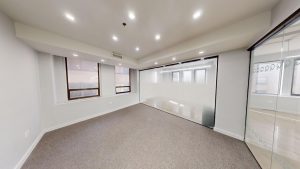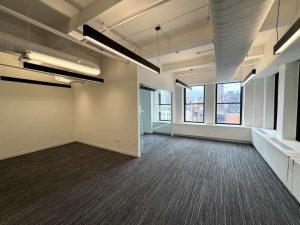

Since 2004, I’ve toured thousands of properties with New York City business tenants. During that time, I’ve learned which warning signs matter most—the ones that predict serious issues after you sign your lease. Here are eight red flags that should make you pause while evaluating properties—and whether or not they should disqualify a space.
1. The Space Feels Smaller Than Advertised


You’ve toured five 2,000-square-foot spaces today. This last one is also listed at 2,000 square feet. However, it just feels smaller. Trust that instinct.
Ask your broker or the managing agent: “What’s the usable square footage?”
Here’s what’s happening: In New York City, landlords market rentable square footage. That number includes your proportionate share of common areas—hallways, bathrooms, elevator lobbies. As a result, your actual usable space is less.
This is calculated by an architect’s formula. However, the efficiency varies building to building. Some buildings have high loss factors—meaning you’re paying for a lot of common area. For example, a 5,000 rentable square foot space might give you only 3,750 usable square feet. In contrast, another building’s 5,000 square foot space might give you 4,000 usable.
If the space feels cramped compared to others you’ve seen at the same advertised size, you’re probably looking at a high loss factor. That’s not favorable to you. Therefore, get the exact usable number before comparing rents between buildings.
How much space your office actually needs
2. The Space Is Currently Occupied
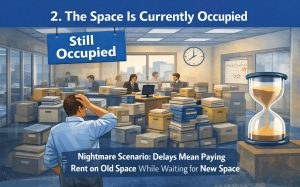
You tour a space and there are people at desks, files everywhere, the tenant clearly still operating. The landlord assures you, “Don’t worry, they’re relocating in three months.”
Here’s the problem: What if they hold over? What if they decide at the last minute to renew? What if their new build-out gets delayed?
Until the existing tenant physically leaves, the landlord can’t start your construction. In fact, I’ve seen tenants unable to take possession for 6-12 months past their target date because the previous occupant didn’t leave on schedule.
This creates a nightmare scenario. Specifically, you’re paying rent on your old space while waiting for access to your new space.
In slower markets, I avoid showing occupied spaces. However, in tight markets like now, it’s often unavoidable. Just go in with eyes open. Instead, insist on specific vacancy language in your lease. Build in extra time. Additionally, have a backup plan if the timeline slips.
Understanding subleasing and assignment issues
3. Long Elevator Wait Times
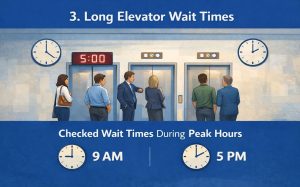
You’re standing in the lobby at 2 PM on a Tuesday. Not morning rush. Not lunch. Not evening exodus. Nevertheless, you wait five minutes for an elevator.
That’s a red flag.
Insufficient elevator capacity or outdated systems create daily frustration. Many buildings have modernized with computerized dispatch systems that optimize wait times. However, plenty haven’t.
Here’s what to do: If you’re seriously interested, return during peak hours. For example, show up at 9 AM when people arrive. Then come back at 5 PM when they leave. Stand in the lobby and time the wait. Additionally, ask employees in the building about their experience.
This isn’t just about convenience. In fact, elevator problems affect productivity and employee satisfaction. If your team wastes 10 minutes a day waiting for elevators, that adds up fast.
Your broker should know which buildings have elevator issues. However, verify yourself.
4. Scaffolding Blocking the Views

You tour a beautiful space with floor-to-ceiling windows. However, there’s scaffolding covering half the exterior. The managing agent says cheerfully, “That’ll be removed in a few months.”
Don’t count on it.
In fact, I’ve seen scaffolding stay up for years. Delayed facade work. Permitting issues. Funding problems. Sometimes the landlord is doing legitimate repairs. Other times, they’re slow-walking the work.
Either way, you don’t want to sign a 10-year lease for “great views” that are currently obstructed with no firm removal date.
Ask specific questions: Why is the scaffolding up? What work is being done? Is there a firm completion date with penalties? Importantly, get commitments in writing if the views matter to your decision.
NYC façade inspection requirements
5. Neglected Common Areas and Bathrooms

Landlords spend millions on impressive lobbies. Marble. Modern lighting. Artwork. Then you get off the elevator and the hallways tell a different story.
Discolored ceiling tiles. Worn carpet. Scuffed paint. Bathrooms that haven’t been updated since 2009.
This is a litmus test for how the landlord actually maintains their property. The lobby is for show. In contrast, the common corridors reveal their true priorities.
When touring, always insist on seeing both the men’s and women’s bathrooms on the floor. Look up at the ceiling tiles—are they water-stained? Check the carpet condition. Notice the paint.
These details tell you whether the landlord is committed to maintaining the building or doing the bare minimum.
A good broker will point these things out proactively. On the other hand, if they’re glossing over obvious maintenance issues, that’s also a red flag about the broker.
Key lease terms to address upfront
6. The HVAC, Heating, Windows, and Soundproofing Need Attention

Temperature Control
You’re touring in July and it feels like a sauna. Or it’s January and you can see your breath. The broker says, “The HVAC just needs adjustment.”
Don’t buy it. In fact, climate control issues during a tour almost always indicate larger problems.
For heating, look at the radiators. Are they evenly spaced? Do there appear to be enough to heat the entire area? In older buildings, radiators should be under windows, along exterior walls, spaced to provide consistent warmth. Large open areas with no nearby radiators? Problem.
For cooling, check how the space is cooled:
Window units: Look at their condition. Are they old and beat up? Do they look like they’re from the 1990s? Old window units are inefficient, noisy, and break down.
Central air with ductwork: Ask these questions:
- Does this space have its own package unit or is it shared with other tenants?
- Where is the package unit? (Ask to see it)
- How old is it?
If that package unit is 30 years old, you’re inheriting a problem. Specifically, you don’t want it dying in July when it’s 98 degrees. A new package unit costs tens of thousands. Who pays if it breaks down?
Ask about control:
- Can you control different zones in your space? For instance, if your CEO likes it cooler in his office, can that be adjusted?
- Who controls the temperature—you or building management?
- What are after-hours HVAC charges?
If the system looks antiquated, ask NOW: Will the landlord provide a new package unit? Will they install new window units before you move in?
Once you sign the lease, it’s too late.
Windows
Inspect the windows carefully. Check that they seal properly. Additionally, verify they’re double-pane glass. A poor seal is a definite red flag. Single-pane windows? Absolutely worth noting.
Old or poorly sealed windows waste energy and make the space uncomfortable. If you decide to make an offer, you can ask the landlord to replace the windows. However, be cognizant of their condition during your tour.
Sound and Noise
Is there any banging? Mechanical sounds? Humming? Walk into each room and listen. The space should be silent.
We’re not just talking about noise from outside or from mechanical systems in the space. Instead, we’re talking about sound insulation between rooms.
If there are private offices, test them. Have someone on the tour go into an office and speak at normal volume. Meanwhile, stand next door and listen. Does the sound carry? How private are the offices really?
After all, the whole idea of an office is privacy. If sound carries between offices, that’s a problem for confidential conversations.
What landlords typically cover in a build-out
7. Ambiguity About Miscellaneous Monthly Charges

You ask about operating expenses, additional charges, or tax escalations. You get evasive answers. “Those are pretty stable.” “We’ll get you that information.” “Don’t worry about it.”
Worry about it.
Your base rent is only part of your cost. In fact, how additional charges work varies significantly by building type and lease structure.
Understanding Additional Charges
In side street loft buildings, it’s normal to pay miscellaneous monthly charges. Water. Sprinkler maintenance. Guard services. These vary by building, but here’s the rule: the total of all miscellaneous charges should never exceed one month’s rent annually.
For example, if you’re paying $10,000/month in base rent, your annual miscellaneous charges shouldn’t top $10,000.
If the managing agent or landlord’s broker is evasive about specifics, take note. This often means the charges are higher than typical. Essentially, they’re hoping you won’t dig into details until after you’ve committed.
The Real Estate Tax Trap
Pay attention to how real estate tax increases are calculated. There’s a critical difference:
- Standard (fair) language: Tenant pays proportionate share of the increase over base year
- Problematic language: Tenant pays proportionate share of total real estate tax increases
That second version costs you significantly more. Therefore, understand exactly what you’re responsible for before signing.
How commercial real estate taxes are assessed
Other Charges to Investigate
Ask these specific questions during your tour:
HVAC contract: Is the tenant responsible for their share of the building’s HVAC maintenance contract? If so, what’s the annual cost?
Rubbish removal: Is this included or is there an extra charge? In Class A buildings, rubbish removal should be included. If you’re being charged separately, that’s unusual.
Water and sprinkler charges: Get specific monthly amounts, not vague estimates.
These might seem like small charges. However, over a five-year lease (60 months), they add up fast. For instance, a $200/month charge that seems negligible becomes $12,000 over your lease term.
If the managing agent doesn’t know answers to these basic questions during your tour, that’s itself a warning sign. They should know their building’s charge structure cold.
The best landlords are transparent about costs upfront. In contrast, the ones who make you dig for information usually have a reason for their opacity.
How additional charges are structured
8. The Lobby Is Unattended and Building Security Is Unclear
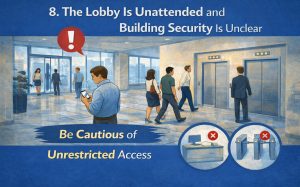
You walk into the lobby. There’s no attendant. No security desk. People walk in and out freely. No one stops them. No one asks where they’re going.
This isn’t necessarily bad. In fact, many Class A buildings and even some Class B buildings don’t have security turnstiles or front desk attendants. However, it’s something you need to evaluate carefully.
What to Look For
During your tour, assess the overall security setup:
Is there a lobby attendant? If yes, understand their role. Do visitors have to sign in? Does the attendant authorize access? Or are they just there to answer questions?
Are there security turnstiles? Do they require security cards? Can visitors enter your floor without authorization?
What are the attendance hours? Is the lobby attended during business hours only? 24 hours a day during the week but limited on weekends? 24/7? This matters if you have staff working early mornings or late nights.
The Neighborhood Factor
Don’t just evaluate security inside the building. Additionally, look at the surrounding area.
If you’re seriously interested in the space, come back in the early evening—around 7 or 8 PM. Walk around the block. Does the neighborhood feel different than it did during your daytime tour? Are there people on the street? Is it well-lit? Does it feel safe?
You may want to check crime statistics for the area. This is especially important if you have staff working late hours.
Why This Matters
If you have team members leaving the building at 9 PM, they need to feel secure. If your staff works late and feels unsafe leaving your building, it will hurt employee retention.
In fact, I’ve seen companies lose good employees because people didn’t feel comfortable working late in certain locations. Security isn’t just about protecting assets—it’s about protecting people and maintaining morale.
Ask the landlord or managing agent directly: Have there been any security incidents in the building? What security measures are in place? Can additional security be added if needed?
The Bottom Line
None of these red flags automatically disqualify a space. For instance, an occupied suite might have an ironclad vacancy agreement. Scaffolding might genuinely be coming down next month. An unattended lobby might be perfectly fine in a safe neighborhood. However, these warning signs should trigger deeper questions before you commit.
The best protection? Work with a broker who knows the buildings, asks tough questions, and has seen these problems before. And trust your instincts. If something feels off during the tour, investigate further before signing.