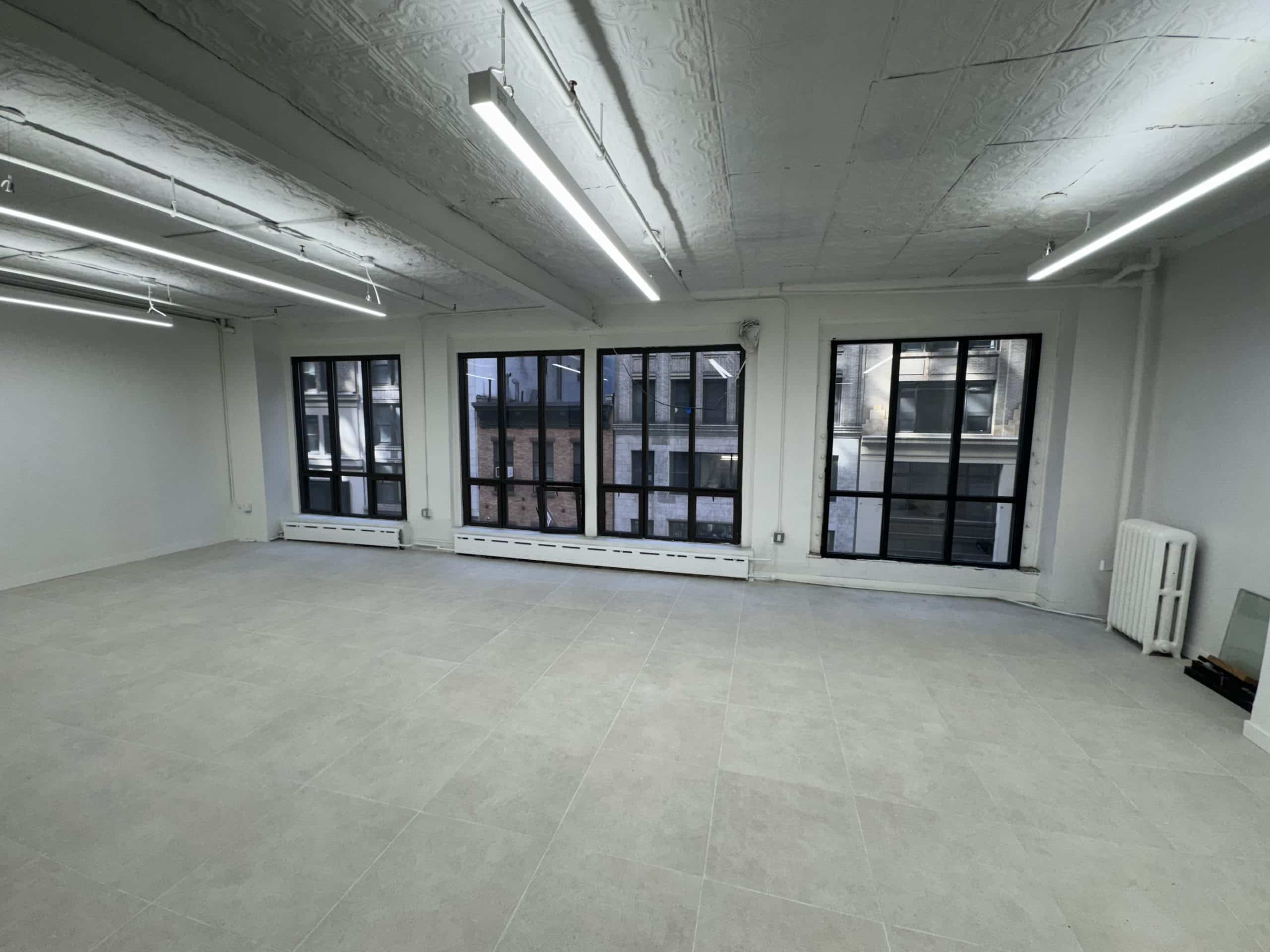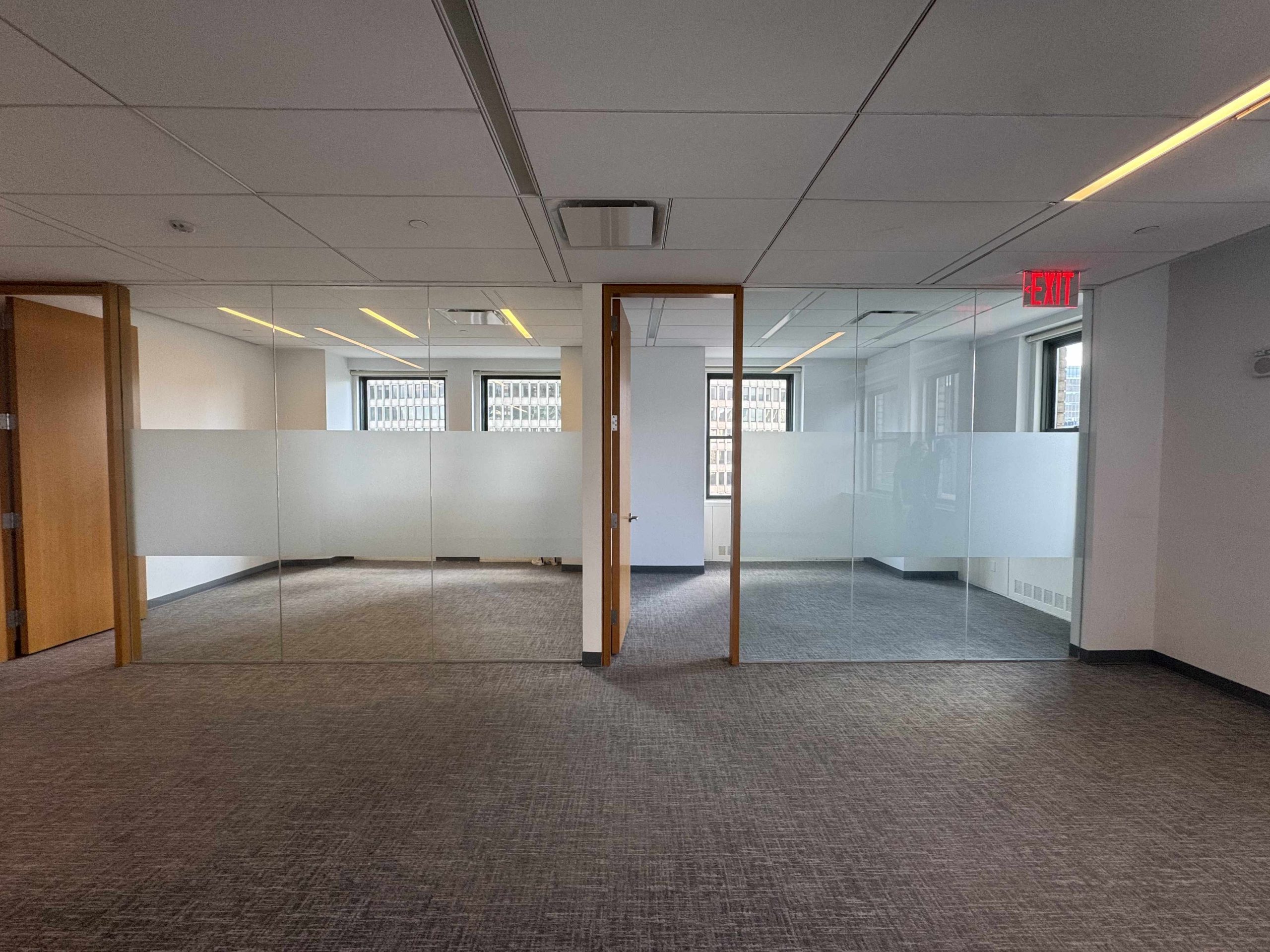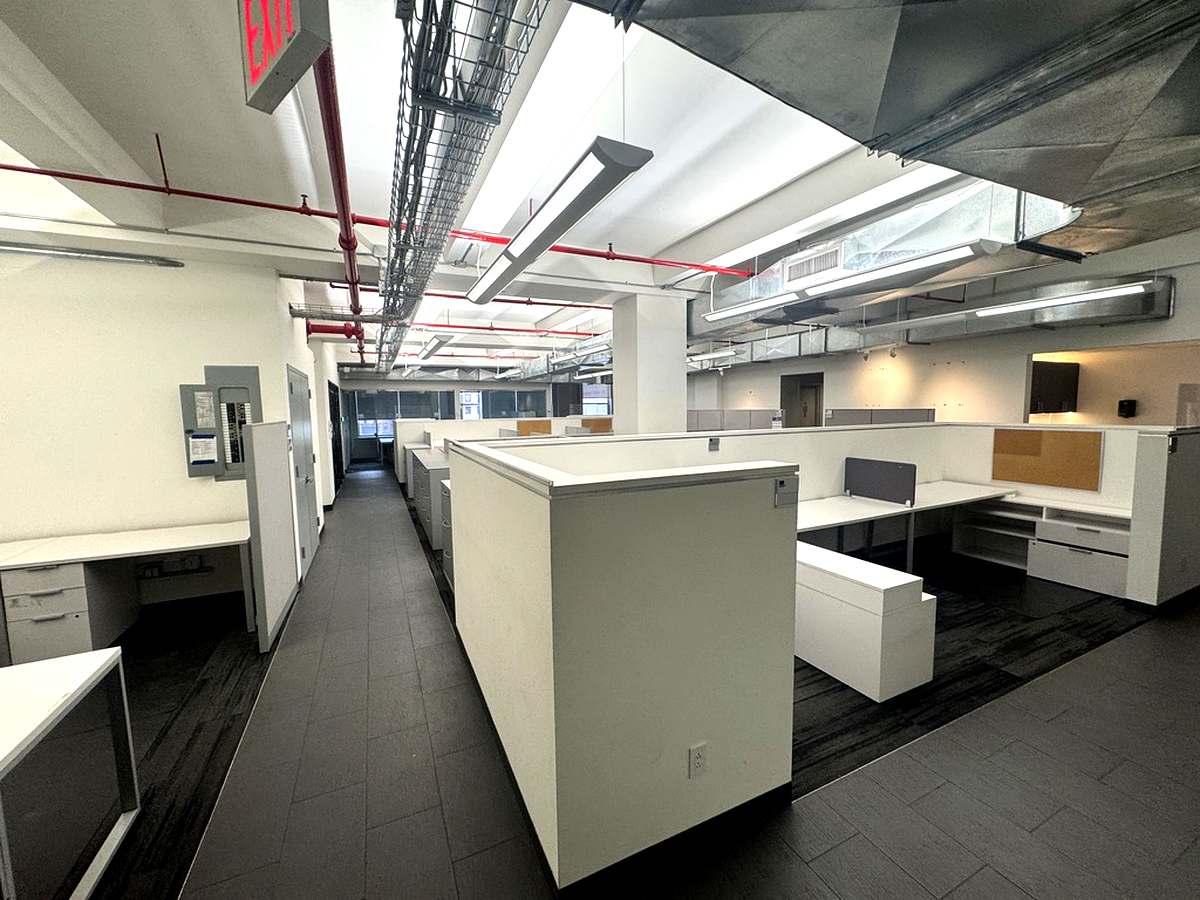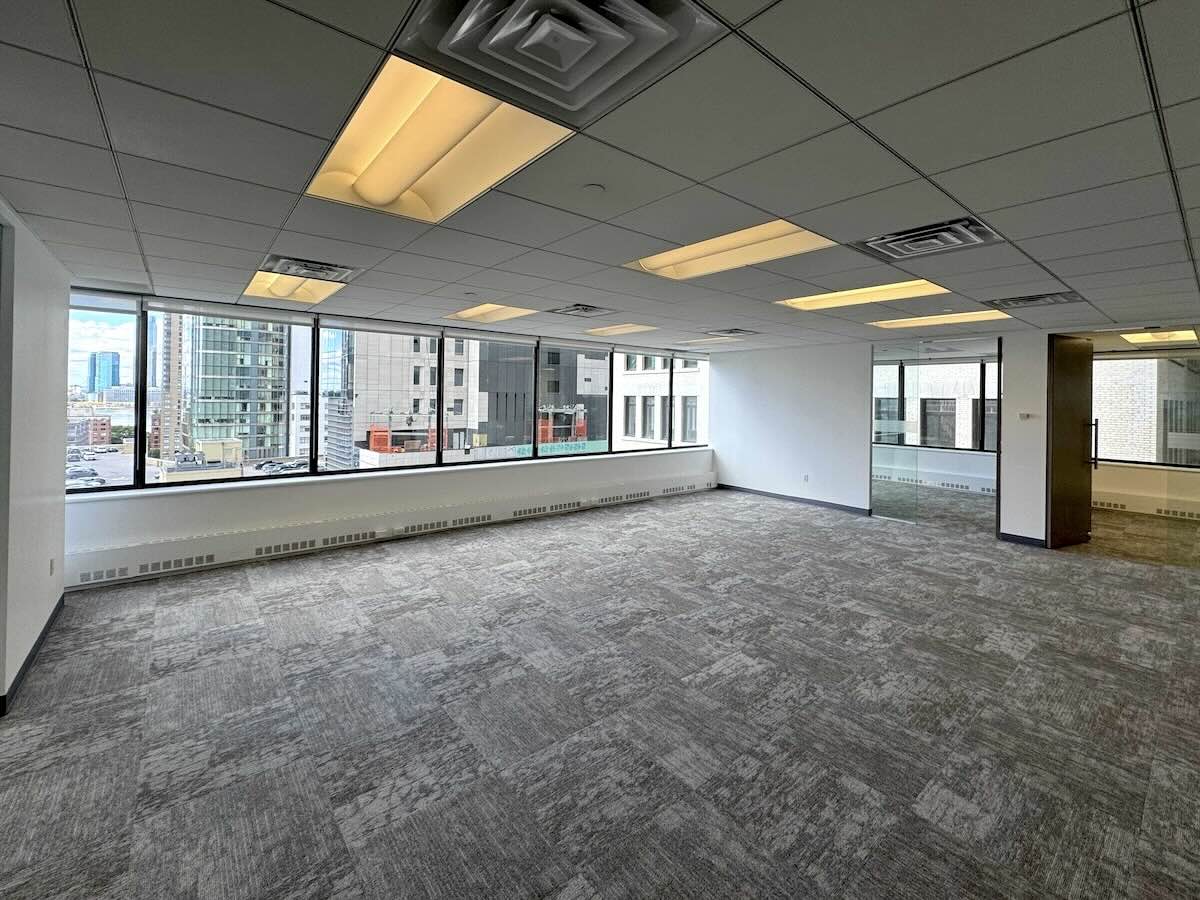
I’ve spent years representing tenants searching for financial services office space across Midtown and beyond. Now, while I don’t regularly lease to private investment firms, private wealth platforms, discreet principals, and, for that matter, family offices, these are some of my favorite clients to work with.
But I’ll tell you right now, they are not typical office tenants. Not by a long shot.
Most family offices never actually call themselves that and don’t like to. They operate under holding company names or private advisory firms. But whether they use the label or not, private-capital-style tenants all share the same core priorities when evaluating New York City office space: discretion, credibility, and permanence.
The building is part of that message.
So I put together this guide to not only break down the best office buildings for family offices in Manhattan but also what matters most during tours and negotiations to hit that message the right way, every time.
What Family Offices Evaluate (Beyond the Address)
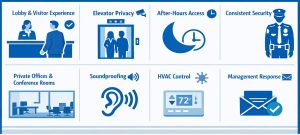
Every broker has a tour checklist. Family offices throw it out the window. Principals in this space care most about things that do not always show up on a listing sheet, and they notice details that most tenants walk right past. If you’re evaluating office buildings for family offices, consider the following:
- Lobby Professionalism and Visitor Handling:Your guests form an opinion before they reach your floor. Front desk staff should greet visitors by name, not hand them a clipboard and point at a bench.
- Elevator Exposure and Sightlines: Nobody wants to ride 30 floors with a stranger who just watched them leave a meeting. I look at how many tenants share your elevator bank and whether your floor has any visual exposure from the hallway.
- After-Hours Access Rules: Family offices don’t run on a 9-to-5 schedule. Make sure the building doesn’t either.
- Security Staffing Consistency: A rotating cast of unfamiliar lobby guards defeats the purpose of a secure building. I want to see the same faces downstairs every week, and so should you.
- Floorplate Suitability for Private Offices and Conference Rooms: Open floor plans work great for tech startups. Family offices need walls, doors, and rooms where sensitive conversations stay sensitive.
- Acoustic Separation:If you can hear the conversation next door, so can everyone else. Test the walls, not the brochure specs.
- HVAC Control and Operating Hours: You need independent climate control for your suite and extended operating hours that match how your team works. Shared systems with rigid schedules create problems.
- Property Management Responsiveness: Send a test email to the management office and see how long they take to respond. That reaction time tells you everything.
- Ownership Stability:Buildings that trade hands every few years bring new management, new rules, and new headaches. Long-term owners tend to keep things consistent.
- Controlled Circulation Within Your Suite or Floor: Can you design a layout where your back office, reception, and conference areas operate on separate paths? The best family office spaces let you control who sees what and who.
Quick Fit Guide: Choose Your Building Type in 30 Seconds
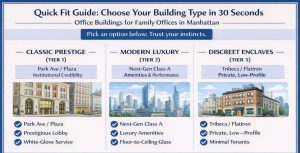
That said, most family office principals already know what they want before they ever call a broker. They just need someone to confirm it and point them to the right buildings. So before we get into specific addresses, let me save you some time. Office buildings for family offices in Manhattan generally fall into three categories, and your gut reaction to each one will tell you exactly where to start looking.
- Classic Prestige (Tier 1): You want the lobby to do the talking. Think Park Avenue limestone, white-glove elevator operators, and a tenant roster that reads like a Fortune 500 shortlist. This suits principals who view their office as an extension of their reputation and want every square foot to reinforce that.
- Modern Luxury (Tier 2): You want the glass, the ceiling heights, the building-wide amenities, and infrastructure that keeps up with how your team works. This suits groups that care about performance and polish equally but don’t mind sharing a building with a bigger tenant mix.
- Discreet Enclaves (Tier 3): You want a building where nobody knows your name, and you like it that way. Fewer tenants, private keyed elevators, minimal foot traffic. This suits principals who operate on a need-to-know basis and prefer their office location stay off the radar entirely.
So now that you have a 30-second snapshot, let’s break each tier down so you know what you’re walking into before you ever schedule a tour.
Tier 1: Classic Prestige (Park Ave/Plaza District/Midtown East)
Every family office principal I’ve worked with in this tier shares one thing in common: they want the address to close doors behind them, not open conversations. The signal here is institutional credibility, stability, and a tone that tells your bankers, attorneys, and co-investors you’ve been at this for a while. That matters because when your counterparties see a Park Avenue address on the letterhead, it removes a layer of friction before the first meeting even starts.
Buildings like 375 Park Avenue, 399 Park Avenue, and 280 Park Avenue have held this reputation for decades. The finishes might not scream “new,” and that’s the point. Predictability and tone carry more weight here than a renovated lobby.
The neighborhood itself does a lot of heavy lifting, too. You’re steps from the private banks, white-shoe law firms, and wealth advisors your team already works with. Grand Central sits right there for client access, and Midtown East keeps you close to everything without dropping you into the noise of Times Square.
Tier 2: Modern Luxury Buildings (Next-Gen Class A)
Some principals want the credibility but also need the infrastructure to match how their teams operate today. Buildings like One Vanderbilt, 425 Park Avenue, and 30 Hudson Yards deliver on that front with serious ceiling heights, top-tier amenities, and security systems built for this decade.
These work well for multi-family offices, global investment platforms, and international principals who host frequently and need the building to perform during client visits. Yet here’s my broker note: modern luxury does not automatically mean private. Privacy at this level depends on elevator configuration, floor position, and building management procedures.
Always ask those questions on the tour.
Tier 3: Discrete Professional Enclaves (Tribeca/Flatiron/Select SoHo)
Not every family office wants a power address, and some actively avoid one. The principals who gravitate toward certain neighborhoods tend to operate on their own terms and prefer a building where the elevator ride doesn’t come with small talk.
For example, Tribeca draws a certain crowd because it sits close enough to Wall Street to stay connected but carries none of the Midtown baggage. Flatiron hits a similar note for groups that want a professional environment with a lower profile, where the building blends into the block rather than anchoring it. SoHo can also work, but only when the layout gives you controlled access and genuine privacy; a trendy lobby full of retail foot traffic defeats the purpose.
What ties all three neighborhoods together is the potential for full-floor control with fewer tenants and minimal exposure. That combination is hard to find in Midtown at any price. However, I always make sure to remind my clients that “quiet” and “under-managed” look the same on a first tour. They feel very different six months into a lease. So before you fall for the charm of a boutique building, dig into how the ownership runs the place.
Operational maturity matters just as much as the square footage.
What the Numbers Tell You About Office Buildings for Family Offices
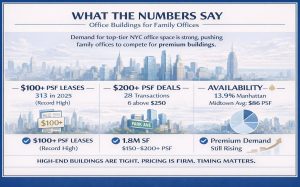
Gut instinct matters when choosing a building, but so do the numbers. And right now, the premium end of Manhattan’s office market is telling a very clear story: demand for top-tier New York City office space has never been stronger, and family offices are competing for the same buildings as every other well-capitalized tenant in the city.
- Record-Breaking Premium Lease Volume: JLL’s latest high-rent study counted 313 Manhattan leases at $100 per square foot or above in 2025, up from the previous record of 212 in 2024. Premium leasing now accounts for roughly one-third of all Manhattan lease activity, spanning about 9.9 million square feet.
- Ultra-Premium Rents Have Become Normal: Twenty-eight transactions in 2025 started at $200 per square foot or above. Six of those exceeded $250. Trophy towers in Midtown have pushed starting rents past $300 per square foot on select floors.
- Park Avenue Still Leads the Pack: Park Avenue logged roughly 1.8 million square feet of $100-plus leasing in 2025. No other submarket in Manhattan came close. Plaza District trophy buildings commonly ask between $150 and $200-plus per square foot, and Hudson Yards towers start in the low-to-mid $100s with premier floors climbing well above $200.
- Availability Keeps Shrinking: Overall Manhattan office availability dropped to around 13.9% by the end of Q4 2025, and Midtown’s average asking rent hit approximately $86 per square foot. Trophy segments sit materially higher.
- Pushback Exists, but Leverage Is Limited:Some landlords face resistance at the very top of the rent spectrum, even for smaller suites. Limited availability in best-in-class financial services office space continues to support elevated pricing, though, so waiting for a correction here is a risky bet.
Five Practical Recommendations: How to Shortlist Office Buildings for Family Offices
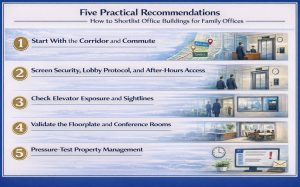
Numbers set the context, but they don’t pick your building. That part comes down to process. Running these searches for private capital groups across Manhattan isn’t something I do regularly; however, I’ve landed on five steps that consistently separate the right fit from an expensive mistake. Run through them in order, and your shortlist will build itself.
Step One: Start With the Corridor and the Commute
Pick your neighborhood before you pick your building. Every corridor sends a signal, and your team still needs to get there every day. Park Avenue says one thing. Tribeca says another. Neither is wrong, but both should be intentional. Plot your principals’ home addresses, your key advisors’ offices, and your most-visited banks on a map. The overlap usually points you to two or three neighborhoods worth exploring, and you can eliminate the rest before wasting a single morning on tours.
Step Two: Screen Security, Lobby Protocol, and After-Hours Access
The lobby is where discretion either holds up or falls apart. Ask how visitor registration works, who monitors the desk overnight, and whether the building shares access logs with other tenants. Some buildings handle after-hours entry with a simple key card. Others require escort procedures that feel like airport security. You want enough control to protect your principals without creating friction every time someone works late.
Step Three: Check Elevator Exposure and Sightlines
Shared elevators create shared encounters, and for most family office principals, that’s a problem. Ask whether the building offers dedicated or semi-private elevator banks for your floor. Pay attention to sightlines from the elevator landing into your reception area, too. A poorly positioned entrance means every stranger on your floor gets a clear look inside your office before your front desk can intervene.
Step Four: Validate the Floorplate and Conference Room Placement
A beautiful building with the wrong floorplate will frustrate your team for the entire lease term. Walk the space with your actual headcount and meeting patterns in mind. Conference rooms should sit close enough to the reception area that visitors never wander past internal offices. Principal offices need separation from common areas. If the floorplate forces you to compromise on either of those, keep looking.
Step Five: Pressure-Test Property Management Responsiveness
Send the management office an email at 4:45 on a Friday and see what happens. Seriously. The best building in Manhattan becomes a liability if the property manager takes 72 hours to respond to a broken HVAC unit or a security concern. Ask existing tenants how quickly issues get resolved. A responsive management team protects your lease value long after the ink dries.
The Building Is Part of the Message. Choose Accordingly.
I’ve walked hundreds of buildings in Manhattan with all kinds of tenants, but the private capital groups stick with me. The principals behind private investment firms, wealth platforms, and discreet holding companies who never use the words “family office” out loud. The through line is always the same. They already know who they are. They need a building that knows it too.
Your attorneys won’t mention it. Your bankers won’t bring it up. But every person who visits your office forms an opinion before they sit down, and that opinion starts in the lobby. The neighborhood, the elevator ride, the sightlines from reception, the way management handles a 9 PM visitor request. All of it compounds into a single impression that either reinforces your credibility or quietly chips away at it.
You’ve spent years building something worth protecting. Get in touch with our team, and we’ll help you find the building that proves it the moment someone walks through the door.