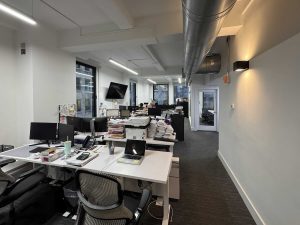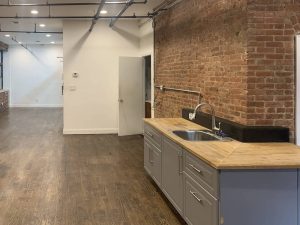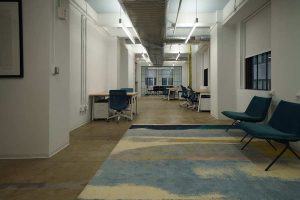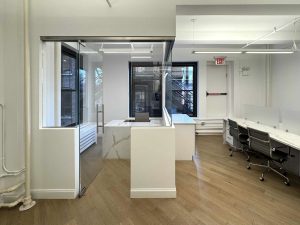

If you walked into KPMG’s Manhattan headquarters this winter, you would have seen something that tells the entire story of the modern office market. Their new CEO, Timothy Walsh, stood in front of staff announcing that the firm is building skyline lounges, strategy rooms, creative collaboration spaces, and even a barista bar—not for clients, not for show, but specifically to make younger employees want to come in.
This is not a Silicon Valley startup trying to feel cool. It is one of the largest professional-services firms in the world openly acknowledging a truth the market has been inching toward for years: an office must offer an experience that is worth commuting for. And if it doesn’t, employees—especially high-earning hybrid workers—will simply stay home.
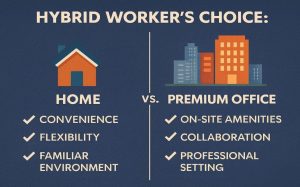
The lesson is simple. Amenities have crossed a line. They are now part of business strategy, talent strategy, and retention strategy. In 2026, they are no longer perks. They are part of the financial model.
This shift is playing out clearly across Manhattan. According to JLL’s most recent absorption data, large blocks of premium space—especially Trophy and newer Class A product—are disappearing faster than almost anything else in the market. ThreeParks, the combined ecosystem of Hudson Yards, Manhattan West, and the Penn District, is nearing capacity. The flight to quality that began in 2021 has accelerated into something else entirely: a supply squeeze.
This is not driven by aesthetics alone. It is driven by people. And people, as employers are learning the hard way, are choosing buildings with comfort, wellness, natural light, outdoor access, advanced HVAC, quiet lounges, and flexible collaboration areas.
Companies are discovering that the way a building feels affects how people work—and whether they stay.
So the real question becomes: can amenities—a gym, a terrace, a quiet room, a barista bar—actually retain a $500K employee? The answer, based on everything happening in the market, is yes.
The Real Economics Behind Amenities

NYC’s most competitive industries—AI, quant trading, fintech, biotech, digital health—employ people who cost more per month than the incremental rent difference between a good office and a great one. When a single engineer or trader earns $300,000 to $500,000 a year, losing just one has a real, measurable financial impact.
Turnover often costs one and a half to two times a salary. That means replacing a single high-earning employee can cost more than the annual rent on an entire midsize suite.
No landlord will say this directly, but many tenants quietly do: paying slightly higher rent for a building that keeps employees engaged is cheaper than managing the fallout of a disengaged workforce.
This is why wellness amenities, terraces, quiet rooms, upgraded air systems, and hospitality-style experiences have moved from “nice-to-have” into “strategic necessity.” They protect a company’s most expensive investment: its people.
Over the years, I’ve watched this play out directly with tenants across Manhattan. Last year, I represented a blockchain exchange that spent more than six months touring buildings from Hudson Yards to Midtown. They were highly selective, and while pricing mattered, it wasn’t the deciding factor. They gravitated toward buildings with full-service gyms, terraces, meditation rooms, upgraded mechanical systems, and pet-friendly policies.
It wasn’t until we approached lease execution that they explained the logic. Many of their data analysts earn close to $500,000 a year. Recruiting them is extremely competitive and replacing even one is expensive and time-consuming. Amenities weren’t luxuries—they were part of a compensation strategy.
I’ve seen similar patterns with private equity and finance clients. A Midtown South private equity group I represented insisted on staying in that neighborhood because their young analysts needed restaurants, upbeat streets, and transit late into the night. The lifestyle amenities mattered as much as the office interior.
CBRE’s 2024–2025 Workplace and Occupancy Insights confirmed this: employers have begun prioritizing workplace effectiveness over square-foot efficiency. The workplace is no longer just a container for people. It is a tool to influence performance, collaboration, and retention.
And when the workplace becomes a tool, amenities become the controls.
What People Actually Want When They Come Into the Office
YAROOMS conducted one of the clearest employee-preference studies in recent years. Employees consistently want natural light, outdoor access, quiet-focus areas, ergonomic seating, on-site wellness options, comfortable lounges, healthy food choices, and environments that support hybrid collaboration.
Nothing flashy. Nothing gimmicky.
Workers want a place where their day feels better, not worse.
This matches what thousands of Manhattan tenants express every year. They want a place where productivity feels easier, where noise doesn’t interrupt calls, where temperature isn’t a daily battle, where a quick break outdoors is possible, and where the physical environment gives energy instead of draining it. That is the standard now.
Gensler’s 2023 U.S. Workplace Survey found that employees believe they reach their highest productivity with roughly two-thirds of their week in the office—but only if the environment supports real work.
The Amenities That Truly Influence Lease Decisions
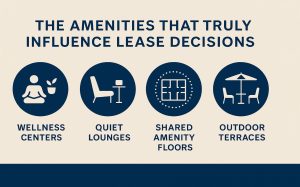
In practice, only a handful of amenities consistently influence lease decisions in New York. They are the features that make the workday meaningfully better – not the gimmicks.
Wellness and fitness options lead the list. Tenant-only gyms continue to shape deals, especially in buildings such as the Empire State Building, where the fitness center and basketball court have become major retention tools. When employees can exercise without leaving the building, stress drops and productivity rises. For many firms, this is non-negotiable.
Outdoor terraces have taken on new importance. A terrace is no longer a novelty – it’s a reset button. Sunlight, fresh air, quick breaks, informal meetings, and Friday afternoon team time all boost morale. Buildings across Hudson Yards, Penn District, and Midtown with usable terraces consistently lease faster than comparable properties without them.
Quiet lounges remain essential in the hybrid era. Open floor plans alone can’t support the privacy today’s work requires. Spaces such as soft-seating libraries, small enclosed rooms, and low-noise lounges allow employees to move between focus and collaboration with less friction.
Shared amenity floors have become one of Manhattan’s strongest differentiators. Tenants can reduce private conference rooms and leverage building-wide meeting suites, event rooms, and collaboration hubs. Modern developments – like 1 Manhattan West, One Five One, and 55 Water Street – illustrate how these shared floors expand a company’s functional footprint without increasing rentable square footage.
And then there’s HVAC. In New York’s office market, upgraded HVAC remains the most undervalued amenity. Better air quality, multi-zone temperature control, and modern filtration systems reduce complaints and drastically improve comfort. Many Financial District and Midtown towers that invested early in mechanical upgrades are now reaping the rewards in absorption and renewals.
These are the amenities that change behavior – and ultimately shape leasing outcomes.
Quiet lounges may seem simple, but they solve a problem hybrid work created. Employees need privacy, focus, and calm just as much as they need collaboration. A floorplan full of open space does not support this. A mix of enclosed rooms, quiet libraries, and soft-seating lounges does.
Shared amenity floors make a measurable difference. Tenants no longer need to allocate precious internal square footage to conference rooms that sit empty most of the day. Buildings offering reservable meeting rooms, event space, and collaboration hubs give tenants more flexibility and allow them to shrink their footprint.
The most undervalued amenity in New York: upgraded HVAC.
Comfort, air quality, filtration, and zone control influence mood, focus, and productivity more than almost any other building feature. Anyone who has worked in a freezing conference room understands this. Modern mechanical systems, which many buildings in the Financial District have begun to prioritize, are rapidly becoming non-negotiable.
And finally, hospitality-driven programming changes the emotional texture of the office. A barista bar, a concierge desk, casual seating clusters, social events, thoughtfully curated spaces – reminiscent of KPMG’s new direction – create a sense of place. Employees begin to see the office as an environment designed for them, not simply for the company
Why Amenity-Rich Buildings Lease Faster
The absorption numbers don’t lie. JLL’s latest NYC map shows that the highest-amenity buildings – new developments, modernized towers, and fully renovated Class A assets – are leasing far faster than the rest of the market.
This is the ongoing flight to quality. But lately, it has become something more. It is a flight to experience. A flight to comfort. A flight to wellbeing.
Companies know that if they choose a low-amenity environment, their employees will feel it every day – and morale will suffer. The cost of that morale drop is far greater than the cost of rent.
This is why the best buildings are disappearing first. Landlords who invested early in fitness centers, terraces, advanced HVAC, flexible spaces, and hospitality-style lounges are now seeing returns in the form of occupancy stability and tenant retention.
Cove’s 2025 analysis quantified this: buildings with well-executed amenity strategies generated roughly two and a half times the net operating income of older, non-upgraded buildings.
Real estate economics rarely produce numbers that dramatic.
Yet here, they do.
Why Amenities Often Matter More Than Rent
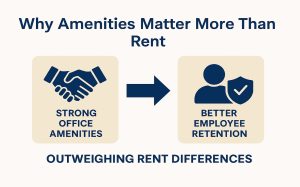
After years of touring tenants through Manhattan buildings, a clear pattern emerges. When companies compare two similar options – one with stronger natural light, a modern gym, an outdoor terrace, and a robust amenity floor, and one without – the better-amenitized building almost always wins. Even when it costs more.
The explanation is straightforward: rent is a rounding error compared to payroll. A $5 per square foot difference pales in comparison to the cost of losing an employee who earns several hundred thousand dollars a year. The physical environment influences how people feel, how they work, and how long they stay – and employers know it.
Amenities aren’t indulgences. They are performance infrastructure.
- Quiet rooms reduce burnout.
- Terraces lift mood.
- Natural light increases focus.
- Advanced HVAC removes daily discomfort.
- Fitness centers reduce stress and sick days.
- Hospitality spaces foster connection.
When an employee’s experience improves, their productivity improves – and retention follows. This is why the companies competing most aggressively for talent are choosing buildings that support wellness, flexibility, and comfort. And why those buildings are leasing faster than the broader market.
How Companies Should Evaluate Amenity Value in 2026
When touring buildings this year, the question is no longer a simple yes-or-no checklist like, “Does the building have amenities?” The real question – the one that actually influences retention and performance – is, “Do these amenities improve the daily experience of our team?” That framing changes everything. It shifts the evaluation from a superficial feature comparison to a more strategic look at what truly supports productivity, morale, and long-term engagement.
The workplaces that consistently deliver value are the ones that feel intuitive, comfortable, and balanced. They are environments where employees can move easily between focus and collaboration, between privacy and openness, between work and a moment of restoration. In practical terms, tenants should look for natural light, thoughtful layouts, quiet zones for deep concentration, on-site fitness and wellness options, outdoor access for sunlight and air, upgraded mechanical systems that prevent constant temperature battles, lounge seating that encourages casual interaction, and flexible shared spaces that give teams room to grow or contract as needed.
Workplaces built with hospitality in mind almost always outperform those designed purely for maximum efficiency. Hospitality-driven offices send a subtle but powerful message: this place was designed for people. Efficiency-driven spaces, by contrast, often feel transactional – they house employees, but they do little to inspire them.
Evaluating amenity value also means understanding how certain features can reduce the space a company needs to lease. Access to shared conference centers, reservable meeting rooms, or amenity floors can eliminate the need for large private boardrooms. On-site fitness centers reduce the need for wellness rooms inside the suite. Terrace or lounge access reduces the demand for oversized break rooms. Tools such as the Office Space Calculators can help tenants right-size their footprint by accounting for how shared amenities offset internal square footage requirements.
In 2026, the right amenities do more than elevate the workplace – they allow companies to operate smarter, leaner, and with a clearer focus on what matters: creating an environment where people actually want to work.
What All of This Really Means
KPMG’s decision to add lounges, creative rooms, and barista bars wasn’t a design exercise – it was an acknowledgment that the office must now compete with home. In Manhattan, this pressure is even sharper. Employees have options, and employers feel the consequences when the office isn’t compelling enough to support collaboration, culture, and retention.
Amenities sit at the center of that shift. They create the conditions that make work feel sustainable and engaging. Landlords understand this too, which is why so many have invested tens of millions converting dormant floors into terraces, wellness suites, conferencing centers, or hospitality-driven lounges. These aren’t aesthetic upgrades; they are business strategies meant to stabilize occupancy and strengthen renewal leverage.
Across industries – from blockchain to private equity to healthcare and creative tech – the pattern is the same. The companies that invest in workplace quality hire faster, keep people longer, and get more out of every workday. The buildings that deliver that quality outperform the broader market.
The question is no longer whether amenities pay for themselves. New York has already answered that.
The real question is whether companies can afford to operate in environments that don’t support the people they depend on.