



Smart Design: Movable Walls Can Transform Your Office
Think back to your office in 2019.

Browse top listings for commercial real estate. Get insider tips: find the right property, avoid hidden costs, and negotiate favorable lease terms.

Space needs vary by industry. A law firm’s conference room and reception requirements are different from what a tech company or a medical practice needs from a floor plan. This guide breaks down commercial space in Manhattan by tenant type, so you can go straight to what applies to your business.
Each page below covers typical layouts, buildout considerations, and current listings for that space category. For questions specific to your search, call (212) 444-2241.
Nine products, roughly, and they behave differently enough that treating them as one market is how tenants end up in the wrong building. The table below sorts them by what you are actually getting.
| Type | What you’re getting | Who it fits | Typical commitment |
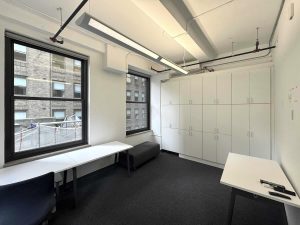
| Office space | Full or partial floors in a tower, built out with private offices, conference rooms, and a reception area | Almost any desk-based business | 3–10 years |
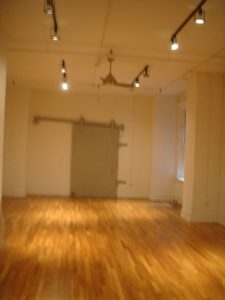
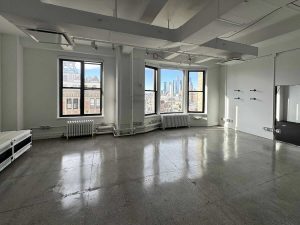
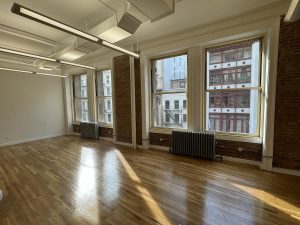
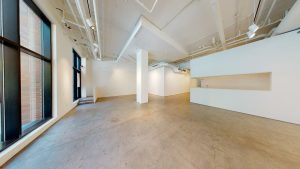
| Commercial loft | Converted factory and warehouse floors with high ceilings and open plans, concentrated in Midtown South | Creative, tech, fashion, and anyone who wants light | 5–10 years |
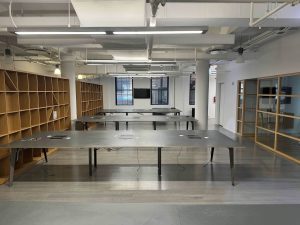
| Startup & tech | Open loft floors with room to add desks as headcount grows | Technology, SaaS, and AI companies | 3–7 years |
| Medical & healthcare | Floors with plumbing where you need it, power for equipment, and a landlord used to patient traffic | Practices, clinics, dental, behavioral health | 5–15 years |
| Financial services | Trophy and Class A towers built to impress clients and investors | Finance, private equity, hedge funds | 5–10 years |
| Law firm offices | Dense private-office layouts with real sound separation | Law firms | 5–10 years |
| Retail & storefront | Ground floor with frontage, often with a selling basement or a second floor above | Anything that lives on walk-in traffic | 5–15 years |
| Sublet space | Someone else’s space on someone else’s terms, usually below market and already built out | Cost-sensitive tenants, short time horizons | 1–5 years |
| Coworking & flex | A desk, a private room, or a small suite on a license instead of a lease | Teams under 20, satellite offices, uncertain headcount | Month–2 years |
Updated Q2 2026, per Cushman & Wakefield’s Manhattan Office MarketBeat report.
Asking rent is only part of the cost of occupancy. Tenant improvement allowances, free rent concessions, and operating expense pass-throughs all affect what you actually pay, often by more than the rent itself. See how concessions and occupancy costs change your real number.


These factors shape how a space performs for your business long after move-in, not just how it looks on a tour.
Most Manhattan commercial space is not move-in ready, and how it’s delivered shapes both your timeline and your budget.
Landlords often contribute toward buildout costs through a TI allowance, and larger allowances typically come with longer lease terms. Our guides to build-out agreements and work letters and who typically pays for the build-out cover how that money actually gets negotiated and spent.
It usually comes down to your industry’s layout requirements and your clients’ expectations. A law firm needs private offices and confidential meeting space, a tech company wants open, flexible loft space, and a medical practice needs a layout built around patient flow. Start with the use-type page that matches your industry above, it covers the specifics for that category.
Traditional office space is typically full-floor or partial-floor space in a Class A or B tower, built out with private offices and a reception area. Loft space is converted industrial or manufacturing stock, usually in Midtown South, with high ceilings, exposed elements, and open floor plans. Coworking is shared, flexible space with month-to-month or short-term terms, better suited to very small teams than to an established, growing business.
Generally, yes. Most tenants cover property tax increases over a base year as part of their lease. Some landlords will let you buy out this obligation in exchange for higher rent escalations.
It depends heavily on submarket and building class. Manhattan’s average asking rent was $72.83/SF in Q2 2026, with Class A running $84.79/SF (Cushman & Wakefield). See the rent breakdown by submarket above, or the specific use-type page for your industry for more targeted figures.
Most well-priced space, especially in older or off-market buildings, never reaches public listing sites. A tenant representation broker works only for you, with no building of their own to fill, and the landlord pays the commission, so representation costs your business nothing.
A prebuilt or turnkey suite can be ready in a few weeks. A full custom build-out typically takes several months from signed lease to move-in. Start your search early if your layout needs significant construction.
Accessibility Tools