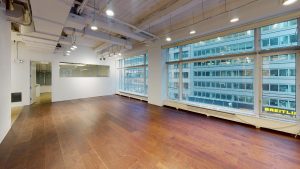
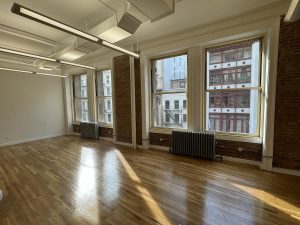
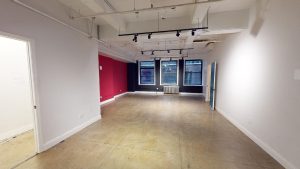
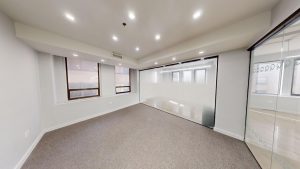
Showroom Space in New York City
Find the right property, avoid hidden costs, and negotiate favorable terms.

Find the right property, avoid hidden costs, and negotiate favorable terms.
New York sells to the world out of its showrooms, and a showroom is a different animal from a store or a plain office floor. It’s a room built to put your line in front of professional buyers, and where you plant it decides who walks through the door. So forget the idea of one tidy citywide price. What you’ll actually pay comes down to three calls: which district you pick, what kind of space you take, and how hard you’re willing to push at the table.
This page walks you through all three, plus the buildings where the trade really lives and how a showroom lease actually works once you’re in it. Two things worth knowing before you read another word. In New York, the landlord pays the broker, so putting an expert in your corner costs you nothing. And most of the good showroom space never shows up on the public search sites, which is exactly why I pair a street-level map of the market with the building knowledge no data feed can hand you. Want the wider view across every use? Start with my rundown of office space for rent in New York City.
A tenant rep works for you and nobody else, with no building of our own to fill. Out of the hundreds of showroom floors floating around at any given moment, that means the handful you go see are the ones actually worth your afternoon.
The market you’re walking into is the tightest it’s been in years, and you should know that going in. Manhattan tenants leased about 22.8 million square feet in the first half of 2026, the busiest first half since 2002, the average asking rent climbed to $78.03/SF, its highest since July 2020, and availability slipped to 13% (Colliers, Q2 2026). For you, it boils down to one thing: the well-lit, freight-served value floors that showrooms actually want are getting snapped up faster than they were a year ago.
Sources: Colliers Q2 2026 Manhattan Office Market Report and Savills Q2 2026 report (both released early July 2026), plus reporting by Commercial Observer and The Real Deal (July 2026). Refresh this section quarterly; it is the one dated market narrative on the page.
The trade lives in a handful of districts, and each one is built around a category and a specific set of buildings. Pick the district first, because it sets your rent, your buyer traffic, and the market weeks that fill your floor. The ranges below are directional, just enough to get you oriented; current asking rents by market live on the neighborhood pages linked in each row.
| District | What Shows There | Anchor Buildings | Typical Asking Rent | Best For |
| Garment District | Apparel, footwear, and accessory wholesale showrooms | 1400 Broadway, 1407 Broadway, 1412 Broadway, 530 & 550 Seventh Ave | $42 to $65/SF (upper floors) | Fashion brands, wholesalers, emerging designers |
| NoMad & Madison Square | Gift, tabletop, housewares, home textiles | 41 Madison Ave, 230 Fifth Ave | $50 to $75/SF | Gift, home, tabletop, and seasonal brands |
| Murray Hill & Lower Fifth | Accessory, jewelry, lingerie, and furniture | 320 & 330 Fifth Ave, 180 / 183 / 185 Madison, 261 Fifth Ave | $45 to $70/SF | Accessory, jewelry, lingerie, and furniture lines |
| Midtown East & Plaza District | Luxury interior design, furniture, fabric, and lighting (to the trade) | D&D Building (979 Third Ave), New York Design Center (200 Lexington) | $70 to $110/SF (D&D); $55 to $85/SF (200 Lex) | High-end furniture, textile, lighting, and kitchen/bath brands |
| SoHo & NoHo | Design, furniture, contemporary fashion, direct-to-consumer | Cast-iron lofts along Broadway, Greene, and Wooster | $75 to $150/SF (upper); ground floor higher | Design brands, experiential and DTC labels, contemporary fashion |
| Chelsea | Art, home, and lighting showrooms near the gallery district | Loft and gallery buildings in the West 20s | $60 to $95/SF | Art- and design-adjacent, home, and lighting brands |
What makes showroom leasing in New York its own animal, and it really is, is the showroom building. You’ve got companies in the same trade stacked under one roof, all selling to the same professional buyers. Think 41 Madison for tabletop and housewares, 230 Fifth Avenue for home and gift, the New York Design Center for furniture and design, the D&D Building for luxury interiors. Each one packs a category into a single address so buyers can shop dozens of lines in an afternoon. Tenants in these buildings sell to each other constantly, and a buyer walking the building during market week strolls right past your door whether they came to see you or not. That’s the magic, and it’s usually the biggest reason to pick one building over another. It beats a slightly cheaper rent in a building no buyer ever bothers to visit.
A lot of these buildings are to the trade, which means they serve professional designers, retailers, and wholesale buyers, not the walk-in public. If your model lives on consumers wandering in off the sidewalk, you’re really shopping for retail or a ground-floor space, and that’s a different product at a different price.
Showroom demand runs on a calendar, and if you ignore it, you’ll pay for it. Professional buyers fly into New York for a few concentrated weeks a year, and a showroom near the right show, in the right building, is packed when it counts and dead quiet the rest of the season. Knowing the calendar drives two decisions: which district you land in, and whether you need a permanent floor or just something for the season.
| Category | Key Trade Shows & Markets | Where | Typical Timing (2026) |
| Fashion & apparel | Coterie and MAGIC New York; New York Fashion Week | Javits Center; citywide | February and September (Coterie/MAGIC, Sept 9 to 11, 2026) |
| Gift, home & tabletop | NY NOW; New York Tabletop Market | Javits Center; 41 Madison Ave | Winter (Jan/Feb) and summer (early August); tabletop spring and fall |
| Interior design & furniture | ICFF and NYCxDESIGN (New York Design Week); D&D Building markets | Javits Center; citywide showrooms; 979 Third Ave | ICFF May 17 to 19, 2026; D&D Fall Market Oct 8, 2026 |
A few dates worth building your whole search around. Fashion buyers come for Coterie and MAGIC at the Javits Center every February and September, which is exactly why the Garment District towers fill up and empty out on that rhythm. The gift and home crowd runs on NY NOW, held at Javits twice a year with a summer edition in early August, plus the seasonal tabletop markets right at 41 Madison. The design trade piles into ICFF and NYCxDESIGN in mid-May, when showrooms across SoHo, NoMad, Flatiron, and the D&D Building throw open their doors for New York Design Week. If all you need is a floor for the selling season, a market-week rental or a sublease gets you a built, ready-to-go showroom without signing your life away.
Trade-show dates confirmed from official show sources (June 2026) and are subject to change; verify before publishing and refresh annually. Coterie/MAGIC and NY NOW run at the Jacob K. Javits Convention Center; ICFF anchors NYCxDESIGN across citywide showrooms.
Before you start comparing floors, get the class system straight, because it drives price, perception, and how the space feels to a buyer standing in the middle of it. Showrooms bend these letters harder than any other use out there, so treat the class as a starting filter, not a verdict.
| Class | What It Means | Rough Rent Position | Typical Showroom Homes |
| Trophy | The newest towers and flagship addresses, hotel-grade service, the addresses that make a brand statement. | Top of the market, well above Class A | Fifth Avenue and SoHo flagship showrooms, marquee brand spaces |
| Class A | Modern or well-renovated buildings, staffed lobbies, strong systems, and dependable freight. | Premium, below trophy | The purpose-built showroom buildings, upper floors at 41 Madison and 200 Lex |
| Class B | Solid, functional, often prewar buildings with good light and ceiling height. | Mid-market | Garment District fashion towers, Flatiron and NoMad lofts |
| Class C | Older, no-frills, often converted loft and manufacturing stock. The deepest value in the city. | The value tier | Cast-iron SoHo lofts, older Garment District floors |
One warning on those letters, and it’s a big one: the A, B, and C system is just a rough grade of a building’s age, systems, and prestige, and it kind of falls apart in showroom markets. A Class C cast-iron loft in SoHo with twelve-foot ceilings and north light will flat-out beat a bland Class A tower floor for a furniture or fashion brand, because your buyer is looking at your product and the way the light hits it, not the lobby downstairs. My explainer on what makes a building Class A, B, or C breaks down the distinctions, but for a showroom, the loft qualities usually matter a lot more than the grade on paper.
Implementation note: place between the building-classes section and the space-requirements section, matching the Office Space and Law Firm pages. Ranges are directional and organized by format, because a showroom’s price is driven by format and district more than by class alone. District-level rents live on the neighborhood pages.
What you pay comes down to format and district more than anything else, so I’ve organized the ranges below by the kind of showroom you’re actually shopping for. Most of the trade leases upper-floor wholesale space, which rents well below the ground-floor and street-visible space in the very same building. Treat these as ballpark numbers to get you oriented before you tour, not a quote on a specific floor.
| Showroom Format | Typical Asking Rent ($/SF/year) | Typical Available Space | Best Suited For |
| Upper-floor wholesale showroom (Garment District, value floors) | $40 to $65 | Suites and partial floors, 500 to 5,000 SF | Fashion, apparel, and emerging brands |
| Showroom-building suite (41 Madison, 230 Fifth, 200 Lex) | $50 to $85 | Built showrooms, 800 to 6,000 SF | Gift, home, tabletop, and furniture, to the trade |
| Premium design showroom (D&D Building, SoHo lofts) | $75 to $150+ | Full and partial floors, 1,500 to 10,000 SF | Luxury furniture, fabric, lighting, and design |
| Ground-floor / flagship showroom (SoHo, Fifth Ave, Flatiron) | $150 to $500+ | Street-level, 1,000 to 8,000 SF | Experiential and DTC brands wanting street visibility |
| Temporary / market-week showroom (all districts) | By day, week, or month | Pop-up and short-term, 300 to 5,000 SF | Seasonal selling and testing a market |
For current asking rents by market, check the neighborhood pages: Midtown Manhattan, Midtown South, and Downtown Manhattan. Best bang for your buck in a real working district? The Garment District, where wholesale fashion floors with genuine light and freight run in the $40s to low $60s and put you a few blocks from the Javits shows. Top of the market is a ground-floor SoHo or Fifth Avenue flagship, where you’re paying a retail price for street visibility.
A showroom has to pull off things a normal office never worries about. It shows product to buyers who make up their minds in minutes, it moves inventory and samples in and out all season, and it has to look right under real light. Sort these out before you fall in love with a view.
| Element | Why It Matters for a Showroom | Planning Note |
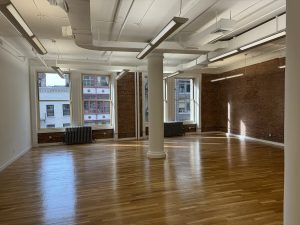
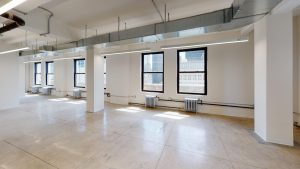
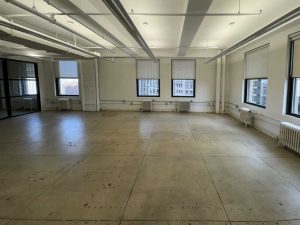
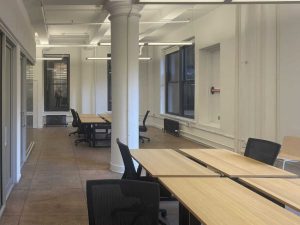
| Natural light and ceiling height | Buyers judge color, texture, and finish by how they read in the room. Height and light are the “wow” that makes a line look considered. | Favor upper floors with big windows and open, column-light plates. Cast-iron and prewar loft floors deliver this better than most tower space. |
| Freight elevator and loading | You bring product in and out constantly, and never through the passenger lobby. | Confirm a working freight elevator and a loading dock or curb plan, plus building move-in hours. This is non-negotiable for furniture and bulky goods. |
| Floor load and open layout | Furniture, fixtures, and heavy displays need a floor that can carry them and a plan that can flex. | Check the rated floor load for heavy inventory, and look for a rectangular, open plate you can re-merchandise by season. |
| Back-of-house storage | A clean selling floor needs stock and samples out of sight. | Plan a stockroom, ideally at the back, so you can replenish and stage without cluttering the display area. |
| Office and work area | Sales, marketing, and order-writing happen next to the floor during market. | Carve out a small office or back area near the display space for staff, order desks, and buyer paperwork. |
| Climate control and lighting power | Display lighting and full market-week traffic push HVAC and electrical loads. | Confirm after-hours HVAC terms and enough electrical capacity for track and accent lighting. Lighting is the biggest utility line a showroom carries. |
| Street visibility vs. upper floor | Wholesale buyers come by appointment; consumers need a window. | Pay for ground-floor visibility only if your buyer walks in off the street. Most wholesale showrooms do fine on upper floors at a fraction of the rent. |
| Buyer reception and access | The entrance is your first impression and your sample security. | Look for an attended lobby, a clean elevator landing, and a reception point at the showroom door. Confirm full ADA access for buyers arriving from across the region. |
Before you tour a single floor, figure out what kind of space you’re actually after. A suite in a showroom building, a direct loft lease, a ground-floor flagship, a market-week rental, a shared showroom, a sublease: that’s six different products with six different commitments and six different price tags. Most brands have no idea they’ve got this many options on the table.
| Type | Best For | Typical Commitment | Trade-Offs | Explore |
| Showroom-building suite | Brands that want to sit inside their trade’s buyer traffic. | 3 to 7 years | Built-in buyers and market weeks, less control over the building. | |
| Direct loft lease | Brands that want a custom, light-filled floor of their own. | 5 to 10 years | Best light, ceiling height, and control; a longer commitment. | Loft |
| Ground-floor / flagship | Experiential and DTC brands that need street visibility. | 5 to 10 years | Retail-level visibility, at a retail-level price. | Retail |
| Market-week / pop-up | Seasonal selling and testing a district. | Days to a few months | Fast and flexible, higher per-day cost, no permanence. | |
| Shared / flex showroom | New and small brands and satellite lines. | Month to 2 years | Low commitment and cost, shared identity and space. | Coworking |
| Sublease | Cost-sensitive brands and shorter horizons. | 1 to 5 years | Often below market and already built, terms set by the existing tenant. | Sublets |
Two quick notes on flexibility. If you’re scaling a small brand out of shared space and into your own floor, my guide to transitioning from coworking to an office is your playbook, and it works just as well for a showroom. And if a sublease is looking good, read up on sublease and assignment clauses before you sign onto someone else’s deal, because you’re inheriting every term they negotiated, the good and the ugly.
Leasing a showroom isn’t like renting an apartment, and it’s not quite a plain office deal either. The best floors sit inside showroom buildings that almost never advertise openings, the market-week calendar should be driving your timing, and a tenant rep who works only for you, and gets paid by the landlord, levels the whole playing field. What follows is the path from “we need a showroom” to “we’re open for market.”
The face rent someone first quotes you is almost never what you actually end up paying. Net effective rent, once you fold in the free months and any improvement money, can land well under the asking number. The smart brands negotiate the whole package, not just the headline rate.
Concessions are still tenant-favorable across much of Manhattan, and they’re fattest in older Class B and value buildings where landlords are fighting hardest to fill space. Since a showroom build-out is usually lighter than a hard-walled office, the allowance often covers most of a clean fit-out, and the free rent is where a ton of the real value hides. What the packages tend to look like right now:
| District Tier | Free Rent | Improvement Allowance | Notes |
| Premium showroom building / flagship | 6 to 10 months | $40 to $90/SF | Tightest terms, because the marquee buildings and street-level space stay in demand. |
| Standard showroom building / Class A floor | 8 to 14 months | $40 to $75/SF | The sweet spot for most brands, a real building at real economics. |
| Value floor / Garment District / loft | 10 to 16 months | $25 to $60/SF | Real leverage on a longer term, and many floors come partly built. |
Two ideas do most of the heavy lifting here. First, the value lives in the free rent and the improvement allowance, not the asking rate, which my look at rising landlord concessions gets into. Second, those allowances are absolutely negotiable, and my primer on tenant improvement allowances walks through the common structures and how to bargain for lighting and finishes.
Typical-market figures based on recent Metro Manhattan deals (internal research, July 2026). Final terms depend on credit, lease length, building, and negotiation.
Established brands often sign 5 to 10 years to justify a real build-out and lock down a spot inside their trade’s building, while newer and seasonal lines lean toward 3 years, a sublease, or a market-week rental to stay loose. Longer terms pull richer concessions and hold your rent steady; shorter terms keep you nimble. My breakdown of 3-year, 5-year, or 10-year lease terms lays out which one fits which kind of brand.
The face rent is rarely the whole bill. Budget for the rest of it before you sign anything:
A short list of buildings does most of the work in New York’s showroom trade, and each one is built around a category and its own set of buyers. Picking the right building matters as much as picking the right floor, because the building is what actually puts buyers at your door. The anchors below are where the trade really sits.
| Building | Trade Focus | What to Know | Rough Position |
| 41 Madison Ave (Forty One Madison) | Tabletop, housewares, and gift | A full-block Flatiron tower, long the home of the tabletop trade, with roughly 90 permanent showrooms and 200-plus brands. Hosts the seasonal New York Tabletop Market. | Midtown South, mid-market showroom |
| 230 Fifth Ave (New York MarketCenter) | Home textiles, gift, tabletop, and furniture | The former “Lighting Building,” now a wholesale showroom building with more than 200 showrooms, on Fifth Avenue at Madison Square Park. | Midtown South, mid-market showroom |
| New York Design Center (200 Lexington Ave) | Furniture, fabric, lighting, and kitchen/bath | The country’s oldest furniture and design building, built in 1926, with about 100 to-the-trade showrooms across 16 floors, plus The Gallery antiques and a top-floor cafe. In Murray Hill. | Murray Hill, premium to the trade |
| D&D Building (979 Third Ave) | Luxury interior design, furniture, and textiles | Eighteen floors and roughly 570,000 SF of luxury showrooms, the premier to-the-trade design destination in the U.S., drawing hundreds of thousands of designers a year. In Midtown East near the Plaza District. | Midtown East / Plaza, top of the design market |
| Garment District fashion towers | Apparel, footwear, and accessories | The Broadway and Seventh Avenue towers (1400, 1407, and 1412 Broadway, 530 and 550 Seventh Ave) where fashion wholesale showrooms cluster, steps from the Javits shows. | Value Midtown |
| SoHo cast-iron lofts | Design, furniture, and contemporary fashion | Ceiling height, light, and the block. The home of experiential and DTC brand showrooms that want a retail-style experience. | Premium Midtown South |
It depends on district and format way more than any single citywide number. Wholesale fashion floors in the Garment District run roughly $40 to $65/SF, gift and home suites at 41 Madison and 230 Fifth run about $50 to $85/SF, and premium design showrooms in the D&D Building or a SoHo loft can hit $150/SF and up. Ground-floor showrooms with street visibility get priced like retail and cost several times what an upper floor does. Manhattan’s overall office asking rent sat at $78.03/SF in Q2 2026 (Colliers), which is a handy anchor but not what most showroom floors actually cost.
It’s a building where companies in the same trade lease space and sell to the same professional buyers. Places like 41 Madison for tabletop and housewares, 230 Fifth for home and gift, the New York Design Center for furniture and design, and the D&D Building for luxury interiors each pack a whole category under one roof. Buyers hit one address and shop dozens of lines in an afternoon, and the tenants sell to each other all the time. Clustering with your trade is usually the single biggest reason to pick one building over another.
The Garment District, still the fashion capital of the country, where apparel, footwear, and accessory showrooms pile into the Broadway and Seventh Avenue towers between roughly 34th and 40th Streets. The pull is the buyer network, walking-distance access to the Javits Center and Coterie, and rents that look like a bargain next to SoHo or Fifth Avenue. Contemporary and direct-to-consumer brands chasing a retail-style vibe often head to SoHo instead.
Around Madison Square Park and the Flatiron District, anchored by two purpose-built showroom buildings. 41 Madison Avenue is home base for the tabletop and housewares trade, with roughly 90 showrooms, and 230 Fifth Avenue, the New York MarketCenter, carries more than 200 showrooms across home textiles, gift, kitchen, and furniture. Both pack in buyers during NY NOW and the seasonal tabletop markets.
The two anchors are the New York Design Center at 200 Lexington in Murray Hill, the oldest furniture and design building in the country, and the D&D Building at 979 Third Avenue in Midtown East, the premier to-the-trade design destination with more than 100 luxury showrooms across 18 floors. SoHo and NoMad carry strong clusters of contemporary furniture, lighting, and design too, and they come alive during ICFF and NYCxDESIGN in May.
Start with natural light and ceiling height, because buyers judge your product by how it shows in the room. Then confirm freight elevator access and a loading plan for moving inventory and samples, enough floor load if you sell furniture, and real back-of-house storage so the selling floor stays clean. A small office or back area, climate control that actually works, and a buyer-facing reception round out a working showroom.
Most wholesale showrooms sit on upper floors and do just fine, because their buyers are pros who come by appointment or during market weeks, not walk-ins off the street. Street visibility only matters when you want a retail-style experience, sell direct to consumers, or use the showroom as a brand statement, which you see all over SoHo and along Fifth Avenue. Ground floors get priced like retail, so pay up for visibility only if your buyer actually needs to spot you from the sidewalk.
Absolutely. Temporary and market-week showrooms are all over the place, rentable by the day, week, or month in every district, so you can sell during Coterie, NY NOW, or Design Week without signing a long lease. Subleasing an existing showroom is another way to grab a built, market-ready floor for a shorter run. Just read the terms you’re inheriting before you sign onto someone else’s lease.
Budget for electricity, which runs higher in a showroom because display lighting pulls real power, plus commercial liability and inventory insurance, a security deposit, and yearly rent escalations. The build-out is usually lighter than a law firm or medical office, but custom lighting, millwork, and finishes still add up fast. A good broker prices the whole package for you, not just the face rent.
Most of the best floors, and the quiet openings inside the marquee showroom buildings, never show up on public listing sites, so a tenant rep is how you get to see the full market. A broker also knows which buildings have space in your category, which landlords are dealing, and how the market-week calendar should shape your timing. And since the landlord pays the commission, representation costs your brand effectively nothing.













Accessibility Tools