



400+
Leases Closed Since 2004
4.9 ★★★★★
$0
Broker Fee — the Landlord Pays
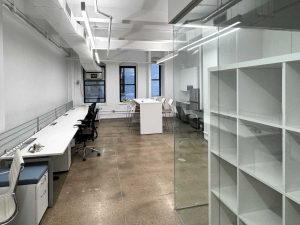
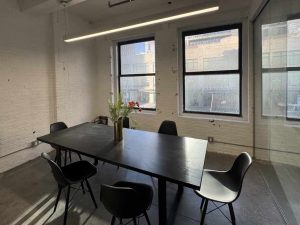
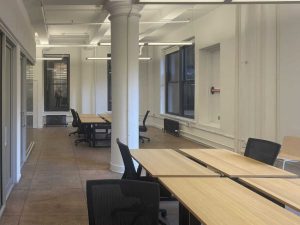
NYC office: white desks, orange chairs, glass-walled meeting room.

Commercial Space for Lease in Manhattan

Space needs vary by industry. A law firm’s conference room and reception requirements are different from what a tech company or a medical practice needs from a floor plan. This guide breaks down commercial space in Manhattan by tenant type, so you can go straight to what applies to your business.

Each page below covers typical layouts, buildout considerations, and current listings for that space category. For questions specific to your search, call (212) 444-2241.

Explore Commercial Space by Use Type

Nine products, roughly, and they behave differently enough that treating them as one market is how tenants end up in the wrong building. The table below sorts them by what you are actually getting.

TypeWhat you’re gettingWho it fitsTypical commitment
Office spaceFull or partial floors in a tower, built out with private offices, conference rooms, and a reception areaAlmost any desk-based business3–10 years
Commercial loftConverted factory and warehouse floors with high ceilings and open plans, concentrated in Midtown SouthCreative, tech, fashion, and anyone who wants light5–10 years
Startup & techOpen loft floors with room to add desks as headcount growsTechnology, SaaS, and AI companies3–7 years
Medical & healthcareFloors with plumbing where you need it, power for equipment, and a landlord used to patient trafficPractices, clinics, dental, behavioral health5–15 years
Financial servicesTrophy and Class A towers built to impress clients and investorsFinance, private equity, hedge funds5–10 years
Law firm officesDense private-office layouts with real sound separationLaw firms5–10 years
Retail & storefrontGround floor with frontage, often with a selling basement or a second floor aboveAnything that lives on walk-in traffic5–15 years
Sublet spaceSomeone else’s space on someone else’s terms, usually below market and already built outCost-sensitive tenants, short time horizons1–5 years
Coworking & flexA desk, a private room, or a small suite on a license instead of a leaseTeams under 20, satellite offices, uncertain headcountMonth–2 years
Commercial space types in Manhattan, by product, fit, and typical lease commitment. Metro Manhattan internal research, July 2026.

Average Office Space Asking Rents in Manhattan

Updated Q2 2026, per Cushman & Wakefield’s Manhattan Office MarketBeat report.

  • Manhattan overall: $72.83/SF average asking rent; $84.79/SF for Class A
  • Midtown: $76.98/SF average asking rent; $88.50/SF for Class A
  • Midtown South: $81.14/SF average asking rent; $104.50/SF for Class A
  • Downtown: $56.66/SF average asking rent; $63.60/SF for Class A

Asking rent is only part of the cost of occupancy. Tenant improvement allowances, free rent concessions, and operating expense pass-throughs all affect what you actually pay, often by more than the rent itself. See how concessions and occupancy costs change your real number.

What Kind of Commercial Space Do You Need?

Four business people meeting in bright office with glass walls.

Office Space

Most Manhattan tenants land here. If your business doesn’t need plumbing, freight access, or a display floor, a traditional office in a Class A or B tower is the default choice, and it’s where the deepest inventory and the most flexibility on lease terms sit.
Explore Office Space

Commercial Loft

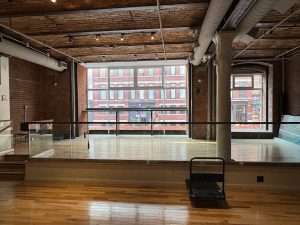
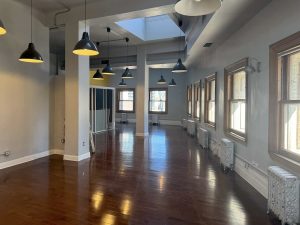
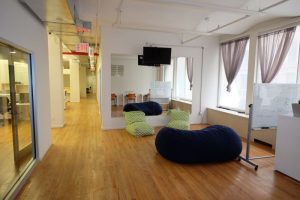
Converted factory and warehouse floors with high ceilings, exposed brick or timber, and big windows, concentrated in Midtown South. No single industry claims this one, but the mix leans creative, tech, and fashion, and the class-letter system barely applies here, a well-located Class B loft routinely out-earns a Class A tower.
Explore Commercial Loft

Tech Companies

Tech companies favor open, creative-style space in loft-like buildings over traditional offices. Many also look for startup-friendly buildings with room to grow, concentrated in Midtown South’s “Silicon Alley,” through Chelsea, Flatiron, NoMad, and SoHo.
Browse Startup & Tech Office Space
Nurse, hospital employee in a healthcare, wellness clinic

Medical Practices

Medical practices need plumbing and water access, something most office space doesn’t have, along with a landlord tolerant of heavy patient foot traffic. Many prefer ground-floor space near hospitals like Cornell, Mount Sinai, and Lenox Hill, or in residential pockets such as the Upper East Side, Upper West Side, and Chelsea.
See Medical Office Space Listings
Young woman trading stocks in office

Financial Services Firms

Image matters for financial firms. Offices need to impress investors and attract competitive talent, which is why many gravitate toward modern Class A towers in Hudson Yards, the Plaza District, and One Vanderbilt at Grand Central.
Explore Financial Services Office Space
Side view portrait of elegant mature woman as female boss working with reviewing lease at desk.

Law Firms

Law firms need soundproof private offices for confidential work, open space for paralegals and support staff, and floor plans dense enough to fit many offices into less square footage. Big Law concentrates along Park Avenue and Sixth Avenue, litigation firms favor the Financial District for court access, and boutique practices are landing in Midtown South lofts.
See Law Firm Office Space Options

Retail Space

Retail leasing is highly competitive in Manhattan, with low vacancy and landlords often fielding multiple offers on the same space. Tenants typically fund their own buildout in exchange for free rent, and asking rents vary widely, running far higher on avenues than on side streets. Restaurant space is scarce and turns over quickly when it does become available.
Explore Retail Space
Modern office

Accounting Firms

Accountants are cost-conscious and value-driven, comfortable in a Class A, B, or C building with practical, no-frills finishes over a trophy build-out. Many locate in the Financial District’s Class B stock along Broadway or in Class B buildings near Penn Station.
Explore Accounting Firm Office Space
Productive open plan office space

Advertising Agencies

Prefer creative loft spaces with open layouts, high ceilings, and natural light. Concentrate in the Flatiron District, NoMad, and SoHo, the loft corridors that are former manufacturing neighborhoods and with a large inventory of loft/industrial style office space.
Explore Advertising Agency Office Space
Art dealer in a gallery space

Gallery Space

Galleries favor large, open space with high ceilings, strong display potential, and a freight elevator sized for moving large works and sculptures. West Chelsea’s Art Gallery District is currently in high demand, with the Lower East Side gaining ground, while Madison Avenue, SoHo, and Williamsburg have faded as former hubs.
Explore Gallery Space
Opulent NYC clothing boutique showcases high-end fashion and accessories."

Showroom Space

Showroom isn’t one catchall category. Fashion, jewelry, accessory, and lingerie showrooms are each distinct, and businesses in the same trade often cluster in the same building. The Garment District is the classic example, with more showrooms around Madison Avenue in the 30s and in dedicated showroom buildings.
Explore Showroom Space

Common Tenant Considerations

These factors shape how a space performs for your business long after move-in, not just how it looks on a tour.

  • Location and proximity to clients (plan for client travel time)
  • Expansion potential within the building (consider how likely you are to outgrow your space before the lease ends)
  • Access to public transportation (know which major transit hubs matter most for your team and clients, run it through the Commute Calculator )
  • Building amenities, such as gyms, lobbies, and cafes (more highly amenitized buildings typically command higher base rent, so weigh which amenities your team actually needs)
  • Telecom and internet access, such as fiber, VoIP, and 5G (ask which providers serve the building)
  • Parking availability (nearby parking services or parking within the building)
  • Security and concierge services (decide whether you need staffed turnstiles, informal sign-in, or minimal security)
  • Image, visibility, and branding (you can lease in landmark buildings like One World Trade Center, the Empire State Building, One Vanderbilt, and Hudson Yards, among dozens of other well-known addresses, see our list of top Class A buildings )
  • Buildout flexibility and landlord incentives (tell your broker about any special requirements, finishes, or needs like 24/7 HVAC before you start touring, our guide to build-out agreements and work letters covers how that gets negotiated)
  • Total occupancy costs (set a clear budget with your broker before you begin the search, see the full list of costs beyond rent)

Understanding Buildouts in NYC Commercial Real Estate

Most Manhattan commercial space is not move-in ready, and how it’s delivered shapes both your timeline and your budget.

How Leased Space Is Delivered

  • White Box: Completely unfinished. Walls, floors, and systems still need to be built.
  • Prebuilt: Built out by the landlord with a common layout ready to go.
  • Second/Third Generation: Previously occupied space that needs cosmetic or layout changes.
  • Custom Built: Constructed by the landlord to your specific layout and finishes, typically as part of a larger, longer-term lease.

Tenant Improvement (TI) Allowance

Landlords often contribute toward buildout costs through a TI allowance, and larger allowances typically come with longer lease terms. Our guides to build-out agreements and work letters and who typically pays for the build-out cover how that money actually gets negotiated and spent.

Frequently Asked Questions About Commercial Space in Manhattan

  • How do I know what type of commercial space my business needs?

    It usually comes down to your industry’s layout requirements and your clients’ expectations. A law firm needs private offices and confidential meeting space, a tech company wants open, flexible loft space, and a medical practice needs a layout built around patient flow. Start with the use-type page that matches your industry above, it covers the specifics for that category.

  • What’s the difference between office space, loft space, and coworking space?

    Traditional office space is typically full-floor or partial-floor space in a Class A or B tower, built out with private offices and a reception area. Loft space is converted industrial or manufacturing stock, usually in Midtown South, with high ceilings, exposed elements, and open floor plans. Coworking is shared, flexible space with month-to-month or short-term terms, better suited to very small teams than to an established, growing business.

  • Do commercial tenants in NYC pay property taxes?

    Generally, yes. Most tenants cover property tax increases over a base year as part of their lease. Some landlords will let you buy out this obligation in exchange for higher rent escalations.

  • How much does commercial space cost per square foot in Manhattan?

    It depends heavily on submarket and building class. Manhattan’s average asking rent was $72.83/SF in Q2 2026, with Class A running $84.79/SF (Cushman & Wakefield). See the rent breakdown by submarket above, or the specific use-type page for your industry for more targeted figures.

  • Do I need a broker to find commercial space, and does it cost anything?

    Most well-priced space, especially in older or off-market buildings, never reaches public listing sites. A tenant representation broker works only for you, with no building of their own to fill, and the landlord pays the commission, so representation costs your business nothing.

  • How long does it take to find and move into commercial space?

    A prebuilt or turnkey suite can be ready in a few weeks. A full custom build-out typically takes several months from signed lease to move-in. Start your search early if your layout needs significant construction.