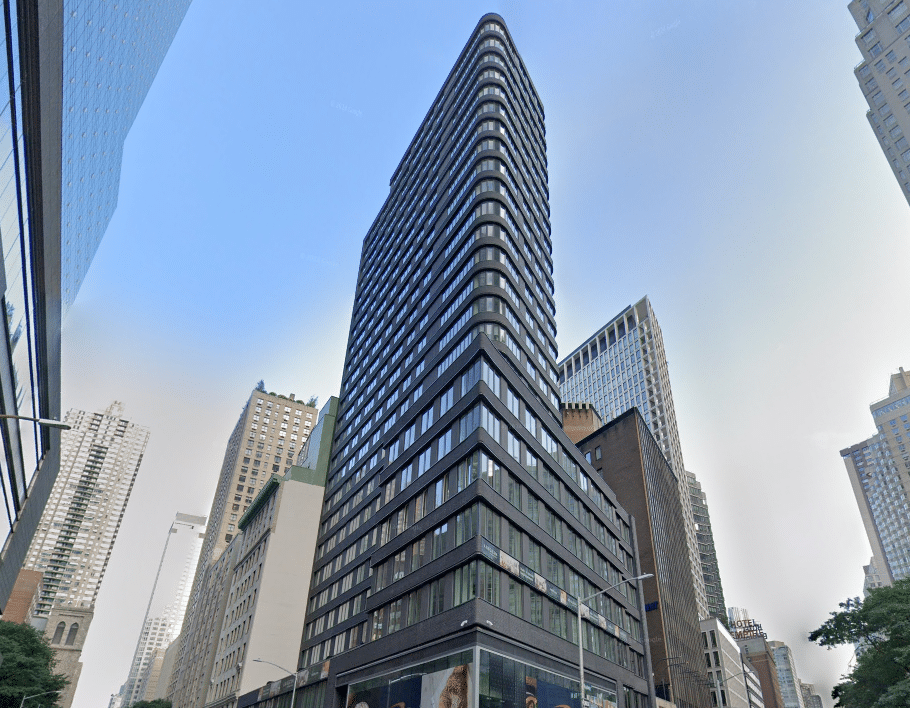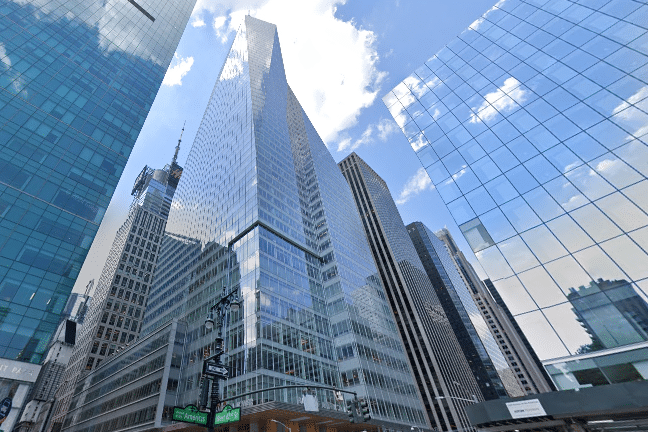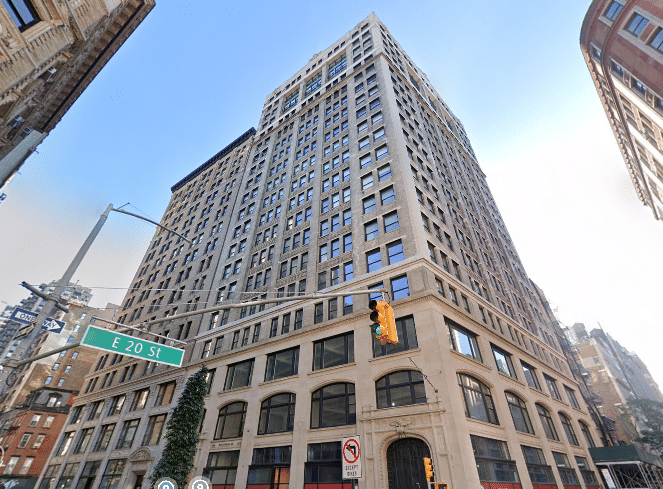

During the pandemic, when Manhattan office rents were sliding, I toured a lot of empty buildings. The lobbies were quiet, the guards were glad to see anybody, and the elevator was always waiting.
Every so often, though, the doors opened on something I didn’t expect. An owner had turned a whole floor into an amenity center, with a conference room you could book, a lounge, and sometimes a roof deck.
Those owners had redone the hallways and the lobby, too, at a time when most of their neighbors were just trying to hang on. It impressed me then, it impresses me now, and I’ve been thinking about those floors lately, because the cheap money that paid for them is gone.
Last month I told you about my friend who climbed nine flights of stairs for eleven weeks because her landlord couldn’t afford a part for an elevator. Most owners are nothing like hers. However, whether yours can keep spending on the building comes down to a race between what his loan costs and what his building earns.
Two Forces Pulling in Opposite Directions

I think two big forces are shaping this market, and they pull in opposite directions. The first is the cost of borrowing, or interest rates, which keeps pushing an owner’s expenses up. The second is rent, which has come roaring back in Flatiron, SoHo, and around Grand Central, where some buildings now top their 2019 rents.
Owners collecting those rents can carry a pricier loan, and the rest have to work harder. Where a building sits has a lot to do with which force is winning.
The First Force: Rates
Start with rates, because that’s the force tenants never see. You’ll never meet your landlord’s lender on a tour, but it has a say in your deal. Right now it’s charging about twice what it used to.
Your Landlord Has a Lease, Too

A commercial mortgage usually runs five to ten years before the whole balance comes due. Think of it as your landlord’s own lease coming up for renewal, except he’s renewing with a bank, and the bank sets the rent.
For a lot of owners, that renewal is now. Marcus & Millichap counts $865 billion in commercial real estate debt coming due nationwide this year, and plenty of those loans started at 3% to 4%. The same money costs 6% to 7% today, so the rent on his money just about doubled.
The Fed didn’t do him any favors, either. It raised rates in September 2026 for the first time since July 2023, then held steady in October 2026. And lenders still haven’t forgiven office for 2020. CRED iQ found office loans carried the widest spreads of the four property types it tracked in early 2026.
What 7% Does to Manhattan Office Rents

Let me show you what that renewal looks like in real money. Say your landlord borrowed $100 million at 4%, so he pays $4 million a year. Now he renews at 7%, and the same building with the same tenants costs him $7 million a year.
That’s an extra $12 a foot every year in a 250,000-square-foot building, before anyone changes a light bulb. And because banks lend less at higher rates, some owners have to write a check to refinance.
Where Manhattan office rents are strong, a few good leases cover that $12 and he barely notices. Where they’re still climbing back, that $12 comes out of the pot that pays for your elevator and your build-out.
Before Anybody Panics
Before you shop for stair-climbing sneakers, take a breath. None of this means Manhattan landlords are in trouble, and history backs me up.
Marcus & Millichap point out that the 10-year Treasury averaged about 2.25% after the financial crisis, while its 70-year average is closer to 5.6%. That decade of cheap money was the dollar slice of finance, and we all ate it up as if it would last forever. Now the slice costs $1.50, and everybody’s acting shocked.
Most owners saw this reset coming and planned for it. The ones who feel it are those whose Manhattan office rents haven’t fully come back. If you’re holding out for a crash to hand you a Flatiron loft at a 2021 price, I’ve got a bridge in Brooklyn to sell you.
The Second Force: Manhattan Office Rents

That crash isn’t coming, and you can blame the second force. Rents have bounced back hard in the right buildings on the right blocks, and that’s what lets an owner swallow a 7% mortgage. Some neighborhoods are winning, others are still catching up, and good space keeps getting harder to find.
The Office Came Back Anyway
A lot of smart people wrote the office’s obituary in 2020, and I’d love to sentence each of them to a year of SoHo rent. These days, I’m the one waiting for the elevator. Colliers has Manhattan office rents averaging near $80 a foot in October 2026, right where they stood in March 2020. Leasing is on pace for its best year since 2000.
Cushman & Wakefield has Class A asking rents at a record $86.74 a foot for the third quarter of 2026. Tenants are paying up for the best buildings, and the money is piling into a handful of neighborhoods.
Where Manhattan Office Rents Are Winning

- Flatiron is the tightest market in Midtown South, with availability down to 7.4% in the third quarter of 2026. AI companies are a big reason why, since they accounted for 58% of all Midtown South leasing that quarter. If your pitch deck doesn’t mention AI, expect a fight for the good lofts.
- SoHo is a different animal, with cast-iron lofts that draw tenants who’d rather quit than work in a glass box. CBRE ranks the NoHo, SoHo, and Lower East Side district as the priciest in Midtown South, at $95.26 a foot in the third quarter. Across the submarket, the average asking rent hit $89.44 in October 2026, up 6% from a year earlier.
- Grand Central sells itself to anyone who rides Metro-North. And now the rents are catching up with the commute. CBRE’s Midtown figures show it posted the strongest asking rent growth in Midtown last quarter, up 8% from a year earlier.
Where Manhattan Office Rents Are Still Catching Up

Not every neighborhood is moving that fast, and if you’re a tenant, that’s good news.
Downtown rents averaged $62.40 a foot last quarter, up 8% from a year earlier, per CBRE. That still leaves them about 2% shy of the May 2020 peak, so the recovery there has been slower, but it’s steady.
You’ll see the same thing on side streets between the big transit hubs and in buildings that haven’t had their turn yet. Those owners are doing fine, but their rents haven’t climbed fast enough to absorb a steep jump in interest. So they’re a lot more open to a deal, and I’d be suspicious of any broker who’s never shown you Downtown.
What Manhattan Office Rents Mean for Your Next Move
So that’s the market. If your lease is up before 2029, read this part twice. Rates and rents will show up in your deal whether you’re watching or not, but if you want to come out ahead, start early and ask the difficult questions.
Pull Out Your Lease Tonight

Find two dates: when it expires and when your renewal notice is due, which can come a year or more earlier. Count back eighteen months from the expiration. If there’s any chance you’ll move, add four to six more for the build-out. That’s when you start touring.
I know that sounds early, but good space keeps getting harder to find. Owners keep turning older office towers into apartments, and JLL doesn’t expect the next wave of new buildings until after 2031. Even sublets are scarce.
One client I wrote about this summer timed his search off his expiration date. When his board finally signed off, the space was gone, and the next two options had repriced.
Get the Owner’s Promises in Writing

I expect the owners who built those pandemic amenity floors to keep spending wherever Manhattan office rents are strongest. Lenders like rising income, and top-tier buildings are still leading the recovery. That’s where you’ll see the next new lobby or roof deck.
Where the recovery has been slower, owners will pace their projects and pay as the cash comes in. Plenty of those buildings are great places to work.
Just don’t pay today’s rent for a renovation you can’t see yet. If the leasing agent promises a new lobby or faster elevators, put it in your lease. Add a finish date and a rent credit if the work runs late.
Quit Haggling Over Rent in the Hot Neighborhoods

Open with a lowball rent in Flatiron, SoHo, or around Grand Central, and you’ll lose the space to the next tenant in line. Owners there have options, and JLL says concessions are falling.
Fight over the build-out instead. Have an architect do a test fit and price the work, so you know what to ask for. CBRE says large raw-space deals in Midtown South average $160.17 a foot in build-out money, so don’t be shy.
Then push on the build-out allowance, the work letter, and the lease term. A ten-year deal buys a package a three-year deal never will. Have your tenant proposal package ready before the first tour, because good space here goes fast.
Ask for More Where the Recovery Has Been Slower
Downtown and on the side streets, ask for lower rent, a few free months, and serious build-out money. Owners are putting real cash on the table. CompStak found the average Manhattan build-out package topped $90 a foot in the first half of 2026, a record. Smaller, cheaper deals like these drove most of it.
Make sure the money shows up, though. Have the landlord pay your contractor in stages as the work moves along. If he falls behind, you want the right to take what he owes off your rent. Before you counter, see how free rent and build-out money add up.
Find Out Who Holds Your Landlord’s Mortgage

Ask the leasing agent who the lender is and when the loan comes due. If you don’t get a straight answer, look up the mortgage yourself on ACRIS, the city’s property records site. A loan from the cheap-money years is probably coming due soon, so ask how the owner plans to handle it.
Then protect yourself in the lease. Ask for an SNDA, the agreement that keeps your lease alive if the lender ever takes over the building. Ask for a rent abatement if the elevators or heat go out for longer than a few days, too. Nine flights of stairs get old fast. My tour checklist covers the rest.
Your landlord knows to the day when his loan comes due. Before you sign, you should too.
The Elevators Aren’t Empty Anymore

Back during the pandemic, when I often had a building’s elevators to myself, I figured that the owners who were building amenity floors were either geniuses or nuts. Turns out it depended on the block. They look like geniuses in Flatiron, SoHo, and around Grand Central, where Manhattan office rents can carry a 7% loan and pay for the next lobby.
Everywhere else, the recovery has been slower, which is where you’ll find the best deals. Just don’t sign anything until you know where your landlord’s loan stands. That loan decides whether a dead elevator gets its new part next week or in eleven weeks, as my friend found out. That’s what I mean when I say your landlord’s mortgage is your business.
I’ve done this since 2004 and represent tenants only. I’m in these buildings every week, so I usually know which owners have room to deal. Call me at (212) 444-2241 or send a note to my team at Metro Manhattan before you fall in love with any office space.