Sublet Office Space in New York City
Find the right property, avoid hidden costs, and negotiate favorable terms.

Find the right property, avoid hidden costs, and negotiate favorable terms.

The sublease market in New York has quietly flipped. Two years ago the city was drowning in second-hand space, about 23 million square feet of it at the late-2022 peak. But most of that overhang is gone now. Manhattan sublease inventory dropped below 11 million square feet in the second quarter of 2026 (JLL, Q2 2026), and what’s left is getting scooped up by AI firms, technology companies, and law firms. Meanwhile landlords keep pulling sublease blocks off the market so they can chase direct deals at higher rents.
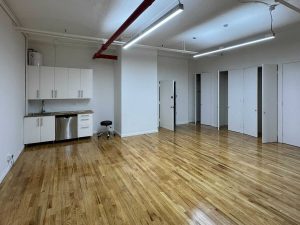
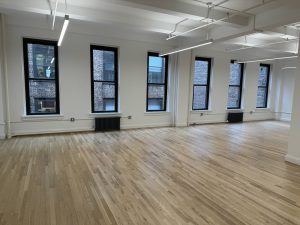
None of that kills the case for subleasing. It’s still the fastest way into a built-out, furnished, move-in-ready office in Manhattan, usually at 20 to 40 percent below what a landlord charges for comparable direct space. You inherit someone else’s build-out, their conference rooms, their kitchen, often their furniture and cabling, and you skip the months of construction a direct office lease can eat.
The catch: you’re stepping into a deal someone else negotiated, on terms you can’t rewrite, for however much time is left on it.
This page walks through all of it: what a sublease costs right now, where the good ones hide, what to check before you sign, how the process works, and how to list your own space if you’re the one sitting on extra floors.
Two things worth knowing up front. Representation costs a subtenant nothing, because the sublandlord pays the commission, so having an expert in your corner is free. And the cleanest turnkey subleases almost never show up on public search sites, which is why this page pairs a read on the market with the kind of leasing know-how a data feed can’t give you.
The sublease story in 2026 is scarcity, not glut. After years of flooding the market, second-hand space is getting absorbed quickly, the deep-discount leftovers are thinning out, and landlords are yanking sublease blocks back to lease them directly at higher rents. Tech and financial services firms have always been the two biggest sources of Manhattan sublease space (CBRE). Now they’re two of its hungriest buyers too. There are still real bargains out there, but you’ve got to move faster than you did in 2024.
Sources: JLL and Colliers Q2 2026 Manhattan reports (released July 2026). This is the one dated market narrative on the page. Refresh it quarterly.
A sublease trades control for speed, savings, and a space that’s already finished. For the right tenant that’s an easy yes. For the wrong one it’s a headache. Four things drive the value, and they’re worth taking one at a time.
Be honest about what you actually need, and the pick gets obvious. The table below sorts it out.
| A Sublease Is the Right Move When | A Direct Lease Is the Better Move When |
| – You want in fast and don’t want to deal with construction. – Cost per foot matters more to you than a long-term address. – Your horizon is short, one to five years, or just uncertain. – You need swing or interim space during a move or a growth spurt. – There’s a built-out, furnished layout that already fits your team. | – You need signage, branding, or naming rights in the building. – You want a heavy custom build-out and years to pay it off. – You need locked-in control of the space well past the current term. – You want a direct line to the landlord for future expansion. – The free-rent and TI concessions on a direct deal beat the sublease discount. |
Weighing a sublease against a flexible membership? Our take on coworking space covers the other end of the spectrum, and our guide to scaling from coworking to your own office is the playbook if you’re outgrowing a shared space.
Sublease space isn’t spread evenly across the city. It bunches up where big tenants over-leased, where tech and creative shops churn through space, and where companies have shrunk out of older buildings. Start with the submarket, because that’s what sets your rent, your commute, and the kind of space you’ll actually see. The asking rents below are direct-market anchors. Sublets usually land 20 to 40 percent under them.
| Submarket | Why Sublets Turn Up Here | Direct Asking (anchor) | Best For |
| Midtown | The deepest inventory anywhere in the city, full of big corporate blocks freed up by consolidations around Grand Central, Park Avenue, and Sixth Avenue. | ~$77 overall, ~$88.50 Class A (C&W, Q2 2026) | Finance, law, corporate HQ |
| Midtown South | The flex heartland. Nonstop tech and creative churn across Flatiron, Chelsea, NoMad, Union Square, and SoHo puts loft sublets on the market, though turnkey supply is tight (2.3% sublease availability, CBRE, June 2026). | ~$81 overall, ~$104.50 Class A (C&W, Q2 2026) | Tech, AI, media, startups |
| Downtown / Financial District | The best value of any Manhattan core. Well-built blocks left behind by finance and back-office moves, plus a direct PATH line to New Jersey. | ~$57 overall, ~$63.60 Class A (C&W, Q2 2026) | Law, finance, nonprofits, back office |
| Columbus Circle / Midtown West | A park-adjacent address hiding some of the widest sublease discounts in the city, left by tenants who dumped blocks to get out fast. | Class A sublease has gone ~$29 vs ~$86 direct (Metro Manhattan, Aug 2025) | Media, creative, value seekers |
Submarket asking rents are direct-market anchors from Cushman & Wakefield Q2 2026 and Metro Manhattan internal research; sublease pricing runs below them. Availability figures are as marketed. Examples are illustrative, not exhaustive.
A sublease gets priced off the direct market and then discounted, so what you pay mostly tracks the building class. The ranges below are directional and cover the whole borough. They’re here to put you in the right ballpark before you tour, not to price out a specific floor. Figure a sublease lands 20 to 40 percent under comparable direct space, with the biggest gaps on older blocks somebody needs to dump fast.
| Building Class | Typical Sublease Asking ($/SF/yr) | How It Compares to Direct | Best Suited For |
| Trophy | $90 to $175 | Scarce, and shrinking, as landlords reclaim these blocks for direct deals | Firms wanting a flagship address at a discount |
| Class A | $50 to $110 | Roughly 20–40% under the ~$85 Class A direct average | Established teams wanting a modern building for less |
| Class B | $38 to $75 | Below the $55–$90 Class B direct range, often fully built out | Midsize and growing companies |
| Class C / value | $28 to $55 | The deepest value in the city, frequently furnished and wired | Startups, small business, back office, nonprofits |
Sublease asking ranges as of July 1, 2026, anchored to Q2 2026 direct rents (Cushman & Wakefield: Manhattan Class A ~$84.79/SF; Colliers: Manhattan average $78.03/SF) and the standard 20–40% sublease discount (CBRE). Updated quarterly; next update October 1, 2026.
For current asking rents by market, see: Downtown Manhattan, Midtown Manhattan, Midtown South, and Uptown Manhattan. Not sure how the letter grades map to price? Our explainer on what makes a building Class A, B, or C breaks it down.
Before you tour anything, get clear on what you’re actually shopping for. A sublease, a direct lease, and a coworking membership are three different commitments at three different prices, and most tenants don’t even realize they’re choosing between all three.
| Option | Best For | Typical Commitment | Trade-Offs | Explore |
| Sublease | Cost-sensitive tenants who want built-out space fast | 1 to 5 years, capped by the master lease | Below-market and turnkey, but the existing tenant sets the terms and the time left may be short | Sublets |
| Direct lease | Established teams that want control and a custom build-out | 3 to 10 years | Best concessions and the most leverage, but the longest commitment, and raw space means a construction timeline | Office |
| Coworking / flex | Solos, satellite teams, and anyone under about 20 people | Month to 2 years | Fastest and most flexible, with the highest per-desk cost and the least control | Coworking |
Commitment ranges are typical-market and vary by deal (Metro Manhattan internal research, July 2026).
One thing sits underneath the entire sublease option: you’re signing onto someone else’s lease, so their deal becomes your deal. Read our guide to sublease and assignment clauses before you commit, because the master lease terms flow straight through to you, and you don’t get to renegotiate them.
A sublease has a few moving parts a direct lease doesn’t, and the risk hides in the parts you can’t see: the lease sitting above yours, and the financial health of the company you’re renting from. Run through this checklist with a broker and a real estate attorney before you sign a thing. It’s the difference between a great deal and kissing your deposit goodbye.
| What to Check | Why It Matters | What to Do |
| The master lease | Every term of the original lease flows through to you, and you can’t change a word of it. | Have your attorney read the over-lease and the sublease side by side, including use, hours, alterations, and surrender clauses. |
| The sublandlord’s finances | If the over-tenant stops paying the master lease and gets evicted, you can lose your space and your deposit right along with them. | Get two years of their financials before signing. A shaky sublandlord is the single biggest risk in the whole deal. |
| Landlord consent | Almost every sublease needs the building owner’s written sign-off, and that takes time. | Budget 30 to 90 days for it. Ask for a recognition or non-disturbance agreement so the landlord keeps you in place if the sublandlord goes under. |
| Remaining term and what follows | A sublease ends when the master lease ends, and you’ve got no automatic right to stay past that. | Nail down the exact expiration, and ask about converting to a direct lease later, or getting a landlord recognition agreement now. |
| Condition and layout | Sublet space shows up close to as-is. A sublandlord will usually spring for paint and carpet, and that’s about it. | The layout has to fit your team as-is, because you probably won’t get a build-out. Anything you do want to change, you’re paying for. |
| Furniture, cabling, and IT | “Plug and play” only helps if it’s actually included, and it actually works. | Get the furniture, wiring, phones, and any gear listed in writing, and test the internet and telecom yourself before you count on them. |
| Security deposit and who holds it | You usually hand your deposit to the sublandlord, not the landlord, which adds a layer of risk. | Confirm the amount, who’s holding it, and how you get it back. Plan how much to budget. |
| Pass-through costs | Electricity and insurance obligations pass straight from the master lease onto you. | Confirm how electricity is billed and what liability insurance you’re required to carry. |
| No direct landlord relationship | You can’t lean on the landlord to move or grow you the way a direct tenant can. | If you’re planning to grow inside the building, weigh a direct lease instead, or lock in expansion rights up front. |
| Restoration and surrender | The master lease might require the space go back in a set condition, and that job can land on you. | Pin down in writing who’s on the hook for any restoration at the end, before you take the keys. |
Sublet space usually comes with cosmetic work only, so the layout has to fit. If you do need real construction, our guides to build-out agreements and who pays for a build-out explain how that work gets scoped and funded, though on a sublease the bill is usually yours.
Subleasing runs on a different track than a direct deal. There are three parties instead of two, the landlord has to sign off, and the whole timeline hinges on how fast that consent lands. A tenant rep broker who works only for you, and gets paid by the sublandlord, keeps everyone honest. This is how it goes, start to finish.
A sublease is priced and put together differently from a direct lease, and the differences cut in your favor on cost and against you on flexibility. Two ideas do most of the work here, and both are worth understanding before you sign.
On a direct deal, the value hides in free rent and the tenant improvement allowance. On a sublease you rarely get either, because your sublandlord is trying to cut losses, not fund your fit-out. Instead the concession is baked right into the rent: 20 to 40 percent below direct, plus a build-out and furniture you didn’t pay for. Don’t shrug off the free conference rooms, kitchen, cabling, and desks, because they’re often worth six figures you’d otherwise be spending to build your own space.
A sublease can’t run any longer than the master lease it sits under, so the time left on that lease drives everything. Plenty of subleases run under three years, well short of the three-to-ten-year commitment most landlords want on a direct deal, and that short horizon is a feature if you like staying flexible. If you need to plant somewhere for a decade, weigh a direct lease and our breakdown of 3-year, 5-year, or 10-year lease terms instead.
The sublease market has two sides, and plenty of people land on this page because they’re the ones sitting on extra floors. If you signed for more space than you’re using now, subleasing turns a liability back into rent, and demand is healthy right now: with direct inventory tightening, subtenants are out hunting for well-built, furnished space. A few things separate a fast deal from a floor that sits empty for a year.
Sublease asking rents usually run 20 to 40 percent below comparable direct space, which puts Class A subleases roughly in the $50 to $110/SF range against a Manhattan Class A direct average near $85/SF (Cushman & Wakefield, Q2 2026), with value subleases well under that. Your actual number comes down to the building class, the submarket, and how badly the sublandlord wants out. And since the space usually comes built out and furnished, your real savings against building your own office are bigger than the sticker rent lets on.
The standard sublease discount runs 20 to 40 percent below direct asking rent, depending on the market, the building class, and the time left on the lease (CBRE). In some pockets it’s steeper: Class A sublease space in Columbus Circle has gone for around $29/SF against roughly $86/SF direct (Metro Manhattan, August 2025). And on top of the rent break, most subleases throw in an existing build-out and often furniture, which raw direct space never would.
A lot of the time, yes. Sublandlords routinely leave their furniture, cabling, and phones behind, which makes many subleases a true “plug and play” move-in. Just get whatever’s included down in writing, and test the internet and telecom before you count on them, because “as-is” cuts both ways.
A sublease can’t run longer than the master lease it sits under, so the term is whatever time is left, often under three years. That’s a lot shorter than the three-to-ten-year commitment most landlords want on a direct lease, which is exactly why subleases suit tenants who need to stay flexible. If you need a long, locked-in horizon, a direct lease is usually the better call.
This is the big risk with subleasing. If the over-tenant stops paying the master lease and gets evicted, you can lose the space and your security deposit right along with it. So review the sublandlord’s financials before you sign, and try to get a recognition or non-disturbance agreement from the landlord, which can keep you in place, sometimes on a direct lease, if the sublandlord goes away.
Almost always. Nearly every commercial lease needs the building owner’s written consent before a sublease is valid, and that usually takes 30 to 90 days. If you’re on a tight timeline, build the consent period into your move-in date, and ask early whether this landlord tends to approve subleases quickly.
In a sublease, the original tenant stays on the master lease and rents the space to you, so you answer to them and they answer to the landlord. In an assignment, the original tenant hands the whole lease over to you and usually steps out entirely, so you deal straight with the landlord on the original terms. Our guide to sublease and assignment clauses walks through when each one makes sense.
Not automatically. A sublease expires with the master lease, and you’ve got no built-in right to renew. The cleanest way to stay is to negotiate a direct lease with the landlord, ideally before your sublease runs out, or to lock in a recognition agreement up front that gives you a path to stay if the sublandlord bows out.
The best built-out subleases rarely show up on public listing sites, so a tenant rep broker is how you see the whole market and find out which sublandlords are actually motivated. The sublandlord pays the commission, so representation costs you basically nothing. A broker also helps you read the master lease and build in the protections, like a recognition agreement, that keep a sublease safe.
A sublease runs well under market and moves fast, but the existing tenant locks in the terms and the time left may be short. A direct lease gives you the most control, the best concessions, and the longest runway, which suits established teams. Coworking is the most flexible and quickest to move into, at a higher per-desk cost, which fits small or still-figuring-it-out teams.















Accessibility Tools