
A client finds an office space they love, then Googles the building.
That’s usually when my phone rings.
“Alan, the landlord’s in foreclosure.”
Now the great light, good layout, and below-market rent have apparently been replaced by visions of padlocks on the front door and bankers carrying the lobby furniture out to the curb.
I tell them the same thing: calm down and go see the space.
A distressed landlord can be a problem. It can also be an opportunity. The owner may be broke, but the building isn’t necessarily falling apart, and a foreclosure doesn’t vaporize your lease. Sometimes the eventual buyer picks up the property cheaply enough to spend money the old owner didn’t have, while you’re still sitting there at the rent you negotiated.
I’ve put tenants into buildings like this more times than I can count, and nobody’s ever called me with a problem. But I don’t walk anyone in blind either. I do about a day of homework first, and that’s what I’m going to walk you through.
What I Check Before You Tour

Before I tell a client to spend an afternoon touring a building with a distressed landlord, I check 4 things. None of them require detective work. Most of the information is public, and I can usually get a pretty good read on the situation in a day.
What Does the Mortgage Tell Me?
I start with the loan because it usually tells me what happens next.
Every NYC mortgage is recorded on ACRIS, so I pull it and look at how much the owner borrowed, who lent the money, and when the loan comes due. A building refinancing next spring is a very different proposition from one with 5 years left on its debt.
Then I check whether the loan has gone into special servicing. That’s where troubled commercial mortgages get sent when somebody needs to restructure them, work them out, or start preparing for foreclosure. I think of it as the ICU. Once a loan gets there, I want to know why.
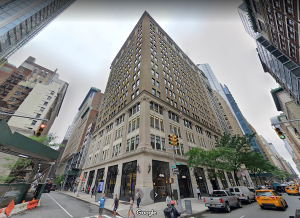
Take 26 Broadway, the old Standard Oil headquarters downtown. Its $290 million loan went into special servicing in June, while the property was generating only about 76 cents for every dollar of mortgage debt service.
You don’t need an MBA for that one.
The ownership is under pressure, which means the building could trade. Knowing that before you tour changes how I negotiate the lease.
Who’s Actually Paying for Your Buildout?
This is where a distressed landlord can become your problem if nobody asks the boring questions.
A lease can promise you a construction allowance, free rent, new common areas, and a lobby renovation that has apparently been “coming soon” since Bloomberg was mayor. Fine. I want to know who’s writing the checks.
In a distressed building, the answer may no longer be the landlord. A lender or receiver could be controlling the money, and neither one cares much about your gorgeous new open-plan kitchen unless the paperwork says they have to.
So I ask who approves the tenant-improvement money. If somebody other than the owner controls it, I want the obligation nailed down and, where appropriate, the money escrowed. Sometimes I’d rather trade part of the allowance for free rent because you can’t bounce a check you never had to write.
I also want to know where the security deposit goes and whose name is on the account.
Very glamorous stuff. It has also saved clients a lot more money than shaving another dollar off the asking rent.
Who’s Actually Running the Building?
Distress has stages, and the person across the table changes as you move through them.
Early on, the owner may still control everything. That can be a terrific time to negotiate because every empty floor gives him another unpleasant conversation with the bank.
If things get worse, a court may appoint a receiver to run the property while the foreclosure works its way through. After a sale, you’re dealing with the new owner.
Those 3 parties don’t negotiate the same way.
An owner under pressure wants occupancy. A receiver wants the building stable, operating, and producing income. A new buyer usually wants leases signed quickly enough to show lenders that the turnaround plan is working.
So before I start asking for concessions, I want to know who can actually say yes.
Otherwise, you can spend 3 weeks negotiating with somebody who no longer controls the finances.
What Does the Rest of the Landlord’s Portfolio Look Like?
One troubled property could be a bad deal. Trouble across several buildings tells me the problem is probably bigger than one mortgage.
That’s why I look beyond the address we’re touring.
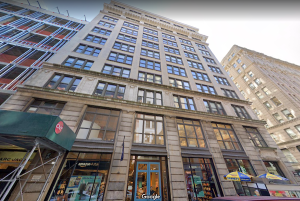
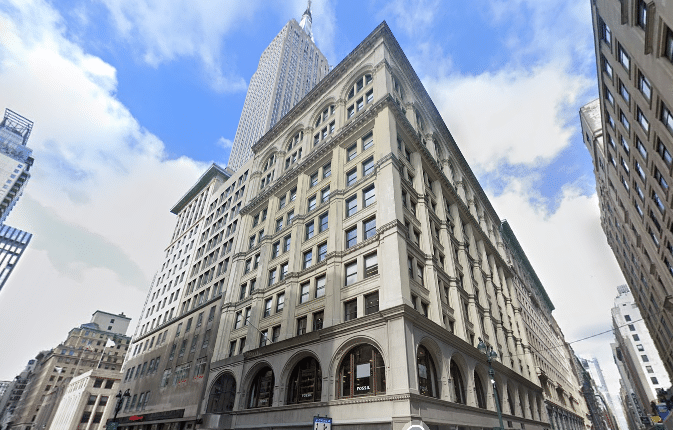
The Chetrit portfolio is an obvious current example. Along with 26 Broadway, the family and its partners own 500 and 512 Seventh Avenue, connected Garment District towers where WeWork occupies roughly 200,000 square feet.
The owners borrowed $375 million against the leasehold in 2018 and stopped making payments in 2024. Late last month, a judge ordered the property sold at auction to satisfy roughly $356 million.
If you’re considering space there, I’m not telling you to run away. I’m telling you to understand what you’re walking into.
The landlord signing your lease today may very well not be the landlord sitting across from you when renewal time comes around in 2031.
How I’d Structure the Lease

Once I know where the building’s vulnerable, I use the lease to keep as much of that risk off my client as I can.
I’m not trying to draft around every bad thing that could possibly happen. I’m looking at the trouble already on the table, then negotiating the economics and protections accordingly. In a distressed building, I’d usually work through it in this order:
- Start With Free Rent: If I have a choice between 8 months free and a big construction allowance, I’m leaning toward the free rent. A landlord can be short on cash and still waive rent; getting a promised $60-per-square-foot buildout check out of him later may be a much less enjoyable conversation.
- Limit the Commitment: I’ll usually push for a shorter initial term and a renewal option rather than locking a tenant in for 10 years. If new ownership improves the building, we keep the option to stay. If things get worse, we’re not trapped there until the next World Cup.
- Protect the Lease From Foreclosure: I want a non-disturbance agreement from the lender so a foreclosure doesn’t put the tenancy in play. If the owner loses the building, my client should still have the office they leased on the terms they negotiated.
- Lock Down the Deposit: I want the lease to say where the security deposit is being held and what happens to it when ownership changes. In a healthy building, that language is easy to overlook. In a distressed one, I read it twice.
- Use the Building’s Weakness as Leverage: Lease terms are negotiable, and distressed buildings often have fewer tenants competing for the same space. If I’m asking my client to live with more ownership uncertainty, I’m also asking the landlord for better rent, better concessions, and stronger protections in return.
By this point, I’m not asking whether the landlord is distressed anymore. I already know that. I’m deciding whether the lease offers my client enough concessions to make the building worth considering.
The Upside You Won’t Find in the Headline

Once I’ve protected the tenant on the way in, this is where the story gets more interesting.
If the building sells, your lease doesn’t suddenly get repriced because the new owner showed up with fresh money and nicer stationery. You keep the rent, term, and concessions you negotiated when the old owner was under pressure and in no position to get cute.
Then the new owner starts spending.
That’s usually what happens after somebody buys a distressed office building at the right basis. The lobby gets redone, the elevators finally get attention, and the “amenity center” stops being 2 sad couches next to a Keurig. I’ve seen buildings look completely different within 18 months. The tenants already inside get the upgrade without paying the new-building rent.
The tenant who signs after all that work is finished gets the glossy brochure and the higher asking rent.
So when a client asks me whether I’m worried the building might change hands, my answer is usually the opposite. If we structured the lease correctly, I’m rooting for it.
What It’s Actually Like Day to Day

The upside sounds great until a tenant asks the obvious question: what’s it like working in the building while all this is going on?
Usually, pretty normal.
The owner may be fighting with the bank, but the bank still wants the elevators running, the lobby staffed, the offices cleaned, and the lights on. An occupied building collecting rent is worth a lot more than one falling apart because nobody paid the vendors.
500 and 512 Seventh Avenue got close enough to the edge that Con Ed scheduled a shutoff after unpaid bills piled up. The lender paid what was owed, so tenants came to work the next day and, from their perspective, nothing happened.
That’s been much closer to what I’ve seen over the years. I’ve put tenants into distressed buildings before, and I haven’t had one call me because basic building services suddenly disappeared.
Office buildings with serious debt behind them usually keep operating while the ownership problem gets worked out.
It Already Happened in Brooklyn

If you want to see where this can end, take a walk down Montague Street and look at the Bossert.
Louis Bossert built the place in 1909 after making his money in lumber, and for years it was grand enough to earn the nickname “the Waldorf-Astoria of Brooklyn.” The Dodgers celebrated their 1955 World Series there. The Jehovah’s Witnesses later owned it for 25 years and kept it immaculate.
Then came the familiar part. New owners, too much debt, a default on a $112 million mortgage, and 13 years of scaffolding while the foreclosure dragged through court.
The property finally went to auction in February 2025. Beach Point Capital took control, then sold it 3 months later to SomeraRoad for $100 million. Now SomeraRoad is converting it into 61 condos, with a Danny Meyer restaurant downstairs.
That’s why distress itself doesn’t scare me. Usually the real problem is an owner who paid too much. Once somebody buys at a reasonable number, there’s finally room to spend on the building again.
Where the Market Is

There’s another reason I’m willing to look where other brokers won’t: Manhattan isn’t exactly giving tenants bargains everywhere else.
Availability is down to 13%, the lowest since 2020, and Midtown Class A asking rents are around $88.50 a foot. I’ve had landlords tell me, with a perfectly straight face, that they “don’t do free rent.” Good for them. Their lender must be sleeping beautifully.
At the same time, CMBS delinquency is 7.86%, so plenty of owners are having a very different conversation with their banks.
That’s the split I care about.
The clean buildings can charge like they know they’re clean. The distressed ones still need tenants, and that need shows up in the lease. If I can get you better economics, stronger protections, and maybe a much nicer building 2 years from now, why would I cross it off just because somebody wrote an ugly headline?
So Yes, Tour It

Just don’t do it without somebody who’s read the mortgage.
Nearly every listing in Manhattan runs through one database and a few hundred people, and the database is the easy part. What you need to know about a building in trouble isn’t on the listing. You’ll find it in the mortgage docs, the court file, and a couple of phone calls, and somebody on your side has to make them.
If you’re touring space this fall and the building’s got a headline, ask whoever’s walking you through it three things. Who holds the mortgage, when’s it due, and is the improvement money real?
If they can’t answer, you don’t have a broker yet. You’ve got a tour guide.