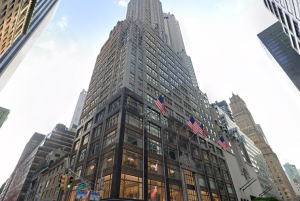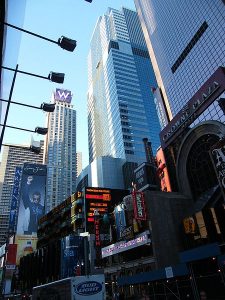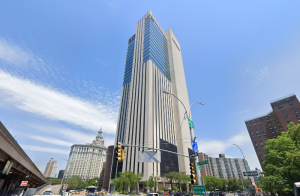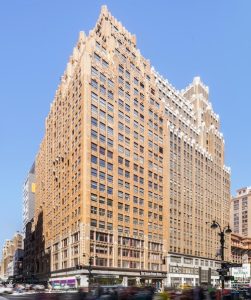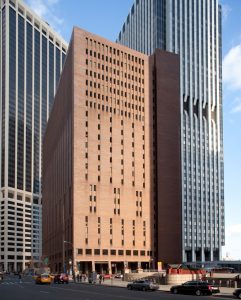

Two support columns on the 21st floor of 235 East 42nd Street buckled on the morning of Tuesday, July 7, and several floors above them started to sag. The address might not ring a bell, but the Midtown tenant it was built for will: this is the old Pfizer headquarters, now the biggest office-to-residential conversion in the city.
Before any market talk, the part that matters most. Roughly 400 kids at a nearby school got evacuated, along with hotel guests and construction crews up and down the block. As of this writing, nobody’s been hurt. That’s the headline that counts, and I’m relieved it reads the way it does.
That said, my phone’s been busy ever since what happened. Tenants and reporters are understandably concerned and keep circling the same worry: what a mess like this means for the businesses leasing space a block away, once the barricades come down and the shoring holds.
I’d rather answer that straight.
What Happened at 235 East 42nd Street

Around 8 a.m. Tuesday, the FDNY got calls about bricks coming off 235 East 42nd Street, a working Midtown East block a short walk from Grand Central. Crews were pulled off the job, and officials evacuated nine nearby buildings plus a school of roughly 400 kids, per Newsweek.
The NYPD threw up a “frozen zone” from 40th to 45th between First and Third. Officials warned of a possible partial collapse and cleared the surrounding blocks as a precaution. Mayor Zohran Mamdani said the building “remains unstable,” with crews watching one compromised column keep moving.
I’m not a structural engineer, and neither are the thousand people posting shaky phone videos of bent steel. So every structural claim here comes from the people paid to make them: the city’s officials and the building’s own developer.
Where Things Stand Now

By late Tuesday, city officials said they were “confident” the temporary shoring was doing its job, and the Department of Buildings reported no new column movement since morning. The stabilization work runs for days, not hours. It’s in progress, not resolved, and worth re-checking before anyone leans on it.
Developer Nathan Berman of Metro Loft isn’t buying the doomsday read. He told reporters the damage was “localized” and came to “less than 1%” of the building, and that added weight from the new upper floors likely bent two columns that, by his own account, had missed part of the reinforcement process.
The DOB has a full investigation running on what’s already one of the most ambitious conversions the city has ever attempted. What went wrong is theirs to figure out. I don’t pronounce verdicts on other people’s steel.
Why I’m Writing About This at All

Most brokers handle a moment like this one of two ways that I strongly disagree with. They fearmonger to spook you into signing, or they clam up because the subject’s touchy and a developer’s named. I’m not doing either.
I’m not telling you this building is coming down; officials say the shoring is holding. Additionally, I’m not pinning blame on the developer or the contractors; the investigation hasn’t run. And I won’t point at a neighboring building and swear its tenants are packing up, because I don’t know that, and neither does anyone posting about it.
What I will do is put a real market question on the table, the kind every honest broker on this stretch is already chewing on privately: whether something this loud and this public, on a working office block, quietly shifts how the tenants nearby think about their own leases.
Worth saying out loud, since most brokers would rather not.
Why the Building Next Door Gets Into Tenants’ Heads

Office leases don’t get signed in a vacuum. They get signed by people, and people are moved by what they see out the window on the ride down to the lobby.
It raises a fair question of whether tenants in the buildings closest to the site, especially the ones already stuck on whether to renew, grow, or shed space, fold a week like this into the math. It’s reasonable to expect some to do. Nobody commits to a seven-figure lease off a single headline, and nobody tunes one out completely either.
I want to be brutally honest and clear on what this is: analysis, not a forecast. I’m not saying tenants will bolt. I’m saying that living beside a headline like this becomes one more line item in a decision that already has fifty. Market watchers may see it tip a handful of calls that were teetering anyway.
The Lease-Expiration Math, and Why Timing Matters
Timing is what turns a vague case of nerves into something you can put a number on.
Class A and B tenants in big Midtown buildings commonly sign leases of seven to ten years. Call the average seven or eight.
Assume those expiration dates fall evenly across the term, and that’s an assumption, not researched data, and at any given moment, roughly 6–8% of a building’s tenants sit inside a six-to-seven-month window of their lease running out.
That window is the pressure point. It’s the stretch where a tenant weighs it for real: stay put, take more, give some back, or pack up. A loud shock landing right now catches whatever slice of tenants happens to be standing at that fork.
Methodology: based on typical 7–10 year Class A/B lease terms, assuming an even distribution of expirations. Treat 6–8% as a modeled estimate, not researched data — exact figures for this block aren’t public.
Why Big Blocks Make This Different
One feature of this particular submarket makes it worth watching more than most.
This stretch of Midtown East runs on big Class A towers with big single tenants, not a warren of small ones. So a relocation call by even one major tenant puts a serious block of space into play. That’s a whole different order of impact than a bunch of small tenants making the same move.
In a submarket of 2,000-foot tenants, ten companies rethinking their space is background noise. In a submarket where a single tenant can sit on several hundred thousand feet, the kind the city’s biggest landlords build their whole portfolios around, one “we’re going to look around” move the needle.
None of that names a tenant or predicts a move. Big blocks carry more weight than small ones, and this slice of Midtown is built from big blocks.
The Bigger Picture: Midtown Is Tight Right Now

Before anyone files this under doom-and-gloom, a dose of context is in order, because the wider market is nowhere near crisis.
Midtown is having its best stretch in years, full stop. Manhattan tenants leased 22.8 million square feet in the first half of 2026, the strongest first half since 2002, and the average asking rent hit $78.03 a foot, a post-2020 high — both figures per Colliers. Availability also dropped to 14.1%, its lowest since 2020, per Avison Young.
The Grand Central area in particular is dense, transit-rich, and in real demand; the LIRR’s Grand Central Madison terminal only deepened the pull. A market this tight swallows churn a lot more easily than the soft one we had in 2021.
That cuts both ways, though. Tenants who get spooked have real options right now, and landlords sitting on scarce space have the leverage to match.
And Tenants Are Already Chasing Quality
There’s a second dynamic stacked on top of that one, and it’s the one I’d keep my eye on.
This market was already paying up for buildings that are finished, stable, and run by people who answer the phone. Flight to quality has been the whole story for two years; top-tier space keeps setting records while tired space just sits there.
When construction risk gets this visible anywhere in the corridor, it’s reasonable to expect the instinct sharpens rather than fades.
That’s a general read on tenant psychology, not a shot at any one building. But if you were already the type leaning toward certainty over a discount, this week did nothing to change your mind.
So the smart play is boring: watch your own lease timeline more closely than you watch the news cycle.
What I’d Tell a Tenant on That Block Right Now

If your office sits inside that frozen zone and your lease is coming due, this is what I’d tell you on the phone, no charge.
Don’t make a real estate decision off a news cycle. That building may stabilize completely and vanish from the headlines within a month. Do know your own clock, though. Pull your lease, find your expiration and renewal-notice dates, and do it before you feel a shred of pressure.
If you’re seriously weighing a move, weigh it on the fundamentals: headcount, budget, and how far your people have to commute. Run your numbers through our office space calculator, and if you want a straight read on specific buildings and pricing in the corridor, call a broker who walks these blocks for a living.
A lease this size deserves better than a gut reaction to a video of bent steel.
The Bottom Line
So where does that leave us? Something serious happened on East 42nd Street this week. Officials say it’s stabilizing, nobody got hurt, and the investigation will eventually tell us why. I won’t insult you by spinning a safety scare into a fire sale.
I’ve been leasing space to New York tenants since 2004, through enough cycles to know that markets are piles of human decisions, and human decisions run partly on what people can see out the window. Loud, visible instability in a dense, big-block corridor is a variable worth tracking. It doesn’t have to be a verdict to matter.
If you’re a Midtown tenant trying to read this market clearly instead of nervously, that’s the whole reason we answer the phone. Reach out. We’ll give you the unvarnished version, about your block, your timeline, and your real leverage, and we’ll tell you plainly when the right move is to sit tight and do nothing.