
“Do you really think we need to start now?”
The CFO of a policy consulting firm asked me that after we’d spent more than an hour discussing his office search. I was traveling 6 time zones ahead of New York, it was past midnight where I was, and I’d just told him that 5 months wasn’t much runway for a firm with such particular requirements.
The minute I said it, I heard myself sounding like the pushy broker I’ve spent my career trying not to be. I could’ve backed off, told him there was still time, and made the call easier. But if spring arrived and the right space was gone, I’d be the one explaining why the next-best option wanted $11 more per square foot. That would be a much worse conversation.
I’d rather risk an uncomfortable moment while the warning can still help. He wasn’t wrong to challenge me, either. Starting an office search and rushing into a lease are 2 very different things. Looking early gives you time to understand the market, negotiate, and walk away. Wait too long, and your expiration date starts making those decisions for you.
I’ve represented Manhattan tenants since 2004, and my answer to “How early is too early to start your office search?” hasn’t changed: you can’t start too early, but you can absolutely act too late. Especially once the calendar begins dictating what you can lease and what you’ll have to pay for it.
The Consulting Firm Five Months from Lease Expiration

Once I saw what they were after, 5 months didn’t feel like a generous timeline. They wanted a better Class B or Class A building with an upscale lobby and good security, plus a corner space with skyline views, all for around $10,000 a month. They are DC-based with a New York City satellite office that overlooks Central Park. So, I understood why the view stayed on the list.
The office search had been delegated internally, as it often is. I’d spent 1 hour with the office manager/CFO handling it and sent a survey afterward. I had no direct line to management and no window into the conversations happening inside the firm.
Their budget also came from a very different market. They’d negotiated the current lease in late 2021, a year into COVID, when New York office rents had bottomed out. That deal still shaped what $10,000 felt like it should buy. I wanted enough time to find out what it could buy now, before their expiration date began narrowing the answer.
8 Weeks of “Almost”
We spent the next 8 weeks finding out how far that $10,000 would stretch. They needed about 2,200 square feet, and the high floor, corner exposure, and real views weren’t optional. The office manager/CFO knew the budget was tight for that combination and said so. I appreciated the candor. At least I knew exactly what I was trying to find.
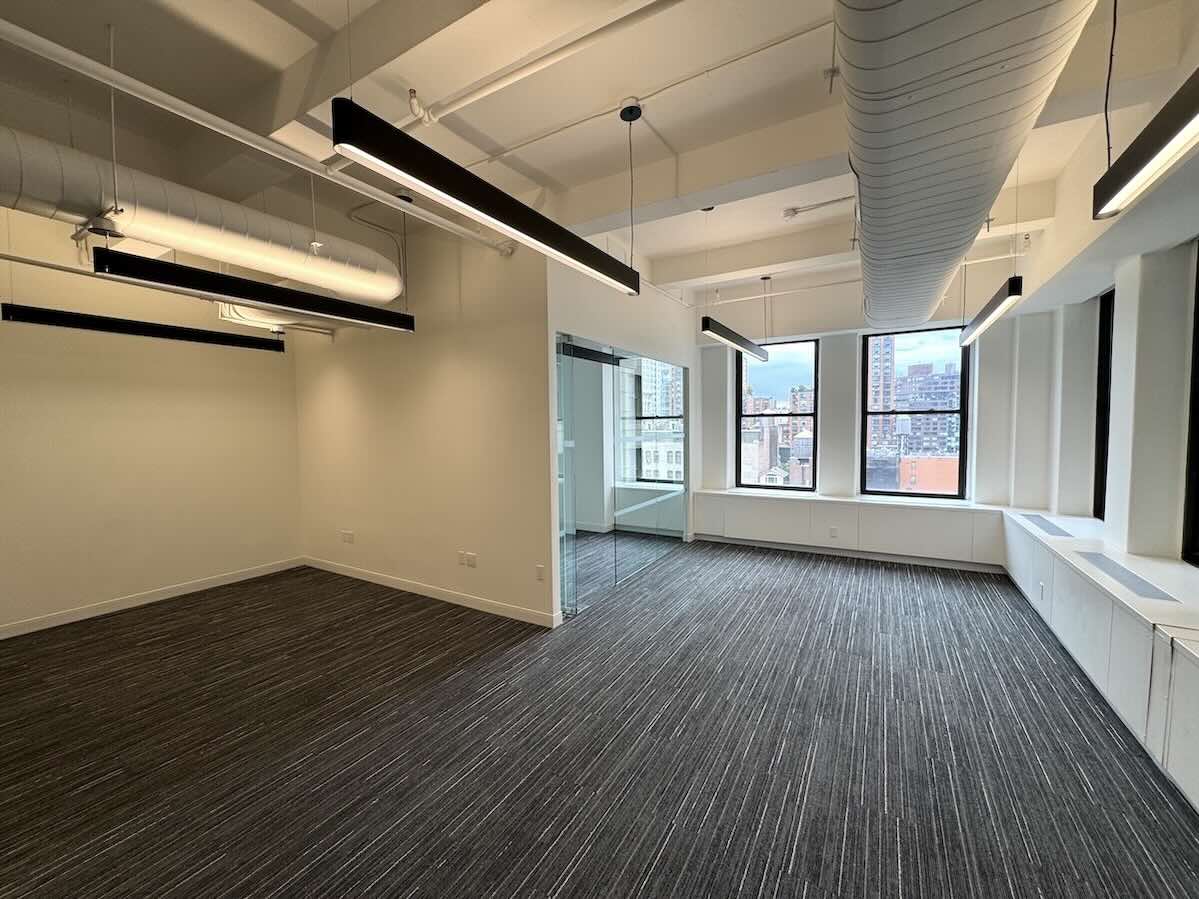
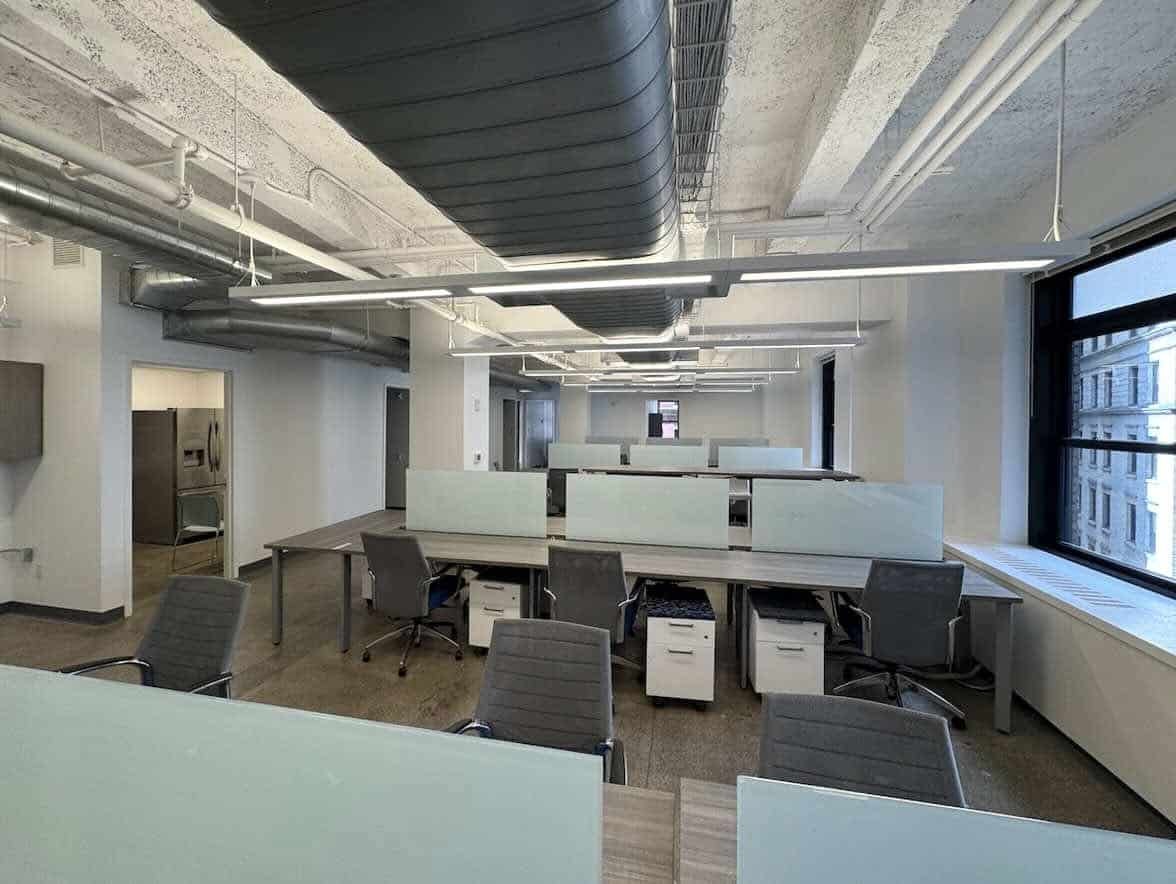
We searched Lower Manhattan, worked through Midtown, and went as far north as Columbus Circle. Every good option was almost right in its own irritating way. One space was beautiful, except a column sat exactly where the conference table needed to go. Another had the light and views, but came with 400 square feet they didn’t need. In New York, those extra 400 feet added roughly $22,000 a year to the rent.
By week 8, I could feel the office search losing steam. The replies got shorter, and renewal began creeping into the conversation because staying put was starting to feel easier than opening another listing.
Then We Walked Into It

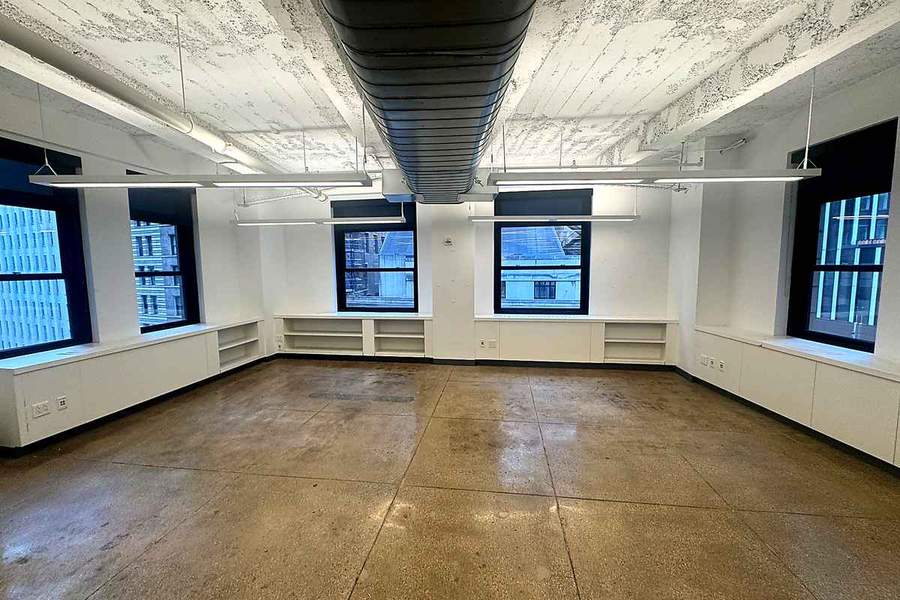
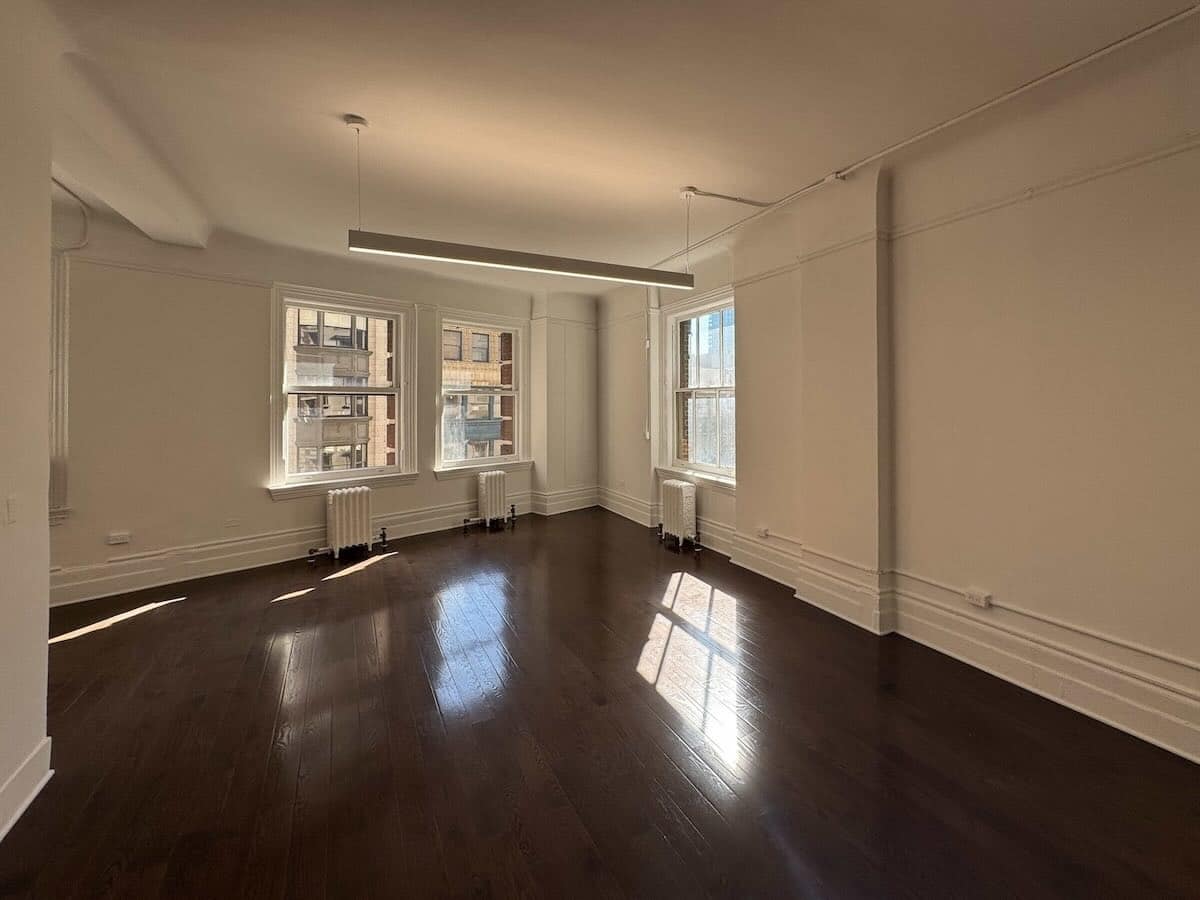
Finally, after 8 weeks in, we found a beautifully maintained Class B building directly across from Penn Station, with a historic Art Deco lobby that makes you look up when you walk in. The owner clearly cared about the place, kept investing in it, and still answered his own phone. Upstairs, we also had the high floor and true corner we’d been chasing, with west-facing windows that let you watch the weather cross the Hudson 20 minutes before it reaches you.
At $55 a foot, the rent came in above the opening number but below the real ceiling. The operations director took 2 slow laps around the floor and barely said a word, while the office manager/CFO went quiet too. I’ve learned not to interrupt that kind of silence because people are usually deciding where the conference table goes.
He Asked If He Was Rushing
With 5 months on the clock, he wanted to know whether he was getting ahead of himself. Three years back I’d have told him to relax and take a vacation. Landlords were handing out free rent like Halloween candy back then, and space sat around waiting for somebody to want it.
But that market is over now. He didn’t know it yet, which is no knock on him, because he has a company to run and I’m the one who’s supposed to be watching the buildings.
What I Pulled Up on My Phone
Watching the buildings happens to be the job, so rather than argue with him, I put my phone on the table and read him what I’d been tracking all year.
- Availability: 13.0% in Q2, the tightest since October 2020 and well down from an 18.2% peak in February 2024
- July Leasing: 3.87 million square feet signed, up 28.4% on the year, with available space down to 66.24 million square feet. The lowest since September 2020
- Asking Rent: $78.03 a foot, up 5.7% over 12 months and the sharpest midyear jump since 2016. Sublet space also shrank by 22%
That last figure is the one that should worry people. The clever plan in 2023 was grabbing an overbuilt tech floor at half price, and those floors are all spoken for now.
The Free Rent His Friends Got Is Gone
Rent is only the headline, since concessions are where the real money changes hands, and they’ve slid away from tenants all year.
Free rent averaged 12.4 months across the first half of 2026, the lowest since 2019, while improvement allowances flattened near $140 a foot. Landlords also raised asks on more listings than they cut, with Midtown leading. When somebody brags about the 14 months free he got in 2024, believe him. Then keep him out of your budget.
That 13% availability figure flatters you as well. Strip out the conversion candidates, the buildings stuck in special servicing and anything over a 10-minute walk from a train, and the real number lands nearer 11.1%.
The Competition for 2,200 Square Feet Has Changed

The enormous deals mean nothing to a firm his size, since Simpson Thacher pre-leasing 916,000 feet at 570 Fifth is a different sport in a different stadium. What matters to him is where the priced-out Class A tenants went, and the answer is downstairs.
Class B’s share of Manhattan leasing climbed from 14.7% to 16.6% in a single year, because decent B stock stopped being a consolation prize and became the plan.
At 2,200 feet, that used to be his aisle of the store. Now he bids against companies with stronger balance sheets, firms that absorb a rent bump without calling a board meeting. It’s how sharp people end up making the mistakes I see constantly, pricing a 2026 deal off a 2024 memory.
What a Landlord Sees Across the Table

The timing question finally clicked when I stopped counting backward from the lease expiration and looked at the deal from the landlord’s chair. Across the table sits a 20-year-old firm with corporate and government work, offices in 2 cities, no seed round, and no runway anxiety. Assuming the financials back that up, the landlord sees a tenant he can reasonably expect to be around at the end of the lease.
If the firm is prepared to commit for at least 5 years, the landlord can spread a few empty months across a much longer deal. That makes him more willing to hold the space or line up the start date with the existing lease, especially for a tenant that could stay until 2046, renew without a fight, pay on the 1st, and never put a litigator on the phone.
At that point, handing over 2 extra months of free rent can be cheaper than squeezing for another $2 per square foot from a tenant that may not exist in 2031. My client has real leverage now, and starting early gives us enough room to use it.
The Trap Waiting on the Back End
Flip the situation around and imagine they wait, the timing slips, and they can’t vacate their existing office space when their lease expires.
Holdover clauses are penalty rent, and blowing your vacate date sends the rate to 1.5x, 2x, sometimes 3x what you’d been paying. They’re drafted that way deliberately, so staying put hurts worse than moving.
The penalty is painful, though what it does to your negotiating position is worse. Once he’s inside that window, the landlord across the table reads his clock as clearly as he does.
You can feel rushed privately for months, and it costs you nothing. The day it shows on your face, it starts costing you free rent, improvement dollars, and escalations. Read that clause before you sign, along with the rest of the terms that quietly decide your deal.
Count Backward From the Day the Movers Come
Here’s what the next stretch looks like for him if he moves:
- Touring and Shortlisting: 4 to 8 weeks, more if you’re picky
- Business Terms Once Submitting the Proposal: 2 to 3 weeks
- Attorneys with the Lease: A month, usually longer
- Design, DOB Filings and Bidding: 6 to 12 weeks on a normal fit-out
- Construction: Another 8 to 16 weeks
Call it 7 to 10 months from the first tour to the first coffee at your own desk, assuming nothing goes wrong. But something always tends to happen. A permit gets kicked back, a contractor books up, or somebody’s attorney disappears into August with the redline still in his bag.
He has
months. The only thing saving him is that this floor needs almost no work, which is the same reason it won’t sit there waiting.
So How Early Should You Start Your Office Search?

None of this makes him a special case, which is why it’s worth writing down. The rule I give everybody, sized to the deal:
- Under 5,000 SF, Prebuilt or As-is: 9 to 12 months out
- 5,000 to 25,000 SF with a Build-out: 12 to 18 months out
- 25,000 SF or Anything Custom: 18 to 24 months out
Those numbers sound aggressive until you notice who’s in line beside you. Somewhere around 55 million square feet of Manhattan leases run out by the end of 2027, and plenty of those tenants started touring in the spring.
There’s no relief at the top either. CBRE puts Midtown prime vacancy at 2.2%, and in January I wrote about the 401 buildings here with nothing left to lease.
Pressure Versus Information
All of which is why that conference room still bothers me a little.
Pressure sounds like “sign today, or you’ll regret it.” Information sounds like “this combination is rare, here’s the data behind it, and here’s what I think happens by December.” The first is a closing technique. The second is my job, and the client stays free to throw it in the trash.
That distinction is the entire idea behind tenant representation. Landlords pay the commission in New York, so having somebody in your corner costs you a phone call. I’ve done about 400 of these out of Metro Manhattan since 2004, and the hardest part is still saying the thing people would rather hear in April.
He Still Hasn’t Signed
As I write this, he’s thinking it over, and naturally doing what a careful operator does with a decision this size.
What I gave him was the least dramatic version of the truth I had. Finding that floor once was luck. Finding it again in 5 months, same corner and same price, isn’t a bet I’d make with my own money, and a landlord chasing a 20-year tenant will be more generous today than after 2 more quarters like this one.
Then I stopped talking, because past a certain point more argument just sounds like pressure wearing a nicer coat.
If you’re anywhere near the same position, start with the unglamorous work. Size your requirement honestly with the office space calculator, get familiar with what New York office space actually costs, and walk the submarkets while you still have the patience. If you’re mid-term and wondering whether to stay put, that’s a renegotiation conversation, and it starts early too.