



Commercial Lease Clauses: The Scariest Between Ghosts and Gravy
You know that post-Halloween feeling when you’re sorting through candy and find something unappetizing you missed?


Last spring we gave every client on these blocks the same advice, and at the time it was good advice. The money is in the two towers on the park. If you can’t stomach Madison Avenue, walk three blocks west and take the loft. Same neighborhood, same trains, nobody’s the wiser.
That advice is expiring, and June is when it stopped working. Moinian leased roughly seventy thousand square feet at 60 Madison Avenue in about two weeks. Prewar building. No glass, no roof garden, no Boulud downstairs. The tenants were AI companies taking entire floors.
Those are the same firms that would have knifed each other over One Madison eighteen months ago. Now they’re signing for brick.
Then the quarterly numbers landed and made it official. For the first time this cycle, more Midtown South leasing happened in the old buildings than in the good ones. Not by much, but it happened, in the submarket everyone swears only wants glass.
So here’s where that leaves you. The two towers are still full and still cost what they cost. The lofts we used to call the value play are having their moment, which is wonderful for the people who own them and considerably less wonderful for you.
There’s still a real gap between the glass and the brick. It’s narrower than it was a year ago and it’s closing from the bottom up, so knowing exactly how wide it still is, building by building, is the whole job. It’s what we do all day.
If you’d rather see what’s actually open before reading another word, the listings are right there.
One thing explains these blocks and it hasn’t changed in two years: AI reset the price of office space here first. What changed is that AI ran out of room.
Manhattan just posted its busiest six months of leasing since 2002. Availability is the lowest it’s been since the fall of 2020, and it’s been falling or holding flat for nine straight quarters. Landlords can feel it. They’re marking asking rents up more than twice as often as they’re marking them down.
AI firms took more space in the last three months than in all of last year combined. That appetite hasn’t cooled a degree. It simply has nowhere left to go on Madison Avenue, which is why the interesting deals are now landing a block or two off it. For the wider view, our Midtown South page carries the district numbers.
Manhattan H1 2026 leasing of 22.8M SF (strongest first half since 2002), availability of 13.0% (lowest since October 2020, against an 18.2% peak in February 2024), nine consecutive quarters of tightening or flat supply, sublet supply down 22% year over year to roughly 9% below pre-pandemic, Q2 AI leasing of about 800,000 SF (more than all of 2025 combined), and Midtown South repricing (11.1% of direct space marked up against 4.9% marked down) from Colliers, Q2 2026 (July 1, 2026). Anthropic’s 466,000 SF lease at 330 Hudson Street from The Real Deal (July 8, 2026). One Madison’s $1.65 billion refinancing and both towers reaching 100% leased from SL Green (March 2026).
Anyone who answers that with a single number is selling you something. A trophy floor on the park asks a hundred and eighty a foot. A prewar loft three blocks west asks sixty. Both are honest quotes for the same neighborhood on the same subway line.
The averages give you the shape and not much else. Midtown South runs somewhere between eighty-one and eighty-six dollars depending on whose report you’re holding, and Class A just crossed a hundred for the first time.
Those firms disagree because they draw the neighborhood differently, which is worth knowing before a landlord quotes you whichever one helps him most. Our habit is to ask which report a number came out of before we bother arguing with it.
The ceiling is the two towers, where One Madison asks $120 to $180 and 11 Madison sits near $90. The floor is out on the side streets and the Flatiron edge, where you can still find loft space in the sixties. Everything else lives in between, and that middle is filling in fast.
So the question was never really the price. It’s what the difference buys you.
If a Madison Avenue address helps you recruit engineers or reassure a client, pay for it, and we’ll tell you to your face it’s money well spent. If it does neither, take the loft and keep the difference. Plenty of very good businesses do exactly that and never look back.
Before you tour anything, run your headcount through our office space calculator. Half the tenants we meet are shopping for thirty percent more space than they need, and on a ten-year lease that mistake gets expensive.
| Area | Class A Profile | Class B / C Coverage | Availability | Typical SF | Tier |
|---|---|---|---|---|---|
| Madison Square Park towers | Trophy Class A (One Madison, 11 Madison), $90 to $180/SF | Minimal | Near 0% direct (both 100% leased) | 5,000 to 100,000 SF | Trophy / A |
| Madison Avenue loft blocks (25th to 29th) | Select renovated Class A | Deep Class B loft, now leasing to AI (60 Madison) | About 8 to 12% | 5,000 to 25,000 SF | Class A / B |
| Park Avenue South (17th to 32nd) | Renovated Class A (315, 360, 345 labs) | Deep prewar loft (Class B) | About 10 to 14% | 2,000 to 40,000 SF | Class A / B |
| NoMad (north of the park) | Select Class A (Nomad Tower) | Class B loft and boutique | About 11 to 15% | 1,500 to 30,000 SF | Class A / B |
| Flatiron edge / Fifth Avenue | Limited Class A | Class B loft dominates | About 12 to 16% | 1,500 to 20,000 SF | Value / B |
| Side streets east of Park | Limited Class A | Class B and C prewar | About 13 to 17% | 500 to 10,000 SF | Value |
| Midtown South average (context) | $104.50 Class A / $81.14 overall | n/a | 16.9% district (Q1 2026, latest published) | Varies | Mixed |
Midtown South overall ($81.14/SF) and Class A ($104.50/SF) from Cushman & Wakefield, Q2 2026 (July 13, 2026). District availability of 16.9% is Newmark, 1Q26, the most recent published Midtown South figure; Avison Young reports the district improved again in Q2 2026 but does not break out the rate, so the Q1 number is carried with its date rather than estimated forward. Park Avenue South ($77.50/SF) and Flatiron ($64.66/SF) from Savills, Q4 2025. One Madison ($120 to $180/SF) and 11 Madison (around $90/SF) from SL Green, The Real Deal, and Commercial Observer, March 2026. Area-level profiles, coverage, and availability ranges are Metro Manhattan internal research (July 2026); the brokerages publish Midtown South and occasionally a Park Avenue South figure, never these per-area breakouts. Asking rents, before concessions.
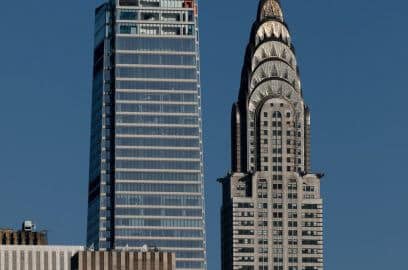
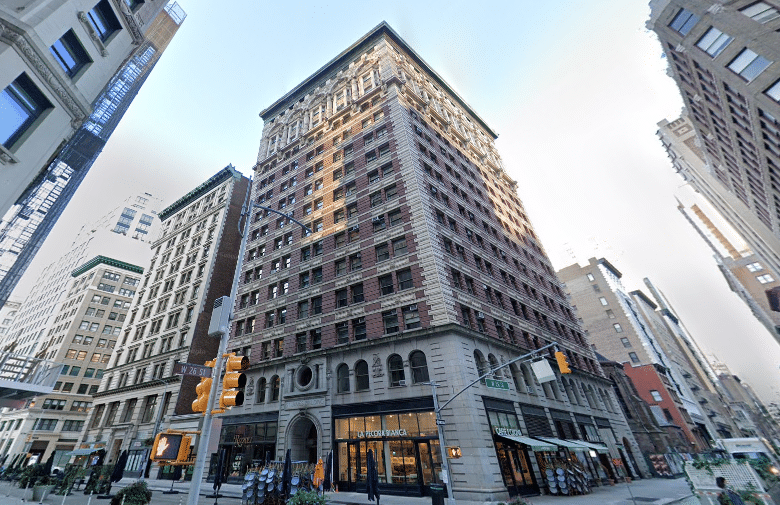
Class A here means Madison Avenue plus a handful of rebuilt buildings on Park Avenue South, and One Madison is the one everybody asks about. SL Green stacked a gleaming tower on an older base, filled it to the last inch, and Harvey alone grew into 185,000 feet on the way there.
The rest of that roster is a velvet rope: IBM, Franklin Templeton, Palo Alto Networks, FanDuel, Sigma, Coinbase. It asks $120 to $180 and it knows precisely what it’s worth, which is why the negotiation there tends to be short.
Which is why we usually walk clients one block up to 11 Madison instead. It’s the old Metropolitan Life North Building, Art Deco, hundred-thousand-foot floors, and it filled up right alongside its flashier neighbor without any of the noise.
UBS took the space Credit Suisse used to hold, next door to Sony Music, WME, Suntory, and Pinterest. By any measure a client actually cares about, that’s the same address as One Madison.
The kicker is the price. Eleven Madison asks around ninety dollars, roughly half its neighbor, and Clay signed a ten-year deal there in March at exactly that number. If you can fill a big floor, that’s the smarter money, and we’ll happily make the case to you in person.
Down on Park Avenue South, 315 is the sharpest play: a crisp prewar rebuild with an Equinox in the base and a tenant list that reads like a venture fund’s portfolio. 360 is BXP’s rebuild with a roof terrace worth the elevator ride.
Then there’s 345, which stands alone. It’s the old Armory, gutted and reopened as a life-sciences building, and it’s the only address in Midtown South with working wet labs a block off a park.
If you’re trying to sort a genuine trophy from a building that merely charges like one, read our piece on what actually separates trophy buildings before you sign anything. Our list of the best Class A towers in Midtown is worth a look too if you’re weighing these blocks against the ones uptown.
Strip out the trophy headlines and this is where the leasing happens. It’s also where this year’s story lives.
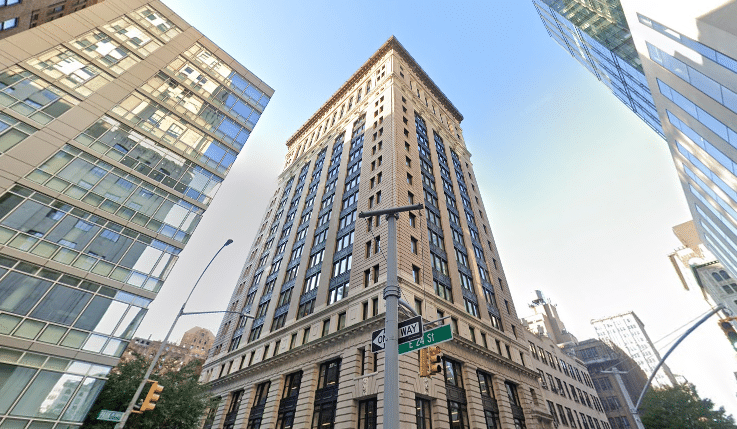
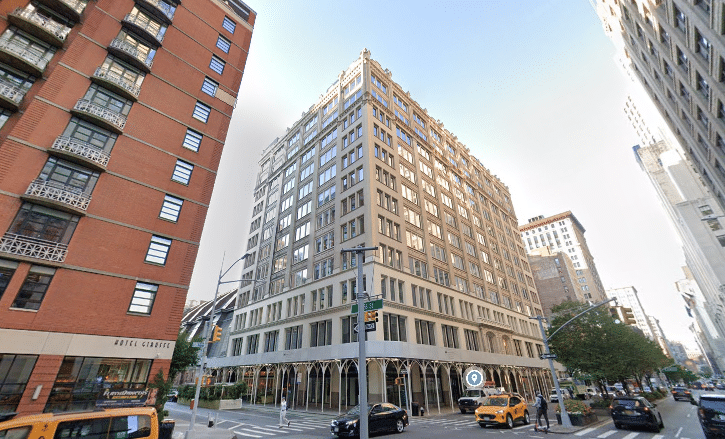
Sixty Madison is the clearest example. Moinian filled it in a fortnight and the tenants weren’t who you’d expect in a prewar building. Tenex Labs took the twelfth floor and the penthouse. Pace and GovWell, both AI companies, each took a floor of their own.
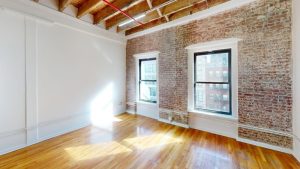
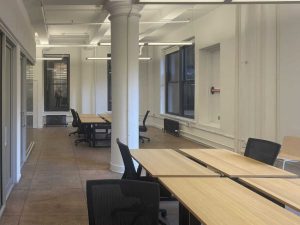
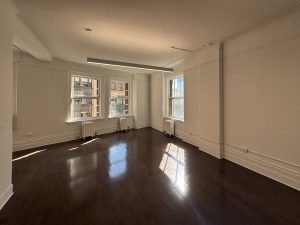
The stock is the reason any of it works. Park Avenue South, lower Fifth, and the Broadway blocks of NoMad are lined with early-1900s lofts: high ceilings, oversized windows, open plates. Everything a creative or tech tenant wants, and everything a 2008 glass box can’t fake.
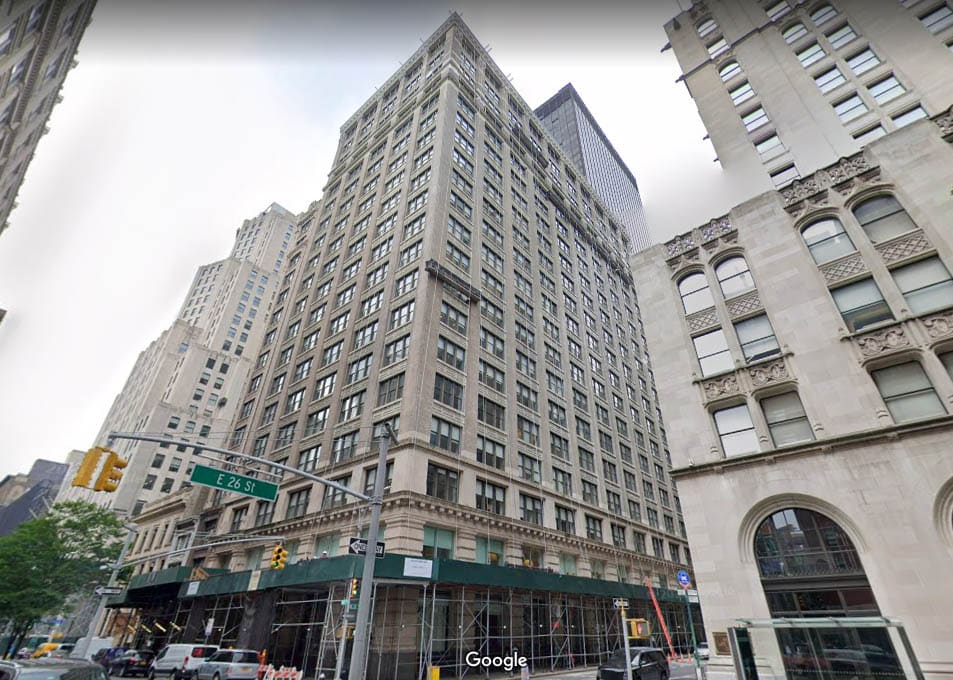
The American Woolen Building at 225 and the Everett Building at 200 are the classics on the strip. 1133 Broadway, the old St. James, holds down the NoMad end with smaller, characterful floors.
One piece of advice worth more than the letter grade: ignore the label. A renovated loft here can wear a B and out-ask a Class A tower in Midtown, because what you’re paying for is ceiling height, light, a usable plate, and the block.
None of that is a letter an appraiser typed into a spreadsheet, and our explainer on what Class A, B, and C actually mean walks through where the whole system falls apart in a loft market.
Two buildings on the same block will quote you wildly different numbers, so tour them yourself and don’t put much faith in the average. This is the same stock that pulls tenants into SoHo and Chelsea, often at similar money, which is worth knowing when you’re deciding how far the search should stretch.
The genuine bargains still sit off the main strip: the side streets running east toward Lexington, the older NoMad buildings, and the Flatiron blocks heading west toward Sixth. Small firms, early-stage startups, nonprofits, back-office teams. For plenty of tenants it’s still the right answer.
The warning is that this is exactly the space the market came for this year. Availability has narrowed sharply across Manhattan’s older buildings, and Class B asking rents citywide just closed a quarter at the highest average anyone has recorded.
Nobody publishes a clean Class C number for this submarket either, so when a landlord hands you one precise figure like it’s settled fact, keep your guard up. If price is genuinely what’s driving you, Downtown and the Financial District still run well below these blocks, and Lower Manhattan is having its own quiet recovery.
Class B taking 42.0% of Midtown South leasing against 40.8% for Class A, and TAMI tenants accounting for 61.4% of new leases 10,000 SF and greater (up from 25.2% in H1 2025), from Cushman & Wakefield, Q2 2026. Class B leasing citywide running 28% above last year and Class B asking rents ending Q2 at the highest average on record from CoStar (July 2026). The 60 Madison leases (Tenex Labs 25,000 SF, Pace 17,500 SF, GovWell 17,500 SF, The Full Picture 8,000 SF) from Commercial Observer, Connect CRE, and Mann Report (June 2026).
This is where tenants leave the most on the table, every single time. They grind on the asking rent, claw back three dollars, feel like they’ve won, and wave straight through the two things that actually move the math.
Those two things are the free months and the build-out money, and both are shrinking. Free rent on new Manhattan deals is down to about a year, the thinnest since 2019, and improvement allowances have flattened out around a hundred and forty a foot.
The landlords know it. Last quarter they marked up more than twice as much Midtown South space as they marked down, and they’ll be pleasant about it while they do.
None of which means you have no room. It means the room is narrower and you have to know which buildings still have it, which is the whole argument for touring more than one and for having somebody in your corner who saw last month’s comps.
| Building class | Free rent (typical) | TI allowance (typical) | Notes |
|---|---|---|---|
| Trophy Class A (One Madison, 11 Madison) | 6 to 10 months | Strong improvement dollars | The thinnest package here, because there's almost nothing left to give. Both buildings are full. |
| Renovated Class A (315, 360, 345) | 10 to 14 months | Healthy allowances | The sweet spot, where a prime address still comes with real give on terms. |
| Class B loft | 10 to 15 months | Varies by building | Narrowing fastest, because AI tenants are bidding for these same floors now. A 10-year term is your leverage. |
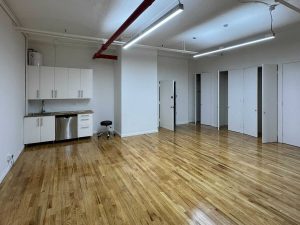
| Class C and value | 12 to 18 months | Varies by building | Much of it already built out and ready to move into. Still the most negotiable tier on these blocks. |
Manhattan-wide benchmarks (12.4-month weighted average free rent on H1 2026 new deals, the lowest since 2019, and $140.02/SF average TI allowance) from Colliers, Examining Manhattan's 13.0% Availability Rate (July 2026). Midtown South repricing (11.1% of direct space marked up against 4.9% down) from the same source. The by-class ranges above are typical-market figures from Metro Manhattan internal research (July 2026) and swing materially by landlord, tenant credit, term, and building. Ranges assume a five or ten-year term.
Two things to fix in your head before you sit down. Your effective rent lands well below the face rent once you count the free months, which our breakdown of rising landlord concessions walks through in full.
The other is that a build-out check is only worth what it actually pays to build. Our primer on tenant improvement allowances covers how that money gets structured, and you want to settle who’s covering the build-out before anybody starts talking numbers.
Budget past the rent too. Electricity gets billed three different ways and the spread matters, as our guide to office electricity costs explains. Your landlord will want liability coverage naming them, and the security deposit runs higher for a young company than a profitable one, usually softened by a Good Guy Guarantee.
If the term is your sticking point, our guide to three, five, and ten-year leases lays out the trade-offs. If there’s any chance you outgrow the space, negotiate your sublease and assignment rights now instead of fighting for them in year three, and skim the lease clauses that quietly cost the most before the redline comes back.
On these blocks the building picks the tenant about as often as the tenant picks the building. The towers and the rebuilt Class A on Park Avenue South pull AI, tech, and finance, while the lab building pulls biotech.
The old lofts pull creative shops, media, design firms, and now the AI companies that couldn’t get into the towers. The cheaper side streets pull startups and nonprofits, though that pool is thinning. Find your row and you’ve narrowed the search before you’ve toured a thing.
| Industry | Best-Fit Areas | Class Fit | Example Buildings |
|---|---|---|---|
| Artificial Intelligence / SaaS | Madison Square towers, Madison Ave loft blocks, Park Avenue South | Trophy / A / B | One Madison (Harvey, Sigma), 11 Madison (Clay, Tempus), 60 Madison (Pace, GovWell), 315 (PitchBook, Gemini) |
| Technology / Software | Park Avenue South, NoMad, Madison Ave loft blocks | Class A / B | 315, Nomad Tower, 60 Madison (Tenex Labs), 200 and 225 PAS |
| Financial Services / Fintech | Madison Square towers, Park Avenue South | Trophy / A | One Madison (Franklin Templeton, Coinbase), 11 Madison (UBS) |
| Life Sciences / Digital Health | Park Avenue South | Class A (lab) | 345 (Cure: Deerfield, ProTara, Helaina), 11 Madison (Tempus) |
| Media / Advertising / Publishing | 11 Madison, NoMad, Madison Ave loft blocks | Class A / B | 11 Madison (Sony Music, WME), 60 Madison (The Full Picture), 1133 Broadway, 200 PAS |
| Design / Creative / Architecture | NoMad, Flatiron edge, loft blocks | Class B | 225 PAS, lower Fifth lofts, NoMad boutique towers |
| Law Firms (boutique and midsize) | Park Avenue South, Madison Square towers | Class A / B | 315, 360, One Madison |
| Professional Services / Consulting | Park Avenue South, NoMad | Class A / B | 360, 315, Nomad Tower |
| Startups / Small Business (under 20) | Side streets, NoMad, Flatiron edge | Class B / C | Side-street lofts, older NoMad buildings |
| Nonprofits / Associations | Flatiron edge, side streets | Class B / C | Prewar side-street buildings |
| Coworking / Flex | Park Avenue South, NoMad | Class A / B | Nomad Tower and buildings with flex operators |
| Retail / Storefront | Fifth Avenue, Broadway, park frontage | Ground-floor | Madison Square Park frontage, Broadway and Fifth corridors |
Vertical landing pages: Financial Services, Law Firm Offices, Startup & Tech Space, Medical & Healthcare Offices, Life Sciences & Biotech Space. Industry and class fits are Metro Manhattan internal research (July 2026). Tenant attributions from SL Green, Commercial Observer, Connect CRE, and The Real Deal (March to June 2026).
Running a small team? This isn’t the cheapest corner of Manhattan and we won’t insult you by pretending otherwise, least of all this year. The side streets and the blocks west of Park still make it more reachable than the AI headlines suggest, though that window is closing.
If you’re still weighing neighborhoods against each other, our guide to the best NYC areas for small businesses is the place to start. If you’re finally trading a coworking membership for a space of your own, we wrote up how to make that jump without regretting it.
Two things you can’t buy in Midtown at any price: Madison Square Park out your front door, and the restaurants ringing it, from Eleven Madison Park inside the tower to Gramercy Tavern around the corner. That’s the whole pitch and it’s a good one.
The new towers set the amenity bar absurdly high. The older buildings answered the only way they could, by gutting their lobbies and stocking up on move-in-ready suites, and it has worked better than anyone expected. It breaks into three tiers.
Trophy: One Madison and 11 Madison. Full-block towers, modern systems, park views, serious dining downstairs, roof gardens, private lounges. The top of Midtown South with no qualifier needed, and both full.
Renovated Class A: 315, 360, and 345. Updated lobbies and mechanicals, an Equinox in the base of 315, a roof terrace at 360, lab-ready floors at 345, and the 6 train waiting at the corner.
Class B loft and value: 60 Madison, 225, 200, 1133 Broadway, the side streets. Prewar character, high ceilings, big windows, attended lobbies, and a deepening supply of prebuilt suites, all a short walk from the park. This is where the market moved.
Ground-floor retail on the park frontage and along Broadway and Fifth is some of the highest-traffic in the neighborhood, and it’s a completely different search. See all Midtown South buildings or filter live listings by size and price.
Who holds the keys matters as much as which building you pick, because no two of these owners play the same game. That isn’t a throwaway line. It’s most of what a good tenant broker is actually selling you.
SL Green owns the trophy tier outright, and with both buildings full they’re negotiating from comfort rather than need. Deerfield runs 345 as a life-sciences campus instead of an office building, so expect an entirely different conversation over there.
Moinian is the name to watch. Four leases at 60 Madison in two weeks, another ninety-five thousand feet at 245 Fifth, a steady run at 450-460 Park Avenue South. They’ve built the deepest loft book on these blocks and they move fast when they like a tenant.
Columbia Property Trust, now under PIMCO, treats 315 like a flagship. BXP rebuilt 360 from the studs. Global Holdings owns Nomad Tower.
The real value of a broker is knowing which of these owners deals straight and which one grinds you on the last dollar, and that’s worth more than any listing site. Our rundown of the biggest landlords in NYC lays out the wider field.
| Landlord | Notable Properties Here | Approx. Portfolio | Typical Lease Profile |
|---|---|---|---|
| SL Green Realty | One Madison, 11 Madison (with PGIM) | ~31.4M SF across Manhattan (city's largest office landlord) | Class A / trophy, 5,000+ SF, 10+ yr |
| The Moinian Group | 60 Madison Ave, 245 Fifth Ave, 450-460 Park Ave South | Large NYC owner; deepest loft book on these blocks | Class A / B loft, full floors, 5,000+ SF |
| Deerfield Management | 345 Park Avenue South (Cure) | ~300K SF (single life-sciences asset) | Lab and office, life sciences, flexible |
| Columbia Property Trust (PIMCO) | 315 Park Avenue South | ~341K SF here; larger nationally | Class A, 5,000+ SF |
| BXP (Boston Properties) | 360 Park Avenue South | Part of BXP's large Manhattan book | Class A, 10,000+ SF |
| Global Holdings | Nomad Tower (1250 Broadway) | ~800K SF here; larger nationally | Class A, 5,000+ SF |
| ABS Partners Real Estate | 200 Park Avenue South (Everett Building) | Midtown South loft portfolio | Class B loft, 1,500+ SF |
Portfolio figures are approximate and weighted toward these blocks; several of these owners hold much larger books across Manhattan. Ownership and management change, so confirm at lease time. Moinian's 60 Madison, 245 Fifth, and 450-460 Park Avenue South activity from Commercial Observer, Connect CRE, Mann Report, and NYREJ (March to June 2026). Metro Manhattan internal research (July 2026).
The transit here is genuinely excellent, and that’s not filler to pad a page. It’s a real reason to sign a lease on these blocks, and it’s worth more every year that landlords elsewhere discover a building ten minutes from a train has a problem.
The 6 runs directly under Park Avenue South, so the spine of the neighborhood sits on a subway line. Penn and Grand Central are both a short ride out, which spares your suburban people the daily headache it becomes somewhere like Columbus Circle.
Before the commute turns into an office-wide argument, settle it with our commute calculator and everyone’s home address. It ends the debate faster than a meeting will.
| From | To Park Avenue South (23rd St) | Mode |
|---|---|---|
| Union Square / Flatiron | 3 to 6 min | 6, R, W, or walk |
| Grand Central | 8 to 12 min | 6 |
| Penn Station | 8 to 12 min | Walk, or 1 to 23rd St |
| Herald Square | 5 to 8 min | R, W, or walk |
| Downtown Brooklyn | 25 to 35 min | 4/5, or R plus transfer |
| Williamsburg, Brooklyn | 20 to 30 min | L to Union Square plus 6 |
| Long Island City, Queens | 20 to 30 min | 6 plus transfer, or F |
| Hoboken / Jersey City | 15 to 25 min | PATH to 23rd or 33rd |
| Newark, NJ | 30 to 40 min | PATH to 33rd, or NJ Transit to Penn |
| Hicksville, NY (Long Island) | 55 to 70 min | LIRR to Penn or Grand Central plus 6 |
| Stamford, CT | 65 to 80 min | Metro-North to Grand Central plus 6 |
Typical off-peak door-to-station estimates that vary with service and time of day (Metro Manhattan internal research, July 2026).
There’s no single number, because the range is enormous. Cushman & Wakefield put Midtown South at roughly $81 a foot in mid-2026, with Class A just over $104. The two Madison Avenue towers ask $90 to $180. A few blocks west or east of Park, loft space still leases in the sixties.
The money and the space lined up here first. AI firms took more Manhattan space last quarter than in all of 2025 combined, per Colliers, and these blocks got an outsized share. Renovated space with big open plates near the park is what those companies want, so Harvey, Clay, Sigma, and Tempus ended up within blocks of each other.
Less than they were, and that shift is the real story of 2026. Cushman & Wakefield found Class B took a bigger share of Midtown South leasing than Class A last quarter, a first for this cycle. CoStar has Class B asking rents citywide at a record average. The lofts still price below the towers, though that gap is closing.
The two full-block towers set the ceiling: One Madison asks $120 to $180 a foot and 11 Madison sits closer to $90. Both are fully leased, so direct space is scarce and you’re usually chasing a sublease. Renovated Class A like 315 and 360 prices below the towers, while the Plaza District trophies uptown run considerably higher.
The magnets are One Madison (Harvey, Sigma, Palo Alto Networks), 11 Madison (Clay, Tempus, Pinterest), and 315 Park Avenue South (PitchBook, Gemini, Cadre). Add 60 Madison Avenue as of June 2026, where Moinian signed roughly 70,000 square feet in a fortnight to Tenex Labs, Pace, and GovWell. Smaller teams get the same character for less in the NoMad lofts.
Yes, and it’s genuinely rare for Midtown South. The old Armory at 345 Park Avenue South reopened as Cure, Deerfield’s life-sciences building, with move-in-ready wet labs a block off the park. Tenants include Deerfield, ProTara, and Helaina. Our look at record demand in NYC life sciences covers the wider picture.
Colliers had Manhattan availability at 13.0% in the second quarter of 2026, the lowest since October 2020. Newmark last published Midtown South at 16.9% in Q1, and Avison Young says the district improved again in Q2 without breaking out the rate. The trophy towers are effectively full, so what’s left here sits in older loft and side-street buildings.
Less than last year, and the trend isn’t your friend. Colliers has free rent on new Manhattan deals averaging about 12 months across the first half of 2026, the thinnest since 2019, with improvement allowances flattening near $140 a foot. Off the trophy tier there’s still real room to negotiate, but you have to know which buildings have it.
They overlap, and you shop them differently. Park Avenue South is the stretch under the 6 train, now the AI center of gravity. NoMad, short for North of Madison Square Park, runs up Broadway and Fifth from 26th to 32nd. Flatiron, west toward Sixth, is mostly prewar loft and prices lower, tracked by Savills in the mid-sixties.
Off the trophy blocks: the side streets east of Park, the older NoMad buildings, and the Flatiron edge. Many landlords there keep prebuilt suites, so a small team can sign and move fast. The discount is thinner than it was, since CoStar has Class B leasing citywide running well above last year. Downtown and the Financial District still run cheaper.
Because there was nothing here to give them. Anthropic took the entire 466,000-square-foot building at 330 Hudson Street in July 2026. One Madison and 11 Madison are full, and no building here has a block that size. That’s a sign of how tight this submarket is, not of it cooling off.
SL Green, the city’s largest office landlord, owns the trophy tier: One Madison and 11 Madison, the latter with PGIM. Moinian has the deepest loft book on these blocks, with 60 Madison, 245 Fifth, and 450-460 Park Avenue South. Deerfield owns 345, Columbia Property Trust (now PIMCO) owns 315, BXP owns 360, and Global Holdings owns Nomad Tower.
The 6 runs directly under Park Avenue South with stops at 23rd, 28th, and 33rd, and the R and W run a block west on Broadway. Herald Square and Union Square are minutes away, PATH trains stop at 23rd and 33rd, and Penn Station is a short walk. It’s one of the best-connected submarkets in the city.
In a market this tight, yes. The best space here moves fast and rarely reaches the listing sites, and a tenant broker gets you through the door and negotiates on your behalf. The landlord pays the commission, so it costs you nothing. Worth reading first: the essentials to ask before leasing, key lease-offer terms, and the tenant proposal package guide.
Accessibility Tools