




Renegotiating Your Commercial Lease- A Short Guide
As we kick off 2023 with economic anxiety, the New York City commercial real estate market faces uncertainty.



Park Avenue is the address American business built for itself. Fourteen blocks of glass and bronze running from Grand Central up to 59th Street, put there in the 1950s and 60s by companies that wanted the world to know how well they were doing. Seagram. Lever House. Colgate-Palmolive. It still works exactly that way.
Which is why hardly any of it is available. Only 6.5% of Park Avenue is on the market, the tightest number in Manhattan, against 11.5% a block west on Madison and 20.3% two blocks east on Third. Rents average $117 a foot, and the avenue keeps shrinking.
Two of its biggest buildings vanished inside a year. JPMorgan moved 10,000 employees into a tower it owns at 270 Park, so that space will never be leased to anyone. Three blocks north, 350 Park came down this summer to make room for Citadel.
So if a search here has turned up four options and none of them work, the search isn’t broken. There are four options.
There’s a way onto the avenue for about $40 a foot less, though, and most tenants never hear about it. It comes down to where the brokerages drew a line.
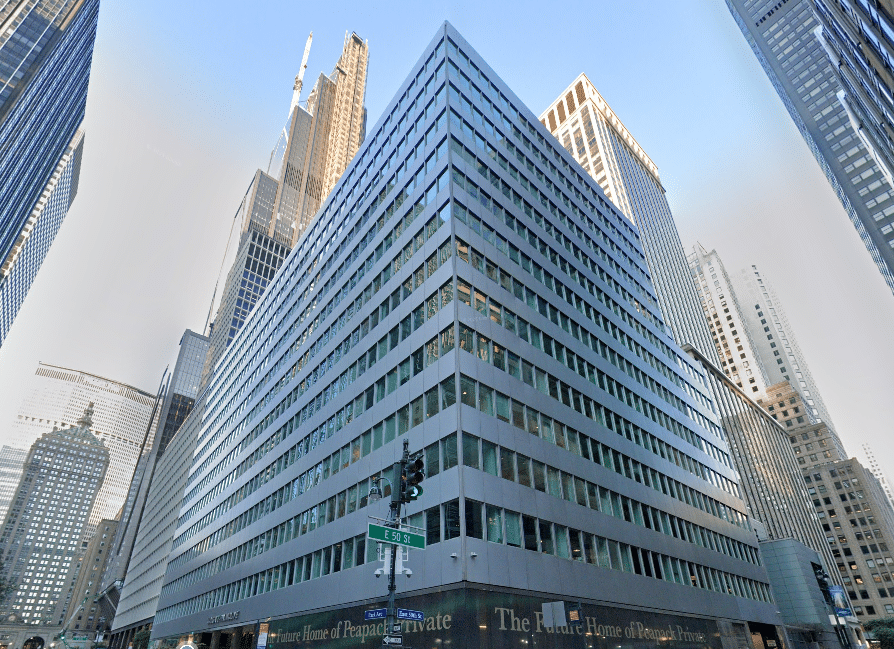
That line runs at 46th Street. Above it, buildings count as the Park Avenue submarket and average $117. Below it, they count as Grand Central and average $75.56. But 90, 99, 100 and 101 Park Avenue all sit below the line, and every one of them puts Park Avenue on the lease, the letterhead and the sign in the lobby.
No client has ever asked which submarket table a building appears in.
What follows covers what each stretch of the avenue costs, which buildings have space, who you’ll be negotiating against, and where the value is hiding. To see what’s open right now, start with the Park Avenue listings.
High rent and low availability normally travel together, so neither figure says much alone. The interesting part is that Park Avenue rents slipped over the past year, from $118.37 to $117.30, in a quarter when twelve of Newmark’s nineteen Manhattan submarkets rose.
Nobody should get excited about that. No landlord cut a price. When a market has this little space listed, the average just reflects whichever floors happen to be available the week someone runs the numbers. A couple of mid-block spaces come open at $95 and the whole average drops without a single negotiation.
Supply is what’s genuinely moving, and it moves one way. JPMorgan pulled 2.5 million square feet off the leasing market at 270 Park and filled it with its own staff. Three blocks north, Vornado, Rudin and Ken Griffin knocked down a full blockfront at 350 Park this summer for a tower Citadel anchors in 2032.
Two of the largest buildings on the avenue, gone. One forever, one for six years, in a market that was already the tightest in the country.
Which means the search here should be built around scarcity rather than price. Start earlier than feels necessary, decide in advance what you’ll accept, and be ready to move when a floor comes back.
Anyone who gives you one number for Park Avenue is guessing. A penthouse floor here trades at $300 a foot while a middle floor in a 1960s tower asks $95, and both leases carry the same address.
The published averages give you a range to argue from. Newmark says $117.30. CBRE, working from a tighter map, says $105.33. Vornado’s Steve Roth told shareholders in April that the avenue was under 7% vacancy, with rents from the mid-$80s into the $120s.
They disagree on boundaries and agree on the shape: north of $100 on average, with a huge range underneath it.
Three things decide where a specific space lands in that range.
Location on the avenue is the first, and it moves the number more than anything else. Second is when the building was last renovated, which tells you more than the class letter on the listing sheet.
Third is floor height, and it counts for more on Park Avenue than anywhere else in Midtown, because a good share of the rent is buying the view.
Do one thing before touring: run your headcount through the office space calculator. At $117 a foot, leasing 2,000 square feet more than you need costs about $234,000 a year, every year, until the lease ends.
| Area | Trophy / Class A Ask | Class B & Value Ask | Availability | Typical SF for New Leases | Tier |
|---|---|---|---|---|---|
| Grand Central end (45th to 48th) | $95 to $150/SF | Limited; $80 to $95/SF | About 8 to 12% | 5,000 to 100,000+ SF | Trophy / A |
| The 50s spine (49th to 53rd) | $120 to $250+/SF | Almost none | About 4 to 7% | 3,000 to 75,000 SF | Trophy |
| Upper Park (54th to 59th) | $110 to $300/SF | Scarce; $85 to $110/SF | About 5 to 9% | 2,000 to 40,000 SF | Trophy / A |
| One block east (Lexington, Third) | $75 to $95/SF | $55 to $75/SF | About 15 to 20% | 1,000 to 50,000 SF | Value / B |
| Park Avenue below 46th | $80 to $100/SF | $65 to $80/SF | About 10 to 14% | 1,500 to 40,000 SF | Value / A-B |
| Park Avenue submarket average (context) | $118.50 direct / $117.30 total | n/a | 8.2% submarket, 6.5% avenue | Varies | Mixed |
Submarket asking rents ($118.50 direct, $117.30 total, $108.80 sublet), availability (8.2%), inventory (24,603,197 SF) and quarterly absorption (204,153 SF) from Newmark, 1Q26. Avenue-level availability (6.5%) from Colliers, Q2 2026. East Side submarket ($72.10/SF, 15.0% availability) and Grand Central ($75.56/SF, 12.0%) from Newmark, 1Q26, and stand in for the value bands above. Area-level ranges, coverage descriptors and availability bands are Metro Manhattan internal research (August 2026); no brokerage publishes per-block breakouts for Park Avenue. Asking rents, before concessions.
Five or six buildings on Park Avenue qualify as trophy properties, and the list barely changes from year to year. What changes is how much space they have, which right now is close to zero.
If your heart is set on one of these, the honest advice is to get in line and wait for a tenant to hand something back.
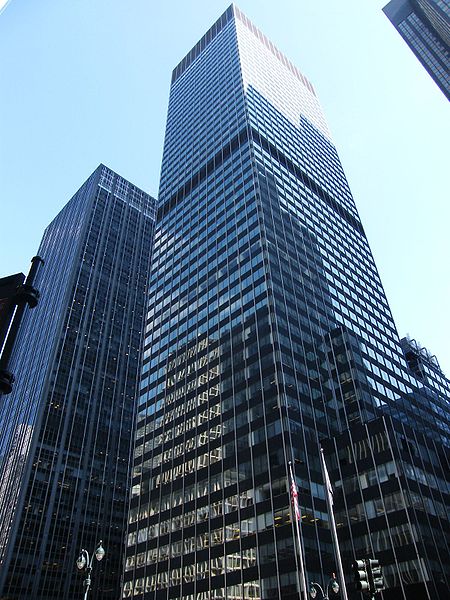
The Seagram Building at 375 Park sets the standard. Mies van der Rohe finished it in 1958, and RFR has spent steadily on it ever since buying in. Occupancy runs near 99%, and it signs more $200-a-foot leases than any building in the country.
Ninety-two percent of its tenants arrived in the last five years, so the demand there is current rather than inherited.
A block north, Lever House reached 100% leased in December 2025 after a $100 million restoration by Brookfield and WatermanClark. Northern Trust and Quantum Energy Partners took space alongside a group of banks and family offices. In 2020, the building’s future was an open question. It’s full now.
425 Park sets the top of the market. Citadel pays $300 a foot for the penthouse on a lease running to about 2034, and L&L’s David Levinson has said the highest non-penthouse rent in the building is $260 escalated. Jean-Georges runs the ground-floor restaurant.
Before committing at these rents, two guides are worth reading: how trophy buildings set themselves apart and the list of top Class A towers in Midtown. There’s also a longer piece on 425 Park and Midtown’s rebirth.
This is where most tenants end up, and it’s usually the right answer anyway. The large postwar towers renovated since 2020 give you the same address and much of the same finish for meaningfully less money, and they’re where most of the leasing on the avenue is happening.
245 Park is the clearest example. SL Green is halfway through a Kohn Pedersen Fox renovation that includes a terra cotta facade on the Park Avenue side, a new lobby, a 17,000-square-foot wellness center and a direct underground connection to Grand Central.
Tenants noticed. Carlyle signed for 150,036 feet in the first quarter, and EQT expanded to 114,562 feet at a $190 asking rent.
345 Park is Rudin’s full-block tower between 51st and 52nd. Blackstone occupies 1.06 million square feet of it across 28 floors under a lease running to 2034, and the NFL has offices in the same building. Centerbridge Partners still found 76,000 feet there in the second quarter.
277 Park is worth watching for a different reason. When the building added premium space this spring, Cushman & Wakefield credited it with raising Midtown’s entire Class A average by $1.93, to $88.50. One building moved the number for the whole market.
The MetLife Building at 200 Park and the Colgate-Palmolive Building at 300 Park round out the group. Tishman Speyer owns both, and between them they offer floor plates that almost nothing south of Midtown can match.
Between 46th and 59th there is almost no Class B space, which surprises tenants who assume every avenue has a cheap side. This one doesn’t. It was rebuilt for corporate tenants in the 1950s and 60s and never went back.
So the affordable space sits one street away. Buildings on Lexington and Third share the same subway lines, the same restaurants and the same twelve-minute walk to Grand Central, and they rent for $55 to $95 a foot. The East Side submarket averages $72.10, against $117.30 on Park.
The smarter move, for most tenants who want the name, is the southern end. 90, 99, 100 and 101 Park all sit below 46th Street. Each one carries a Park Avenue address on the lease and on business cards. Each one gets counted by brokers as part of Grand Central, where the average rent is $75.56.
A 5,000-foot floor at $75 costs roughly $210,000 a year less than the same floor at $117. Nobody visiting your office will know the difference, and no client, recruit or opposing attorney has ever asked which submarket table a building appears in.
If the budget needs to go lower still, Midtown South loft space and Downtown Manhattan both price well below Park Avenue, and the Financial District comes in lower again. When comparing listings, the guide to what Class A, B and C mean explains why the year of the last renovation tells you more than the letter does.
This is where most tenants leave money behind. They negotiate hard on the asking rent, win back two or three dollars a foot, and feel like they’ve done well. Then they sign without pushing on the two terms that decide what the deal costs: free rent and the build-out allowance.
On a ten-year lease, four extra months of free rent is worth more than three dollars a foot. That’s the trade tenants keep getting wrong.
Both are shrinking, so move sooner rather than later. Colliers reports free rent on new Manhattan deals averaging 12.4 months in the first half of 2026, the lowest since 2019, with improvement allowances flat at about $140 a foot. Park Avenue usually comes in below the Manhattan average.
Here is roughly what recent deals have looked like on five- and ten-year terms. Shorter terms earn less, longer terms earn more.
| Building class | Free rent (typical) | TI allowance (typical) | Notes |
|---|---|---|---|
| Trophy buildings (Seagram, Lever House, 425 Park) | 6 to 10 months free | Strong improvement dollars | These are the thinnest packages on the avenue, because the buildings have almost no space to fill. |
| Renovated Class A (245, 345, 277, 280 Park) | 10 to 14 months free | Healthy allowances | This is the sweet spot, where a prime address still comes with room to negotiate. |
| Park Avenue below 46th Street | 12 to 16 months free | Often in prebuilt suites | Often in prebuilt suites you can occupy without waiting on construction. |
| Lexington and Third Avenue | 14 to 18 months free | Best improvement packages in the area | Because those landlords compete for tenants and Park Avenue landlords don't have to. |
Two things are worth settling before the first meeting. The first is effective rent, which almost always lands well below the face rent once free months are counted. This breakdown of landlord concessions works through that math, as do the notes on tenant improvement allowances.
The second is the build-out allowance, which is only worth what it pays to build. Establish who is covering the work before trading numbers. If the length of the term is the sticking point, the comparison of three, five and ten-year leases lays out the tradeoffs.
Finance has dominated Park Avenue for seventy years, and the tenant roster hasn’t changed much. Cushman & Wakefield found that financial services accounted for 37.5% of new Midtown leases over 10,000 feet through midyear, and a disproportionate share of those landed on these blocks.
What has changed is the type of financial firm. Corporate headquarters have given way to private equity firms, hedge funds, family offices and the law firms that serve them. That’s why floors between 20,000 and 40,000 square feet lease faster here than any other size.
The table below maps common business types to the stretch of the avenue that usually fits them best. Find your row and the search narrows before you’ve toured anything.
| Industry | Best-Fit Areas | Class Fit | Example Buildings |
|---|---|---|---|
| Private Equity / Hedge Funds / Family Offices | The 50s spine, Upper Park | Trophy | 375 Park (Seagram), 390 Park (Lever House), 425 Park, 345 Park |
| Banking / Financial Services | Grand Central end, the 50s spine | Trophy / A | 270 Park, 245 Park, 280 Park, 399 Park |
| Law Firms (Am Law and boutique) | Grand Central end, the 50s spine | Trophy / A | 245 Park, 250 Park, 101 Park, 345 Park |
| Asset Management / Investment Advisory | Grand Central end, Upper Park | Class A | 230 Park, 277 Park, 300 Park, 450 Park |
| Consulting / Professional Services | Grand Central end, below 46th | Class A | 200 Park (MetLife), 100 Park, 90 Park |
| Insurance / Reinsurance | Grand Central end, below 46th | Class A / B | 99 Park, 101 Park, 230 Park |
| Real Estate / Construction | Below 46th, one block east | Class A / B | 100 Park, 110 East 42nd, Lexington Avenue stock |
| Medical and Specialist Practices | Upper Park, side streets | Class A / B | East 57th and 58th Street blocks, Park Avenue medical condos |
| Tech and AI (enterprise sales offices) | Grand Central end, Upper Park | Class A | 245 Park, 277 Park, 425 Park |
| Nonprofits / Associations / Foundations | Below 46th, one block east | Class B / value | 99 Park, Lexington and Third Avenue buildings |
| Small Firms and Startups (under 20) | One block east, below 46th | Class B / value | Third Avenue stock, prebuilt suites below 46th |
Vertical landing pages: Financial Services, Law Firm Offices, Medical & Healthcare Offices, Startup & Tech Space, Retail/Stores. Industry and class fits are Metro Manhattan internal research (August 2026).
Fifteen-person firms do lease on Park Avenue, mostly in the buildings below 46th Street and in the stock one block east. The rent is high, but it isn’t out of reach.
For anyone still comparing neighborhoods, the guide to the best NYC areas for small businesses is a reasonable starting point. There’s a separate piece on moving from coworking into a lease of your own, and sublets are worth checking while the inventory lasts.
Amenities on Park Avenue have gotten extravagant. Golf simulators, Michelin-starred cafeterias, rooftop gardens, locker rooms better than most gyms. At the top of this market, none of it distinguishes one building from another anymore.
One improvement is coming that no landlord can take credit for. The city’s transportation department has hired Starr Whitehouse to redesign Park Avenue between 46th and 57th Streets over the next eighteen months, widening the median and adding seating, planting and pedestrian space. After seventy years as a traffic route, the avenue will have somewhere to sit.
The buildings fall into three groups.
Trophy. Seagram, Lever House and 425 Park. Landmark architecture, full building services, restaurants that book weeks out, and rents to match. All three sit at or near full occupancy.
Renovated Class A. 245, 345, 277, 280, 300 and 399 Park. Rebuilt lobbies and mechanical systems, new amenity floors, large plates, and in a few cases a private tunnel into Grand Central. Most leasing on the avenue happens in this group.
Value and address plays. 90, 99, 100 and 101 Park below 46th Street, plus the Lexington and Third Avenue buildings. Attended lobbies, prebuilt suites, and rents a growing firm can absorb.
See all Midtown buildings, or filter live listings by size and price.
The owner matters as much as the building, and on Park Avenue it might matter more. In a market this tight, landlords don’t have to be reasonable. The difference between one who negotiates fairly and one who fights every line item shows up in your effective rent long before anybody signs.
SL Green is the largest office landlord in New York and controls the southern end of the avenue, so expect a confident counterparty. Rudin has owned 345 Park since the family built it in the late 1960s and negotiates like an owner planning to hold it another thirty years.
Brookfield and RFR sit at the top of the trophy tier, and their buildings are full, so the answer to most requests is a polite no. Tishman Speyer runs two of the largest towers on the avenue and has more flexibility.
Knowing which owner is which is most of what a tenant broker provides. The rundown of the biggest landlords in NYC covers the wider field.
| Landlord | Notable Properties Here | Approx. Portfolio | Typical Lease Profile |
|---|---|---|---|
| SL Green Realty | 245 Park, 280 Park (with Vornado), 100 Park | ~31M SF across Manhattan, the city's largest office landlord | Class A and trophy, 5,000+ SF, 10+ yr |
| Rudin Management | 345 Park, 40 East 52nd (in demolition) | ~10.1M SF across 15 commercial buildings | Class A, 10,000+ SF, long term |
| Vornado Realty Trust | 350 Park (with Rudin and Citadel), 280 Park | ~20M SF in Manhattan | Class A and development, 10,000+ SF |
| RFR Holding | 375 Park (Seagram Building) | Trophy-weighted Manhattan book | Trophy, 3,000+ SF, premium pricing |
| Brookfield Properties / WatermanClark | 390 Park (Lever House) | ~18M SF in Manhattan (Brookfield) | Trophy, 5,000+ SF, full building |
| Tishman Speyer | 200 Park (MetLife), 300 Park | ~13M SF in Midtown | Class A, 5,000+ SF |
| L&L Holding | 425 Park | Boutique trophy portfolio | Trophy, 10,000+ SF, 15 yr |
| Stahl Organization | 277 Park | ~5M SF, family-held | Class A, 5,000+ SF |
| JPMorganChase (with Hines) | 270 Park (owner-occupied), 250 Park | 3M+ SF owned along Park Avenue | Mostly owner-occupied; limited third-party leasing |
Portfolio figures are approximate and several of these owners hold considerably larger books across Manhattan and nationally. Ownership and management change, so confirm at lease time. Compiled from company disclosures, SL Green and Rudin press materials, Commercial Observer, The Real Deal and Metro Manhattan internal research (August 2026).
Park Avenue has the best transit access of any office address in North America, and for some tenants that alone justifies the rent. If a third of your staff rides Metro-North or the LIRR, the commute you’re buying here is worth twenty dollars a foot on its own.
The avenue sits directly above the Grand Central train shed. That puts most of it within a covered walk of a terminal serving Metro-North, the Long Island Rail Road and five subway lines.
Grand Central Madison, the LIRR terminal below the main concourse, opened in January 2023 and cut significant time off Long Island commutes that used to route through Penn Station.
A few buildings, including 245 and 230 Park, connect to the terminal underground. Employees get from the train to the elevator without stepping outside.
Settle the commute question early, using the commute calculator and everyone’s home address, before it becomes an argument about the lease.
| From | To Park Avenue (51st St) | Mode |
|---|---|---|
| Grand Central | 5 to 8 min | 6, or walk |
| Penn Station | 15 to 20 min | 7 to Grand Central plus 6 |
| Union Square | 12 to 16 min | 6 |
| Financial District | 20 to 28 min | 4/5 to Grand Central plus 6 |
| Long Island City, Queens | 15 to 22 min | E or M to Lexington-53rd |
| Downtown Brooklyn | 30 to 38 min | 4/5 to Grand Central plus 6 |
| Hoboken / Jersey City | 30 to 40 min | PATH to 33rd plus 6 |
| Newark, NJ | 40 to 50 min | NJ Transit to Penn plus 7 and 6 |
| Stamford, CT | 55 to 70 min | Metro-North to Grand Central plus walk |
| Scarsdale, NY | 40 to 50 min | Metro-North to Grand Central plus walk |
| Hicksville, NY (Long Island) | 45 to 60 min | LIRR to Grand Central Madison plus walk |
Newmark puts the submarket at $117.30 a foot. CBRE works from a tighter map and gets $105.33. Underneath those averages, trophy floors reach $250 to $300, renovated Class A runs $95 to $150, and the blocks below 46th Street start in the $70s. Manhattan overall averaged $78.03 (Colliers, Q2 2026).
Supply keeps leaving. Colliers had Park Avenue at 6.5% availability in the second quarter of 2026, against 11.5% on Madison and 20.3% on Third. JPMorgan pulled 2.5 million feet off the market by moving into a building it owns at 270 Park, 350 Park is coming down, and the trophy buildings are full.
425 Park, and it isn’t close. Citadel pays $300 a foot for the penthouse on a lease running to roughly 2034, with the top non-penthouse rent reported at $260 escalated. The Seagram Building at 375 Park is the nearest competitor and signs more $200-plus leases than any building in the country.
Yes, if you shop the address and ignore the submarket label. 90, 99, 100 and 101 Park all sit below 46th Street, all carry a Park Avenue address, and all get counted by the brokerages under Grand Central, where the average is $75.56. One block east, the East Side submarket averages $72.10.
Demolition started in July 2026. Vornado, Rudin and Ken Griffin are clearing three buildings to make room for a 1,414-foot, 64-story Foster + Partners tower. It will hold 1.8 million feet of Class A space, with Citadel anchoring at least 850,000 feet. Demolition wraps around March 2027, and the tower opens in 2032.
It changed supply permanently. The 60-story tower at 270 Park opened in October 2025 with 2.5 million square feet and room for 10,000 people. Because the bank owns and occupies it, none of that space ever reaches the leasing market. JPMorgan also bought 250 Park across 47th Street for $320 million in 2024.
Less than a year ago, and the trend isn’t your friend. Colliers has free rent on new Manhattan deals averaging 12.4 months through the first half of 2026, thinnest since 2019, with allowances flat near $140 a foot. Trophy buildings give six to ten months; renovated Class A, ten to fourteen; one block east, fourteen to eighteen.
Private equity and hedge funds concentrate in the 50s, at Seagram, Lever House and 345 Park, plus 425 Park above 54th. Law firms lean toward the Grand Central end at 245, 250 and 101 Park, where the plates are bigger and terminal access matters to a commuting partnership. The law firm office space page goes deeper.
Two separate markets that happen to share a name. Park Avenue runs from roughly 45th to 59th above the Grand Central train shed and averages $117.30 a foot. Park Avenue South is the old Fourth Avenue below 32nd, renamed in 1959, and sits in Midtown South with loft stock, AI tenants and rents in the $70s and $80s.
Both are worth touring, and Grand Central especially. The Plaza District averaged $107.38 at 12.5% availability in Q1 2026 while Grand Central averaged $75.56 at 12.0%, which buys considerably more optionality per dollar. For the lowest Class A number anywhere, Downtown and the Financial District sit well below all of them.
At 6.5% availability, yes. The best space here never reaches a listing site; it moves between brokers before anyone markets it. The landlord pays the commission, so representation costs a tenant nothing. Worth reading first: the essentials to ask before leasing and the key terms to get into your lease offer.
Accessibility Tools