




Key Terms to Include in a Commercial Lease Offer: A Guide
You’ve found the perfect office space, and you can already visualize your clients and team walking through the door.



Greenwich Village is a college town that happens to have an office market, and once you look at it that way the rest of it makes sense. NYU has been buying up the blocks around Washington Square for twenty years. In March 2026 it took 770 Broadway too, the old Meta building, on a 70-year master lease worth $935 million.
That’s roughly a million square feet, and it’s gone. Which is really the whole story of leasing here: the big blocks go to the university, and what’s left for everybody else is small, old, and spoken for quickly.
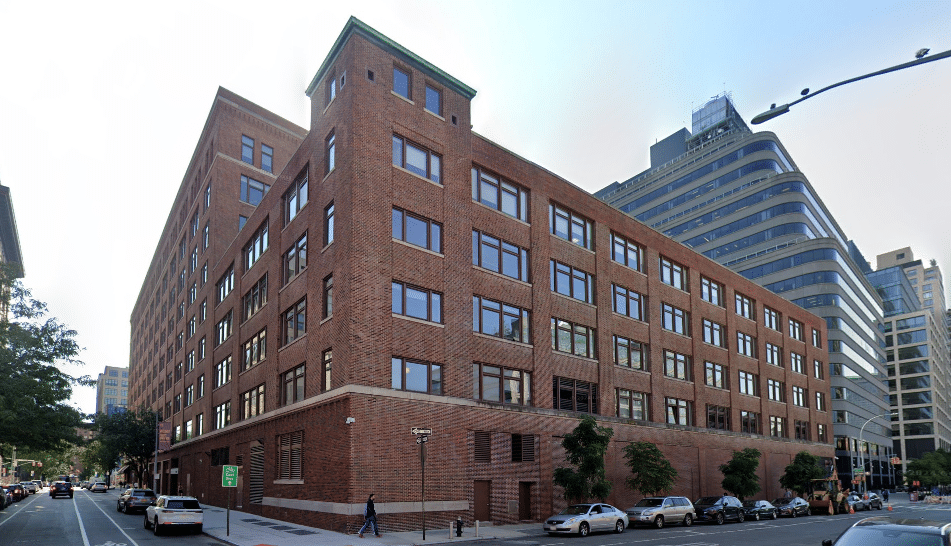
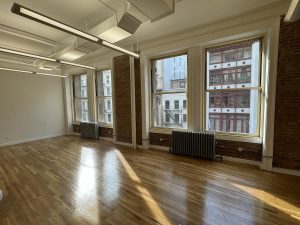
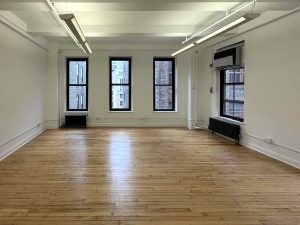
There’s no glass tower to move into, because nobody ever built one. What’s here is loft, hundred-year-old buildings with the ceilings and the light that come with them. If you’ve spent a month touring Midtown boxes, it tends to land the second you walk in.
None of it’s cheap. Midtown South asking rent crossed $88 a foot early this year, second-highest on record, and the Village sits right at the top of that. The average is a little misleading, though. A new floor at 799 Broadway has asked $175, and a loft a few blocks west goes for about half that. Same trains, same neighborhood.
What you’re paying for, partly, is the commute. West 4th Street puts eight subway lines in one station, and there’s PATH service to New Jersey from three stops in the neighborhood. If you’d rather skip ahead and just see what’s open, browse Greenwich Village office space.
The Village has never worked like the rest of Manhattan. It’s a landmarked residential neighborhood with a university sitting in the middle of it, so office was always the leftover use here. The buildings are old and small, landmarking keeps them that way, and new supply basically doesn’t happen.
Meanwhile the wider market is having its best run in years. Manhattan leased 22.8 million square feet in the first half of 2026, the strongest start since 2002, and availability’s down to 13.0%, the lowest since October 2020 (Colliers, Q2 2026). Midtown South is leading it with 641,411 square feet of net absorption in Q1 alone, and Savills now calls the district the city’s AI hub.
The Village didn’t really have the problem to begin with. Vacancy here stayed low through the years everyone else was drowning in empty floors. So as the district fills back up, a submarket this small and this wanted just gets tighter.
More than the old page says, and it depends on the block. Midtown South’s total asking rent hit $88.32/SF in the first quarter of 2026, second-highest on record, with direct asking at $90.23 (Newmark, Q1 2026). The Village sits at the top of that range, because loft near Washington Square is what everybody’s fighting over right now.
The spread inside a few blocks is wider than people expect. A new floor at 799 Broadway has asked $175. Renovated prewar loft on University Place goes well under that, and value space over on the Cooper Square edge less again. Run your headcount through our Office Space Calculator before you tour, so you’re at least shopping the right size.
| Area | Class A / Trophy Profile | Class B / C Coverage | Availability | Typical SF for New Leases | Tier |
|---|---|---|---|---|---|
| Broadway / NoHo corridor | Renovated Class A loft (770 Broadway, the Cable Building); premium prewar loft | Deep prewar Class B loft along Broadway | Tight | 2,000-40,000 SF | Trophy / A |
| Lower Fifth Ave & University Place | New Class A (799 Broadway) and renovated Class A (55 Fifth) | Boutique prewar Class B | Tight | 1,500-15,000 SF | Class A / B |
| Washington Square / NYU core | Institutional, NYU-owned; little leasable | n/a | Minimal | Rarely available | Institutional |
| West Village | Limited Class A | Boutique Class B / C loft and townhouse; ground-floor retail | Moderate | 500-8,000 SF | Value / B |
| Cooper Square / Astor Place | New Class A (51 Astor Place) | Value loft (80 Cooper Square, Cooper Square) | Moderate | 2,000-50,000 SF | Class A / Value |
| Greenwich Village context | Sits at the top end of Midtown South pricing | n/a | Among the district's lowest | Varies | Mixed |
Midtown South total ($88.32/SF) and direct ($90.23/SF) asking rents from Newmark, Manhattan Office Market Report 1Q26 (April 15, 2026). Area-level profiles, coverage descriptors, and availability descriptors are Metro Manhattan internal research (May 2026); approved firms publish Midtown South figures, and sometimes a Greenwich Village or Village/NoHo number, but do not publish the per-area breakouts shown here. Building-specific quotes (799 Broadway to about $175/SF) are marketed asking rents, not submarket averages. Rents are asking rents and do not reflect concessions.
Class A here means one of two things. Most of it’s converted loft, gut-renovated until it prices like a tower. The rest is a handful of purpose-built boutiques.
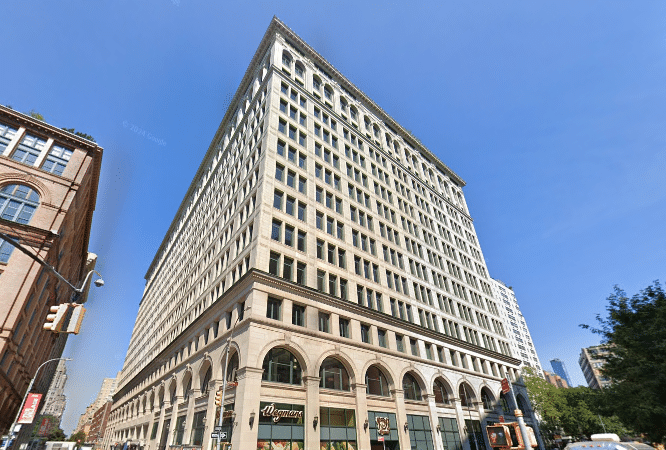
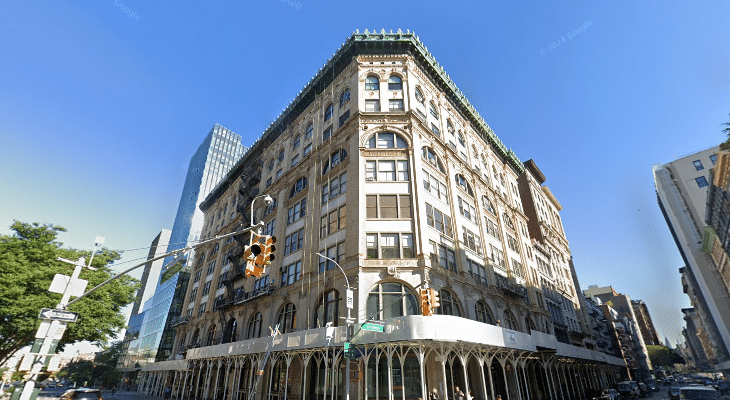
770 Broadway’s the anchor, Vornado’s landmarked old Wanamaker’s block in NoHo, with terra cotta barrel-vaulted ceilings, 75,000-foot floors and Meta in about 800,000 of them. See the 770 Broadway profile.
The newest thing here is 799 Broadway, a 12-story boutique that went up on East 11th in 2022. Perkins and Will gave it 15-foot ceilings, floor-to-ceiling glass and private terraces on most floors. Wellington, Bain Capital Ventures and Lightspeed all signed on around $175, which makes it about as close to a trophy tower as the Village gets.
If you want the theory on why old loft goes for tower money, our piece on how trophy buildings set themselves apart in NYC covers it. Down here it’s mostly ceiling height and daylight. Tenants will trade you a marble lobby for good light every time.
Most deals here happen in prewar loft, and the letter on the building matters less than you’d think. A 1900s cast-iron or masonry loft can be Class B and still out-rent a Class A tower uptown, because what people are paying for is the light, the ceilings and the address. This is commercial loft space at its most quintessential.
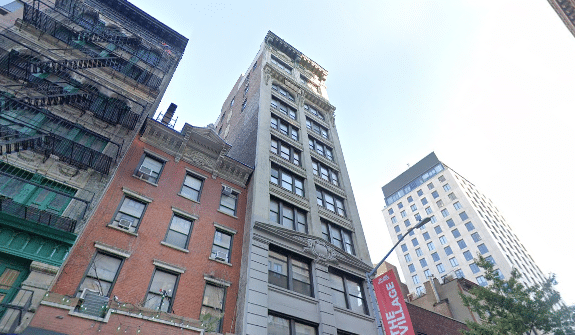
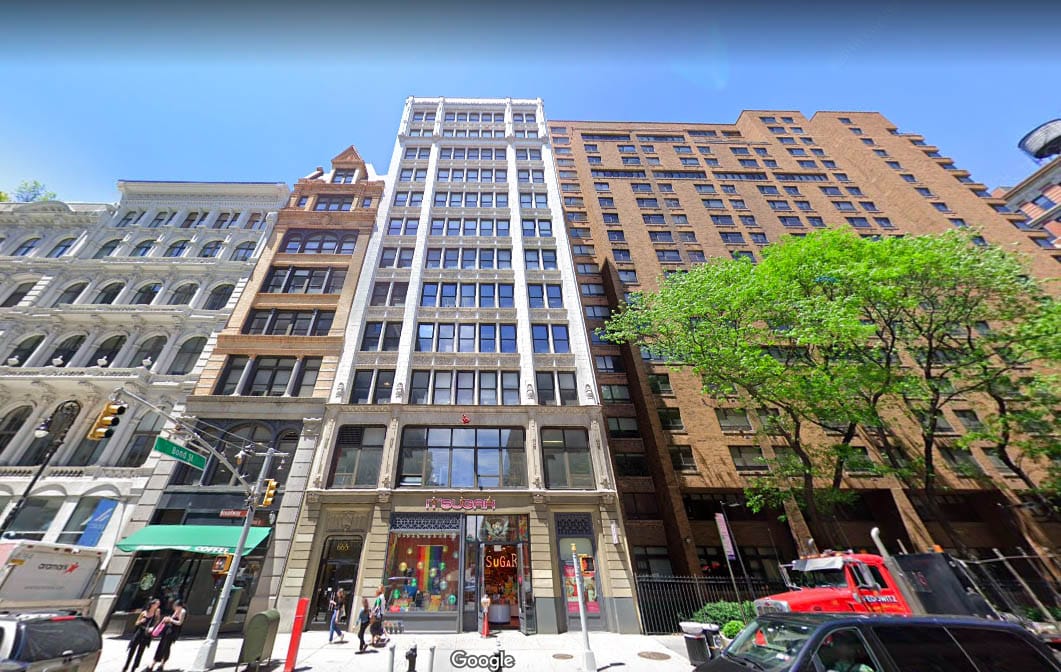
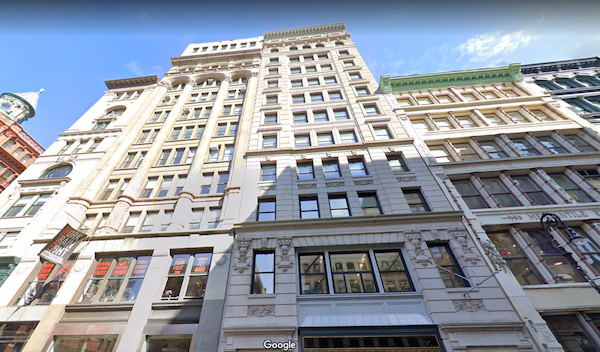
The Broadway corridor’s got the deepest bench: the Cable Building at 611, the Banner at 648, plus 636, 665 and 678. Lower Fifth and University Place add boutique floors at 55 Fifth, 88 University Place and the East 11th Street buildings. A good renovated floor in any of them reads like Class A somewhere else, for less.
Pricing sits under that top-end loft line, and how far under depends on the building and the block (Metro Manhattan internal research, May 2026). Two lofts a block apart can quote you completely different numbers on the same afternoon, depending on the landlord’s vacancy and what he makes of your credit. Which is the argument for walking the space yourself.
The real value’s on the edges. Go west of Sixth into the West Village, or east toward Cooper Square and Astor Place, and you’re into older boutique buildings and value loft. It suits small shops, startups, nonprofits, creative teams that want the Village address without the trophy invoice.
Two things before you sign down here, though. Nobody publishes a clean Class C average for Greenwich Village, so if somebody quotes you one number, raise an eyebrow (the tier read here is our own internal research, May 2026). The other thing is that the neighborhood’s small enough that value floors move fast when they surface, so be ready to decide.
This is where tenants leave the most on the table. They grind away at the asking rent, save a few dollars, sign, and never push on the free rent or the build-out money, which is where the real value’s hiding.
Manhattan free rent averaged 12.4 months in the first half of 2026 (Colliers, Q2 2026). Still real money, but tighter than it was. If lease term’s the sticking point, our take on 3-year, 5-year, or 10-year lease terms lays out the math.
The ranges below are typical of recent Village deals (Metro Manhattan internal research, May 2026) on a 5- or 10-year term. Shorter deals get less, longer deals get more.
| Building class | Free rent (typical) | TI allowance (typical) | Notes |
|---|---|---|---|
| New and trophy Class A (799 Broadway, 770 Broadway) | 8 to 12 months free | TI $90 to $130/SF | Thinnest concessions in the neighborhood, because there's barely any space. |
| Renovated Class A loft (Broadway spine, 55 Fifth) | 12 to 16 months free | TI $80 to $110/SF | The sweet spot, a Village loft with real give on terms. |
| Prewar Class B loft | 14 to 18 months free | TI $60 to $90/SF | Move-in-ready prebuilts are common, and a 10-year term is the strongest hand you can play. |
| Value and West Village boutique | All over the map | Varies | Smaller floors, shorter runways, landlords who do one deal at a time. |
Two things to settle before you sign. Net effective rent almost always lands under the face rent, which our concessions explainer walks through. A build-out allowance is only as good as what it actually builds, so know who pays for an office build-out before you sit down.
The Village has always sold a creative address rather than a corporate one, and the tenant list shows it. Tech and media take the Broadway lofts, where Meta anchors 770 and the old Silicon Alley bloodline still runs. Venture funds and boutique finance want the polished floors on lower Fifth and University Place. NYU takes everything institutional.
Here’s the rough map of who goes where.
| Industry | Best-Fit Areas | Class Fit | Example Buildings |
|---|---|---|---|
| Technology / AI / Software | Broadway/NoHo, Cooper Sq/Astor | A / B loft | 770 Broadway (Meta), 51 Astor Place, 665 Broadway, 80 Cooper Square |
| Venture Capital / Investment / Boutique Finance | Lower Fifth, University Place | Class A / B | 799 Broadway (Wellington, Bain Capital Ventures, Lightspeed), 55 Fifth Avenue |
| Media / Publishing / Advertising | Broadway corridor | A / B loft | 611 Broadway (Cable Building), 648 Broadway (Banner), 636 Broadway |
| Fashion / Design / Showroom | Broadway lofts, University Place | Class B loft | 665 Broadway, 636 Broadway, University Place buildings |
| Education / Institutional | Washington Square core | Institutional | 60 Fifth Avenue (NYU), 181 Mercer (Paulson Center), 770 Broadway (NYU lease) |
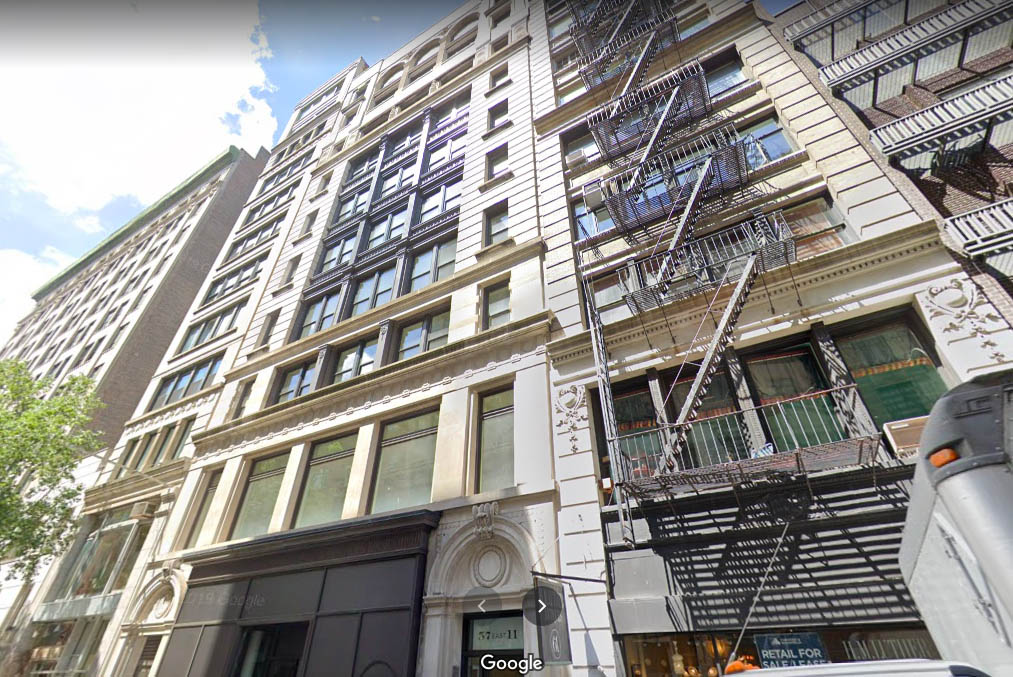
| Healthcare / Medical / Wellness | West Village, University Place | Class B / C | West Village boutique, 57 & 41 East 11th Street |
| Nonprofits / Arts / Foundations | West Village, side streets | Class B / C | West Village boutique, 88 University Place |
| Startups / Small Business (under 20) | Cooper Sq/Astor, West Village | B / C loft | 80 Cooper Square, boutique side streets |
| Coworking / Flex | Broadway corridor, Union Sq edge | A / B | Flex operators along Broadway and near Union Square |
| Retail / Showroom | Broadway, Bleecker, Eighth Street | Ground-floor | Wegmans at 770 Broadway, Broadway and Bleecker retail |
Vertical landing pages: Financial Services, Law Firm Offices, Medical Offices, Retail/Stores, Sublet Space. Industry and class fits are Metro Manhattan internal research (May 2026).
Running a small team? This isn’t the cheap seat in Manhattan and I won’t pretend otherwise. But the value buildings out on the edges and the boutique floors on University Place put it within reach more often than the trophy numbers suggest.
If you’re weighing it against other neighborhoods, our 5 top neighborhoods for small businesses guide does the comparison. Trading a shared desk for your own space? Scaling from coworking to an office is the playbook.
The Village sells something you can’t build: Washington Square Park, the arch, the NYU crowd, streets people actually want to walk after work. That’s the return-to-office argument, already won, which makes this an easy neighborhood to sell a team on. The catch is that the good buildings are small and full, so the tour list is short. Three tiers:
Trophy and new Class A (770 Broadway, 799 Broadway): landmark lofts and one purpose-built boutique. Big floors, terraces, tall ceilings, Wegmans at the base of 770. Top of the submarket, and mostly spoken for already.
Renovated Class A loft (55 Fifth Avenue, the Cable Building): prewar bones, arched windows, updated systems, good skyline light. This is the heart of what actually leases here.
Boutique Class B and value (Broadway spine, University Place, West Village): smaller prewar floors, attended lobbies, move-in-ready prebuilts, and usually a subway that goes everywhere within a block or two.
See all Manhattan buildings or filter active listings by size and price.
Who your landlord is matters more here than almost anywhere in Manhattan, and it isn’t the usual REIT story. The biggest player is a university. Since the 770 Broadway lease, NYU controls a striking share of the neighborhood’s office footage.
Vornado still owns 770 on paper and kept the retail condo, and Savanna’s got the new building at 799. Almost everything else is boutique and family ownership, one prewar loft at a time. For the wider picture, here’s our take on the biggest commercial real estate landlords in NYC.
| Landlord | Notable Greenwich Village Properties | Approx. Portfolio | Typical Lease Profile |
|---|---|---|---|
| New York University | 770 Broadway (70-year office master lease), 60 Fifth Avenue, 181 Mercer (Paulson Center), University Village | Dozens of Village buildings | Owner-occupier / institutional; not a conventional landlord |
| Vornado Realty Trust | 770 Broadway (retail condo retained; office master-leased to NYU) | ~1.2M SF here; large national portfolio | Class A, large blocks (historically) |
| Savanna | 799 Broadway (acquired for ~$255M) | ~182K SF here | New Class A loft, full and partial floors |
| Edward J. Minskoff Equities | 51 Astor Place (NoHo / East Village edge; IBM anchor) | ~400K SF asset | Class A, 5,000+ SF |
| Boutique & family owners | 55 Fifth, 88 University Place, 41 & 57 East 11th, Cable Building, Banner Building, West Village stock | Small prewar loft | Smaller, negotiable floors |
Portfolio figures are approximate. Vornado holds a much larger portfolio across Manhattan; Savanna and Edward J. Minskoff Equities own additional assets elsewhere; and NYU's holdings are academic and institutional rather than leasable office. Metro Manhattan internal research (May 2026).
On transit, nothing in Manhattan really beats this. The subway access is arguably the best in the city and you get PATH to New Jersey on top of it. The one gap’s commuter rail: anyone coming in on the LIRR or Metro-North has to transfer at Penn or Grand Central.
If your people are in Manhattan, Brooklyn or across the river, this is as good as it gets. Plug the addresses into our Commute Calculator and settle the argument.
| From | To Greenwich Village | Mode |
|---|---|---|
| Union Square / Flatiron | 3 to 5 min | Walk, or 6 / L |
| SoHo / Tribeca | 5 to 10 min | A/C/E or walk |
| Times Square / Midtown core | 10 to 15 min | 1/2/3 or A/C/E |
| Penn Station | 10 to 15 min | 1/2/3 or A/C/E |
| Grand Central | 15 to 20 min | 6, or shuttle + crosstown |
| Hoboken / Jersey City | 15 to 25 min | PATH |
| Downtown Brooklyn | 20 to 30 min | A/C or F |
| Long Island City, Queens | 25 to 35 min | F + transfer |
| Newark, NJ | 35 to 45 min | PATH |
| Hicksville, NY (Long Island) | 60 to 70 min | LIRR to Penn + subway |
| Stamford, CT | 70 to 85 min | Metro-North to Grand Central + subway |
Plan on the top end of Midtown South, which averaged $88.32/SF total and $90.23/SF direct in Q1 2026 (Newmark, Q1 2026). The spread here is wide, though. A new floor at 799 Broadway has asked around $175, while renovated prewar loft goes well below that. Where you land in the neighborhood matters more than the headline number.
Because the university owns or controls a big share of the neighborhood’s largest buildings. In March 2026 NYU signed a 70-year master lease on 770 Broadway for $935 million, adding about 1.1 million square feet to holdings that already include 60 Fifth Avenue and 181 Mercer. Whenever a big block comes loose it tends to go institutional, which keeps the open market small.
It’s Vornado’s landmarked old Wanamaker’s building, roughly 1.2 million square feet spanning a full block in NoHo. Meta’s in about 800,000 of it and Wegmans runs a store at the base. In March 2026 NYU master-leased the office floors for 70 years, so it’s a campus anchor now, with the in-place tenants assumed by the university.
Very little, which is sort of the point. The standout is 799 Broadway, a 182,000-square-foot boutique that opened in 2022 with 15-foot ceilings and private terraces, home to Wellington, Bain Capital Ventures and Lightspeed. Past that, Class A here mostly means gut-renovated loft like 770 Broadway or 55 Fifth Avenue.
The Village has run one of the lowest vacancy rates in Midtown South for years, and the district’s tightening fast. Manhattan-wide availability fell to 13.0% in Q2 2026, lowest since October 2020 (Colliers, Q2 2026). Nobody publishes a standalone Village rate, though. The brokers fold it into Midtown South, so treat the low-vacancy read as directional.
Tech, media and creative firms take the Broadway lofts, with Meta the marquee name and a startup lineage running back to Silicon Alley. Venture funds and boutique finance fill the floors on lower Fifth and University Place. NYU holds the Washington Square core, and the West Village runs to smaller creative, medical and nonprofit tenants (Metro Manhattan internal research, May 2026).
Class tracks a building’s age, systems and prestige, but the Village bends the rules. There’s almost no glass-tower Class A, so the premium product is converted loft, and a renovated Class B loft can out-rent a Class A tower somewhere else. Our explainer on what makes a building Class A, B, or C gets into why the letter matters less here.
Less than you could a year ago, because the market’s turned toward landlords. Manhattan free rent averaged 12.4 months in the first half of 2026, lowest since 2019 (Colliers, Q2 2026). On a 5- or 10-year Village deal, figure 12 to 18 months free and TI of $60 to $130/SF depending on tier, thinnest in the new buildings.
Easily, and it’s one of the neighborhood’s real selling points. West 4th Street-Washington Square alone stacks the A, C, E, B, D, F and M. The N/R/W stop at 8th Street-NYU, the 6 at Astor Place, the 1 at Christopher Street, plus PATH to New Jersey from three Village stations. The only gap’s commuter rail, so LIRR and Metro-North riders transfer at Penn or Grand Central.
Both are loft markets with real creative pull, so it comes down to product and price. SoHo leans cast-iron and retail-heavy, the Village leans NYU-anchored with better transit than anywhere. If you want the most subway options and a Washington Square address, the Village wins. If you want cast-iron character, start in SoHo.
In a market this small and tightly held, a broker gets you to space before it hits the listing sites, plus the story on who’s actually dealing. The landlord pays the commission, so it costs a tenant effectively nothing. Before you tour, skim the essentials to ask before leasing NYC office space.
Accessibility Tools