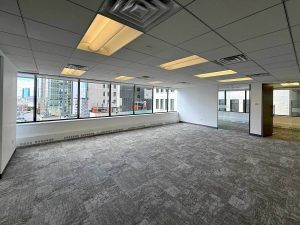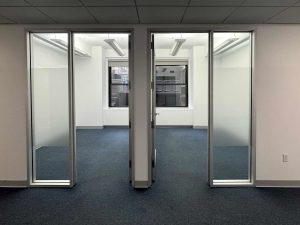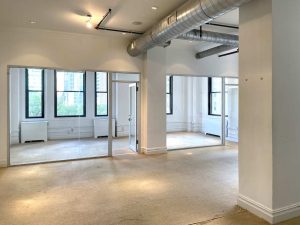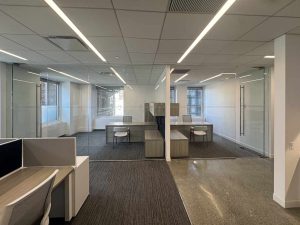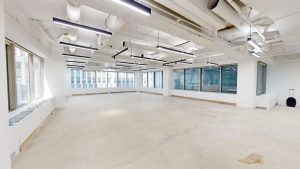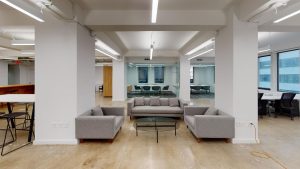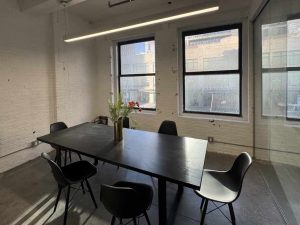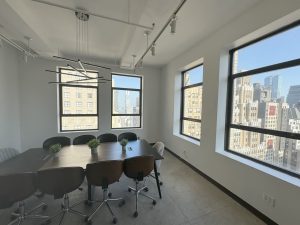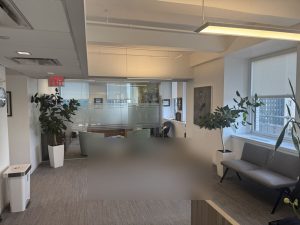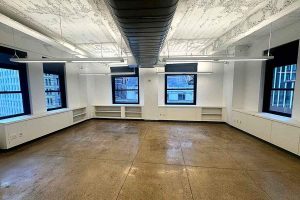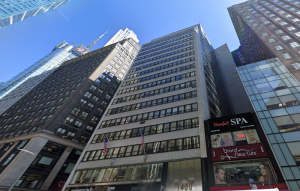

I’ve shown hundreds of commercial office buildings across Manhattan, and loft buildings in SoHo occupy their own category entirely.
Walk into one of these spaces, and you immediately understand the appeal: 14-foot ceilings, cast-iron columns, exposed brick, and oversized windows flooding the room with natural light. Design and architecture firms, tech startups, and media agencies feel it too, which is why they keep paying $70 to $80 per square foot on average (with boutique suites pushing toward $180) to plant their flag here instead of somewhere cheaper.
The premium comes down to something simple. SoHo’s architectural character shapes how teams work and how clients perceive a brand the moment they step off the elevator. You can’t manufacture that in a glass tower, no matter how nice the finishes are.
I put together this article to explore why creative tenants keep chasing these spaces, what separates a great loft from a forgettable one, and five standout SoHo loft office buildings that consistently top my tour list.
Why Creative Firms Still Pay a Premium for SoHo

Before we get into specific buildings, let’s address the obvious question: why do tenants keep shelling out $70, $80, even $180 per square foot when they could lease something cheaper ten blocks north? After years of showing loft buildings in SoHo to creative tenants, I’ve watched the same four factors drive their decisions over and over again.
- The Architecture Sells Itself: Cast-iron facades allow for massive windows and wide, column-free floor plates that modern construction rarely matches. Throw in exposed brick, original timber beams, and raw steel details, and you’ve got a workspace that feels inspiring before you even move the furniture in.
- The Neighborhood Does Half Your Branding For You: Cobblestone streets, galleries, and some of the best restaurants in the city sit right outside your door. Clients notice. Recruits notice. A SoHo address signals something about your company before anyone reads your pitch deck.
- Supply Stays Permanently Tight: SoHo covers roughly 26 blocks wedged between Houston and Canal, and almost nothing new gets built in a landmarked historic district. When demand spikes, landlords don’t add inventory. They raise rents.
- Renovated Lofts Command the Real Premiums: Post-pandemic, there was a flight-to-quality. Tenants started gravitating toward upgraded spaces with modern mechanical systems and high-speed infrastructure. A polished, move-in-ready loft beats a raw fixer-upper every time, even if the monthly rent stings a little more.
What You Should Prioritize in Your Search for a Loft Building in SoHo
Knowing why you want a SoHo loft is one thing. Knowing what separates a great one from a mediocre one is another. I’ve walked tenants through spaces that photograph beautifully online but feel dark and cramped in person, and I’ve shown “diamond in the rough” listings that tenants sign on the spot. The difference usually comes down to a handful of factors that aren’t always obvious until you know what to look for.
The Bones of the Space
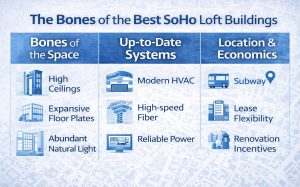
Ceiling height, floor plate size, and natural light form the holy trinity of loft hunting.
You want 12 to 15 feet of clearance overhead, minimal interior columns breaking up the floor, and tall industrial windows pulling daylight deep into the space. The best loft buildings in SoHo offer multiple exposures or corner units with windows on two or three sides.
Floor plates matter too: if you need room for a 30-person team to collaborate without walls, look for buildings offering 8,000 to 15,000 square feet per floor (or larger). Some buildings run close to 30,000 square feet per floor, which gives growing companies serious breathing room.
The Systems Behind the Walls
A gorgeous exposed-brick loft loses its charm fast if the HVAC can’t keep up in August or the internet drops during client calls. Before you fall in love with the aesthetics, confirm the building has modern mechanical systems, reliable fiber infrastructure, and responsive property management.
Some SoHo lofts now offer amenities that rival newer Class A towers: furnished conference rooms, rooftop lounges, ground-floor coffee shops, even LEED or ENERGY STAR certifications. These extras can offset some of that rent premium by reducing what you spend on your own buildout.
The Numbers and the Neighborhood
Even within SoHo’s 26 blocks, micro-location shapes your daily experience. Broadway and Spring Street put you in the retail chaos (great for foot traffic, less great for quiet focus). Greene and Mercer feel calmer and more gallery-adjacent. Wherever you land, verify that subway access works for your team.
On the financial side, you have more flexibility than you might expect. Most landlords will build out a space on behalf of a creditworthy tenant, provided the lease is a reasonable duration (five years or more). Yet, even shorter-term deals often leave room to negotiate some improvements. You may also find a loft whose existing layout, courtesy of a previous creative tenant, already works for you, saving significant construction costs. Landlords frequently sweeten longer leases with free rent or tenant improvement allowances as well. Just decide early how much you’re willing to pay for the SoHo address itself, because you will pay a premium.
The Top 5 Loft Buildings in SoHo for Creative Companies in 2026
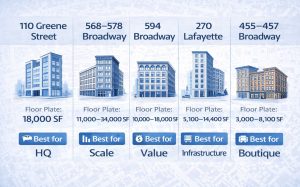
Now that you know what to look for, let’s talk about where to find it. These five loft buildings in SoHo consistently top my recommendation list for creative tenants. Each one delivers the architectural character, natural light, and flexible layouts that make this submarket worth the premium. They range from trophy Class A towers to boutique historic walkups, so whether you need 30,000 square feet or 3,000, there’s something here worth touring.
110 Greene Street (The SoHo Building)
If you want the full SoHo experience with none of the headaches that come with older buildings, 110 Greene Street sits at the top of the list.
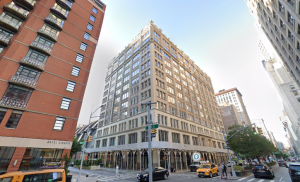
SL Green, a publicly traded company and the largest commercial landlord in New York City, owns and operates this 13-story, 295,000 square foot Class A property at Greene and Prince, and they’ve poured serious capital into making it feel like a modern creative hub wrapped in historic bones. You get polished concrete floors, exposed brick, high ceilings, and windows on all sides, flooding upper floors with light.
The amenity package rivals newer Hudson Yards towers, too: a communal rooftop deck, ground-floor café, shared conference room, extended HVAC hours, and LEED Gold certification. Tenants include Birkenstock’s headquarters, beauty brand Makiage, and UNTUCKit.
568-578 Broadway (The Prince Building)
The Prince Building is the big dog of SoHo loft buildings, and I mean that literally. Floor plates here run close to 30,000 square feet each, making it one of the largest office properties in the neighborhood.
Built in 1879 as a sewing factory, this 12-story tower wraps three sides of the block at Broadway and Prince, which means windows on three elevations and natural light from every angle. Allied Partners recently completed a top-to-bottom renovation with new lobbies, elevators, and a landscaped roof deck.
An Equinox gym anchors the retail. ZocDoc, Milk Makeup, and The Farmer’s Dog (who just signed 58,000 square feet across two floors) call it home. When a creative firm needs serious scale and refuses to sacrifice character, The Prince Building is usually where they land.
594 Broadway
For tenants who want the industrial loft aesthetic without the Class A price tag, 594 Broadway hits the sweet spot.
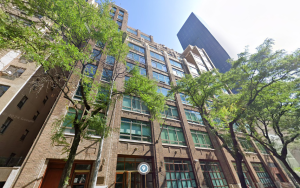
Originally a printing plant, the building offers 17,000 square foot floor plates with soaring ceilings and floor-to-ceiling double-paned windows wrapping the facade. The raw character here feels authentic because it is authentic: exposed brick walls, original columns, and that unmistakable converted-factory energy.
Architecture firms like Ferguson & Shamamian and Bonetti/Kozerski have set up shop here, and the Architectural League of New York operates out of the building. Suite sizes range from a few hundred square feet to full floors, and asking rents tend to come in lower than the trophy properties up the street.
Creative teams on a tighter budget who still want the real SoHo loft experience should tour this one early.
270 Lafayette Street
Sitting right on the SoHo/NoHo border, 270 Lafayette Street draws tenants who want an industrial loft with serious infrastructure.
The building’s factory origins gave it extra-high ceilings and heavy floor load capacity, which means you can run equipment, build out fabrication space, or simply enjoy the volume without worrying about structural limits. A recent renovation modernized the lobby and elevators while keeping the raw loft character intact. Available spaces range from sub-1,000 square foot studios to full floors exceeding 30,000 square feet.
Subway access is excellent with the B/D/F/M and 6 trains at Broadway-Lafayette just steps away. Architecture and design firms dominate the tenant roster here, including Bonetti/Kozerski and Peter Antinoro Associates.
455-457 Broadway (SoHo Loft Building)
Finally, not every creative firm needs a 15,000 square foot floorplate. For smaller teams that want a full-floor SoHo loft without the megablock footprint, 455-457 Broadway offers exactly that.
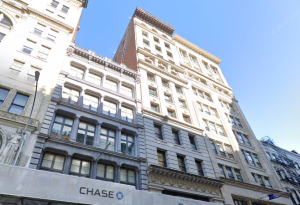
This five-story building features approximately 5,550 square feet per floor, an intact cast-iron facade, tall industrial windows, and mostly column-free layouts once you strip out partitions. Ownership recently reconditioned the property with new elevators and modernized interiors, so you get historic charm backed by reliable systems.
Asking rents on the second and third floors hover around $58 to $60 per square foot, which counts as reasonable by SoHo standards. Especially considering how the location sits steps from the Canal Street subway station and is surrounded by SoHo shopping and restaurants.
Boutique agencies, small design studios, and startups that want the authentic loft experience at a manageable scale should put this building on their shortlist.
Finding Your SoHo Loft

The five loft buildings in SoHo I listed above consistently land at the top of my tour list for creative tenants. However, bear in mind, they’re far from the only options worth considering.
Your ideal loft space depends on your team size, growth plans, budget tolerance, and how much you value that SoHo address on your website. Some firms tour a 110 Greene Street-type of building and know immediately. Others find their fit in a smaller boutique building.
If you’re serious about leasing a loft in SoHo, start your search early and move decisively when you find the right space. The more desirable spaces, especially those smaller than 2,500 Square Feet, lease quickly and don’t linger on the market.
As always, if you are interested in leasing space in SoHo, I’d be happy to suggest specific buildings and spaces that meet your business needs. Please feel free to reach out to us.