Financial Services Offices
Find the right property, avoid hidden costs, and negotiate favorable terms.

Find the right property, avoid hidden costs, and negotiate favorable terms.

New York runs on finance, and the office market makes that obvious. The catch is that “New York” isn’t really one market at all. It’s a handful of very different neighborhoods that happen to share a skyline, and the one you choose shapes almost everything: what you pay, who you share an elevator with, and how your firm reads to a client the moment they step off it. A trophy floor on Park Avenue can clear $300 a square foot. Solid, well-run Class A space downtown might cost a fifth of that.
Same city, completely different worlds.
So your rent isn’t really a “New York” number, it’s the sum of three choices: the corridor you pick, the class of building you settle into, and how well you negotiate. We’ll walk you through all three, point you to the buildings where the banks and funds actually sit, and explain how a finance lease really comes together once you get going.
One thing that surprises most people: bringing in a broker to represent you doesn’t cost you a cent. The landlord pays the fee, so having a pro in your corner is genuinely free, and since most of the best finance space never makes it onto a listings site, that pro is often the only way you’ll even hear about it. If you’d rather start with the big-picture view across every industry, our guide to office space for rent in New York City is a good place to begin.
If one industry is driving the New York office market right now, it’s yours. Finance, insurance, and real estate firms signed more new leases and expansions than anyone else in early 2026, and together with tech and law they made up more than 60% of all that growth (Avison Young, Q1 2026). One CBRE broker put it plainly: the city just had arguably its best leasing year in two decades, and it all started with the banks and funds on Park Avenue (The Real Deal, March 2026). So if it feels like the good space is getting snapped up fast, you’re not imagining things. What that means for your search:
Finance has always clustered, and that cluster tells you a lot before you’ve toured a single floor: what you’ll pay, what kind of firm you’ll be sitting next to, even how the commute will go. Most of the money still lives in a few Midtown corridors built around Park Avenue. The newest trophy towers have gone up out west at Hudson Yards. And downtown is still the value play, though it’s shrinking fast as tired old office buildings get gutted and turned into apartments. Whatever you do, pick the neighborhood first, because nearly everything else follows from it.
| Submarket | Why Finance Goes There | Typical Asking Rent | Who Sits There |
|---|---|---|---|
| Park Avenue | The most prestigious finance address in the country, and the tightest corridor in the city. | $105.33/SF; 7.4% availability (CBRE, Q1 2026) | JPMorgan (270 Park), Blackstone (345 Park), Citadel (425 Park), the Seagram Building, 280 Park. |
| Plaza District & Fifth Ave | White-glove towers, Central Park views, and the discretion hedge funds and family offices pay up for. | ~$94.53/SF; trophy floors well above (Yardi, Q1 2026) | Hedge funds and PE around the GM Building, 9 West 57th, 590 and 510 Madison. |
| Hudson Yards | The newest towers in the city, built for recruiting, and the fastest-growing finance address. | ~$150s/SF; trophy $175 to $240+ (Avison Young) | BlackRock (50 HY), with Point72, Silver Lake, MarketAxess, and Wells Fargo at 55 HY. |
| Sixth Ave & Rock Center | Big floor plates and corporate weight along the Avenue of the Americas. | $80 to $120/SF | Banks and asset managers along the Avenue, near Rockefeller Center. |
| Grand Central & Madison | Well-run Class A at a discount to Park, with prebuilt floors and unbeatable transit. | $65 to $95/SF | Asset managers and boutique funds around the terminal and up Madison. |
| Financial District | Wall Street, the NYSE, the Fed, and the best value of any Manhattan core. | $56.67/SF overall; Class A $61.77 (C&W, Apr 2026) | Goldman Sachs (200 West St), banks, insurers, and fintech, with a trophy pocket at the WTC. |
| Midtown South & Flatiron | Lofts with character and light for fintech and venture funds that want a less corporate feel. | $55 to $90/SF | Fintech, VC, and founder-led funds in Flatiron, NoMad, and Hudson Square lofts. |
Corridor ranges are Metro Manhattan internal research (June 2026); Park Avenue (CBRE), the Plaza District (Yardi), and Downtown (C&W) come from named Q1 2026 reports. The Plaza District at ~$94.53/SF sits just ahead of Chelsea as the priciest submarket in the city. Firm and building examples are illustrative, not exhaustive.
From there, what you actually do narrows things down further. A bulge-bracket bank, a low-profile hedge fund, and a founder-led fintech are after three completely different things, and they’re all competing with the city’s biggest law firms for the same Park and Plaza floors. The table below maps the usual players to where they tend to land.
| Finance Firm Type | What It Wants Most | Where It Tends to Land |
|---|---|---|
| Banks & investment banks | Big efficient floors, trading-floor capability, a prestige address, deep transit. | Park Avenue, Sixth Ave / Rock Center, Hudson Yards, the Financial District. |
| Hedge funds & trading firms | Discretion, top-tier Class A or trophy, redundant power, tight security. | Plaza District, Park Avenue, Hudson Yards. |
| Private equity & asset managers | A marquee client-facing address, full-floor identity, banks and lawyers nearby. | Park Avenue, the Plaza District, Fifth Avenue. |
| Family offices & boutiques | A small, private footprint at a name address, often one high floor. | Plaza District, Madison Avenue, Park Avenue. |
| Fintech, VC & emerging funds | Character, flexibility, and the amenities that pull young talent, like startup and tech firms. | Flatiron, NoMad, Hudson Square, the Financial District. |
| Insurance & back office | Value, large blocks, and reliable systems over a trophy address. | Downtown, the Financial District, Midtown East. |
And if you’re a smaller firm still figuring out where to plant a flag, our rundown of the 5 best NYC neighborhoods for financial services firms and our guide to the top neighborhoods for small businesses are both worth a read.
Before you start comparing spaces, it helps to understand the class system, because it drives the rent, the prestige, and honestly how a place feels when you walk in on a Monday morning. For finance, the real decision usually comes down to trophy versus Class A, with value Class A and Class B in play for boutiques, fintech firms, and back-office teams.
| Class | What It Is | Where Rent Sits | Typical Buildings |
|---|---|---|---|
| Trophy | The newest supertalls and flagships, hotel-grade service, the addresses that win the meeting. | Top of the market, well above A | One Vanderbilt, 270 Park, 425 Park, 50 Hudson Yards |
| Class A | Modern or well-renovated towers, staffed lobbies, real amenities, strong systems and power. | Premium, below trophy | Park Avenue, Sixth Ave / Rock Center, the Plaza District |
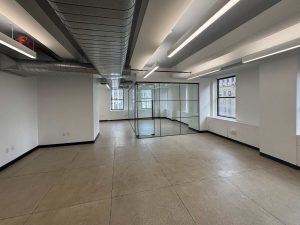
| Class B | Solid, functional, often prewar, many with prebuilt or move-in-ready floors. | Mid-market | Grand Central side streets, Midtown South lofts, older FiDi towers |
| Class C | Older, no-frills, often converted stock, and the deepest value in the city. | The value tier | Financial District side streets, the Garment District |
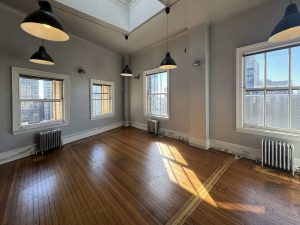
A word of caution about those letters, though. The A-B-C grade is really just shorthand for a building’s age, systems, and prestige, and it gets unreliable in loft markets. A beautifully renovated prewar tower near Grand Central can house a 40-person fund without breaking a sweat, while a character-filled loft in Flatiron can out-rent a plain Class A tower, simply because fintech and venture tenants will pay up for high ceilings, great light, and the right block. For most finance firms, though, the bigger question isn’t the letter at all, it’s power and resilience, which is what the next few sections get into. If you want the full breakdown, our explainer on what makes a building Class A, B, or C covers it, and the best Class A towers happen to cluster in Midtown, which we walk through in our roundup of the top ones there.
Rent tracks the building class more than anything else, so that’s how we’ve laid out the numbers below. Most finance firms lease Class A or trophy space in the premium corridors, comfortably above the $77.55 Manhattan average (Colliers, Q1 2026), while fintech firms, insurers, and back-office teams tend to find their value downtown and in Midtown South. Treat these as the ballpark you’re swinging in, not a quote on a particular space.
| Building Class | Typical Asking Rent ($/SF/yr) | What You Get | Best For |
|---|---|---|---|
| Trophy | $120 to $320+ | Full floors and large blocks, 20,000 SF and up | Banks, flagship HQs, big funds |
| Class A | $80 to $130 | Full and partial floors, 5,000 to 50,000 SF | Established funds and PE wanting a name address |
| Value Class A | $65 to $95 | Prebuilt and partial floors, 3,000 to 25,000 SF | Asset managers and boutique funds near transit |
| Downtown Class A | $56 to $67 | Full and partial floors, value blocks | Insurers, fintech, back office wanting value |
| Class B & loft | $45 to $70 | Small suites and value floors, 1,000 to 10,000 SF | Family offices, fintech, startups |
Asking rents as of April 1, 2026. Updated quarterly; next update July 1, 2026.
For live asking rents in each market, see Midtown, Midtown South, Downtown, and Uptown.
At the top of the market, Park Avenue leads at $105.33 a foot, with the Plaza District close behind around $94.53 and the Hudson Yards trophies right there with them (CBRE and Yardi, Q1 2026). A truly premium floor, high up on Park or at One Vanderbilt, can sail past $300, and Citadel reportedly pays close to that at 425 Park (Commercial Observer, February 2026). At the other end, the best value with a real address is the Financial District, where Class A outside the World Trade Center runs in the low $60s and creeps up a little each quarter as weaker buildings convert to housing.
Ranges span the whole borough and shift with floor, view, and term. Built from CBRE, Colliers, C&W, and Yardi Q1 2026 reports plus Metro Manhattan research (June 2026). The $320 ceiling is the One Vanderbilt record (JLL, Q1 2026).
A finance office has to pull off a few things an ordinary office never worries about. It has to keep your trading desks running through a blackout, move market data without a hint of lag, lock down both the building and the network, and host clients for conversations that can’t leave the room. It’s worth sorting all of this out before you fall for a view, because these are the things that quietly decide which buildings can actually work for you and which can’t.
| What to Check | Why It Matters | How to Vet It |
|---|---|---|
| Backup power | A blackout can freeze trading and cost money by the minute. | Ask about generators and your right to add a UPS, and find out how the building handled its last outage. Trophy and Class A towers usually deliver here; older stock often doesn’t. |
| Trading-floor capability | Trading desks need open floors, dense power and cooling, and tall ceilings. | Look for big, column-free plates and high slab-to-slab heights. The new towers are built for this: JPMorgan’s 270 Park has eight trading floors, and 350 Park is going up with roughly 25-foot ceilings. |
| Redundant connectivity | Market data and execution can’t tolerate downtime, and some strategies live or die on latency. | Check for multiple fiber carriers, separate entry paths, and clean cell coverage on every floor. Ask about the route to nearby carrier hotels too. |
| Data & server rooms | Secure, cooled space for your servers is core infrastructure, not a closet. | Plan a cooled, secure IT room or cage, confirm the building can feed it the extra power and cooling, and keep it on backup. |
| Security & access | Finance is a target, online and in person, and clients expect discretion. | You’ll want a 24/7 attended lobby, turnstiles, visitor management, and keycard or biometric access by floor. Get IT-audit rights written into the lease. |
| Confidentiality | Deal terms, positions, and client names have to stay in the room. | Slab-to-slab demising walls, solid-core doors, sound masking, and private deal rooms near reception, away from the open desks. |
| Client-facing space | Reception and the boardroom are where investors and counterparties size you up. | Put conference rooms near reception so visitors never cross the trading floor, size at least one room big, and consider in-building dining for client lunches. |
| Talent amenities | The amenity floor has become a recruiting tool, and a reason people come back to the desk. | Look for a gym, good food, lounges, and outdoor space, and give extra weight to buildings with strong tenant amenity floors. |
| Business continuity | Your firm has to keep running even if the main office goes dark. | Write disaster-recovery and alternate-site rights into the lease, and ask to see the building’s resilience plan. |
| Transit & ADA | Clients and staff come from all over, and accessibility is required. | Pick a building on major transit and confirm full ADA access, step-free from the street to your suite. |
It’s also worth deciding what kind of space you’re actually shopping for before you start touring, because you have more options than you might think. A traditional lease, a move-in-ready prebuilt, a converted loft, a coworking desk, and a sublease are five genuinely different products, each with its own commitment and price tag.
| Type | Best For | Commitment | The Trade-Off | Explore |
|---|---|---|---|---|
| Direct lease | Banks and established funds that want a custom build-out and full control. | 7 to 15 yrs | Best concessions and leverage, but the longest commitment. | |
| Prebuilt / spec suite | Small funds and family offices that need to move fast. | 3 to 7 yrs | Move-in ready and often plug-and-play, with less room to customize. | |
| Loft space | Fintech, VC, and emerging funds that want character and light. | 5 to 10 yrs | High ceilings and big windows, mostly in Midtown South. | Loft |
| Coworking / flex | New funds, satellite teams, anyone under about 20 people. | Month to 2 yrs | Fast and flexible, but a higher per-desk cost and less control. | Coworking |
| Sublease | Cost-sensitive firms and shorter time horizons. | 1 to 5 yrs | Often below market and already built for finance, but on the prior tenant’s terms. | Sublets |
A couple of notes on staying flexible. If you’re graduating from a shared space into your own, our guide to moving from coworking to an office is the playbook to follow. And if a sublease catches your eye, read up on sublease and assignment clauses first, because you’ll inherit whatever terms the last tenant negotiated, which really matters when you’re looking at a furnished, already-wired finance suite. Most of the best loft space, by the way, sits in Midtown South, in SoHo, Flatiron, and Hudson Square.
Leasing a finance office is a different animal from renting an apartment, and once you add a trading floor or a server room, it isn’t even a standard office deal. The build-outs take longer, the infrastructure is heavier, and the best space rarely shows up on a public site. A tenant broker who works only for you, and gets paid by the landlord, is what levels the playing field. Roughly, the path runs like this:
The rent your broker first quotes you is almost never what you’ll actually pay. Once you factor in free months and build-out money, the real figure, what the industry calls net effective rent, usually lands well below the headline. The firms that come out ahead negotiate the whole package, not just the sticker rate, and because finance firms build out so much specialized space, those construction terms carry extra weight.
Concessions still tilt in the tenant’s favor across most of Manhattan, and they’re most generous in older Class B and value buildings, where landlords have to work harder to win you. They’re tightest, predictably, in the trophy corridors finance loves, where there’s usually another tenant waiting in the wings. This is roughly where packages land today:
| Class | Free Rent | TI Allowance | Notes |
|---|---|---|---|
| Trophy / premium A | 8 to 12 months | $100 to $160/SF | Tightest terms, because demand for top-tier finance space is outrunning supply. |
| Standard Class A | 12 to 16 months | $80 to $120/SF | The sweet spot for most established funds. |
| Value Class A / B | 14 to 18 months | $60 to $90/SF | Real leverage on a 10-year term, and prebuilt floors are common. |
| Downtown / loft value | 12 to 18 months | $40 to $70/SF | Turnkey, fully built suites are everywhere as FiDi tightens. |
Two ideas do most of the heavy lifting here. The first is that the real value sits in the free rent and the improvement allowance, not the asking rate, which our look at rising landlord concessions digs into. The second is that those allowances are negotiable, and our primer on improvement allowances walks through how. For a trading floor and a data room, that allowance can be the difference between a deal that works and one that doesn’t.
Typical-market figures from recent Metro Manhattan deals (June 2026). Final terms turn on credit, term, building, and how you negotiate.
Banks and big funds often go long, 10 to 15 years, to justify a major build-out and lock down a prestige address. Boutiques and newer funds usually prefer 3 to 5 years so they can stay nimble. Longer terms pull in richer concessions and freeze your rent, while shorter ones keep your options open. Our breakdown of 3, 5, and 10-year terms lays out which makes sense for which kind of firm.
A few costs tend to sneak up on people, so it’s worth budgeting for these before you sign:
Want a real sense of where the market’s headed? Look at where the firms are actually signing. The deals of the past year have been huge, and they all point in the same direction: the biggest names are betting heavily on New York.
| Firm | Building | Submarket | Size | The Deal |
|---|---|---|---|---|
| JPMorgan Chase | 270 Park Avenue | Park Avenue | 2.5M SF (new global HQ) | Opened Oct 2025 |
| Blackstone | 345 Park Avenue | Plaza District | 1.06M SF (55% of building) | Expansion through 2034 |
| BlackRock | 50 Hudson Yards | Hudson Yards | ~1.24M SF | Expansion (2025) |
| Bloomberg | 919 Third Avenue | Midtown East | 925,000 SF | Renewal & expansion (Q4 2025) |
| Citadel | 660 Fifth Ave → 350 Park Ave | Plaza / Park Avenue | 504,000 SF now; ~850,000 SF planned | Interim lease + future HQ |
| Carlyle | 245 Park Ave + a second tower | Park Avenue | 200,000+ SF across two towers | Relocation / expansion (2026) |
| Elliott, Wells Fargo & PJT | 280 Park Avenue | Park Avenue | ~90,000 SF combined | New leases (early 2026) |
| Millennium Management | 399 Park Avenue | Park Avenue | Expansion | 2025 |
From CBRE, Savills, JLL, CoStar, and reporting by The Real Deal and Commercial Observer (2025 through June 2026).
The throughline is pretty clear: firms are consolidating into better space, whether that means renewing where they are, expanding onto the next floor, or jumping to a newer tower. The one to keep an eye on is Citadel’s 1.8 million-square-foot supertall at 350 Park, which won’t open until around 2032. Until it does, the squeeze on Park Avenue isn’t going anywhere, so if you’ve got your eye on a marquee block there, the smart move is to start early and lean on a broker who hears about space before it ever lists.
A handful of owners control most of the best finance space, and because each one negotiates differently, who you’re dealing with matters almost as much as the building itself. SL Green, the city’s largest office landlord, owns One Vanderbilt and big chunks of Park and Grand Central. Vornado and Rudin split 345 and 350 Park between them. Brookfield holds the Far West Side and the Fifth Avenue trophy product, and Related built Hudson Yards from the ground up. Knowing who’s sitting across the table from you is honestly half the negotiation. For more background, see our rundown of the biggest commercial landlords in NYC.
| Landlord | Notable Finance Buildings | Approx. Portfolio | How They Deal |
|---|---|---|---|
| SL Green Realty | One Vanderbilt, 245 Park, 280 Park (with Vornado) | ~25M+ SF | 10,000+ SF, 10+ yr |
| Vornado Realty Trust | 350 Park (JV), 280 Park, Penn 1 & 2 | ~20M SF | 5,000+ SF |
| Rudin Management | 345 Park (Blackstone), 350 Park (JV) | ~10M SF | 10,000+ SF |
| Brookfield Properties | 660 Fifth Ave, Manhattan West, Brookfield Place | ~18M SF | 15,000+ SF |
| The Related Companies | Hudson Yards (10, 30, 50, 55), incl. BlackRock’s HQ | ~14M SF | 10,000+ SF |
| RFR Realty | The Seagram Building (375 Park), the Chrysler Building | ~7M SF | 2,500+ SF |
| L&L Holding | 425 Park Avenue (Citadel) | ~5M SF | 10,000+ SF |
Portfolio figures are approximate and weighted toward Manhattan office; several owners hold larger national portfolios (Metro Manhattan research, June 2026). Buildings are illustrative, not exhaustive.
It really depends on the corridor and the building. Manhattan averages around $77.55 a foot (Colliers, Q1 2026), but most finance firms pay more because they gravitate to the premium corridors. Park Avenue asks $105.33 and the Plaza District about $94.53, while fintech and back-office teams find solid Class A value downtown in the low $60s. And if you need a trading floor or a data room, the build-out adds to that on top.
Hedge funds, private equity, and family offices mostly cluster in the Plaza District and along Park and Fifth Avenue, where the Class A and trophy towers carry the prestige and privacy the work demands. Banks and large asset managers fill out Park, Sixth Avenue, and increasingly Hudson Yards. Newer and more creative firms, fintech and venture especially, tend to gravitate toward the lofts of Flatiron and Midtown South.
It comes down to what you’re after. Park is the traditional heart of finance, steps from Grand Central and the banks, but it’s effectively full at 7.4% availability with nothing new arriving until 2029 (CBRE, Q1 2026). Hudson Yards has the newest towers and the kind of amenities firms recruit on, with BlackRock anchoring it, and you’ll usually find bigger available blocks there than Park can offer.
Pretty tight, especially at the top. Manhattan availability was 13.7% in early 2026, the eighth straight quarter it’s tightened (Colliers), but Park Avenue sat at just 7.4% and Midtown’s prime vacancy fell all the way to 2.9% (CBRE, Q1 2026). The upshot is that the best trophy and Class A blocks are genuinely scarce, so timing your search well matters just as much as your budget.
Start with the infrastructure: backup power and room to add a UPS, redundant fiber from more than one carrier, and a secure, cooled data room. From there, think about floor-plate size and ceiling height if you need a trading floor, strong physical and cyber security, and private rooms where sensitive conversations stay private. Amenities and transit round out the picture, since both have a real effect on recruiting and the daily commute.
Not really, no. Trading floors need wide-open, column-free floors, serious power and cooling, raised floors for all the cabling, and higher ceilings than a typical office. The newest trophy towers are purpose-built for it, which is a big reason so much finance leasing flows their way; JPMorgan’s new tower at 270 Park has eight trading floors alone. It’s worth checking a building’s floor plate, power, and cooling early, because retrofitting an older one can get expensive fast, or prove impossible.
Class is basically a rough grade of a building’s age, systems, amenities, and prestige. Trophy means the newest flagships with hotel-level service and the best infrastructure, Class A means modern or well-renovated towers with strong systems, and Class B means solid, often prewar buildings at more moderate rents. Most banks and funds go trophy or Class A for the address and the power, while fintech firms, family offices, and back-office teams find genuine value in Class B and loft space.
More than you might expect, though they’re tightest in the trophy corridors finance tends to prefer. A premium Class A lease often comes with 8 to 12 months of free rent and $100 to $160 a foot in improvement money, while value Class A and B can reach 14 to 18 months free and $60 to $90 a foot (Metro Manhattan research, June 2026). When you’re building out a trading floor, that improvement allowance is the number to push hardest on.
Definitely, and it’s changing fast. Downtown is the best value of any major core, with overall rents around $56.67 a foot and Class A at $61.77 (C&W, April 2026), plus all the history of Wall Street, the NYSE, and the Fed. Its weakest towers are being converted into apartments by the thousand, which is tightening the remaining office supply and nudging rents up, so the window for the deepest deals is slowly closing.
Honestly, yes, mostly because so much of the best finance space never gets listed publicly, and a tenant broker is how you actually see the full market and learn which owners are ready to deal. The cost question is the easy part: the landlord pays the commission, so representation is effectively free to you. A good broker also helps you structure the build-out and the lease terms that end up driving the real cost of the deal.
















Accessibility Tools