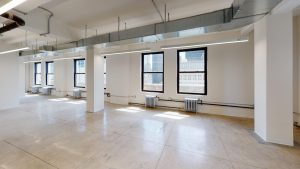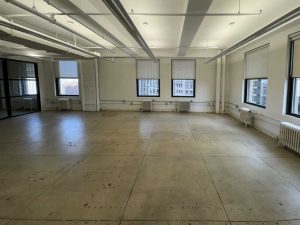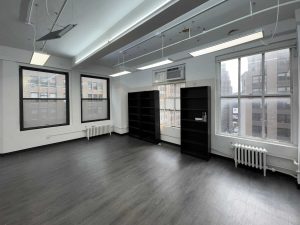
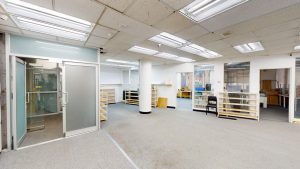
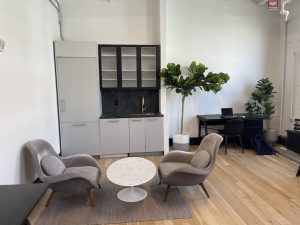
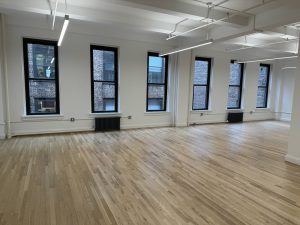
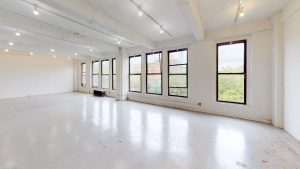
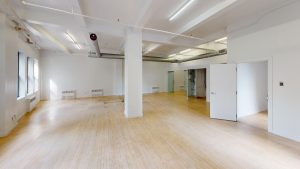
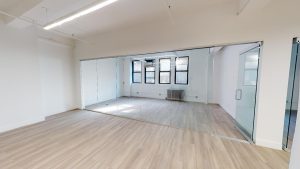
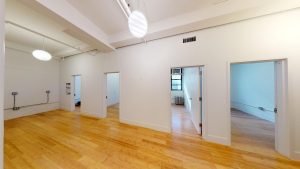
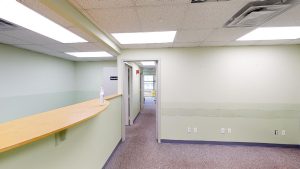
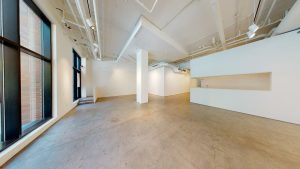
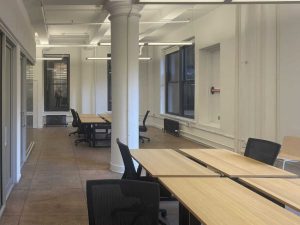
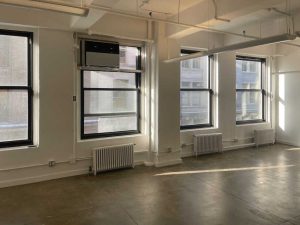
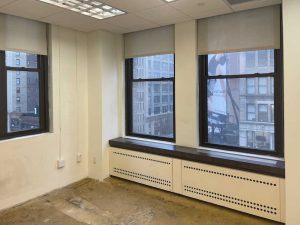
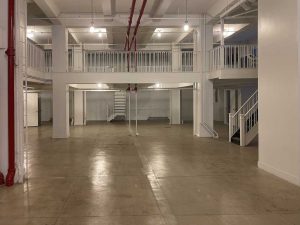
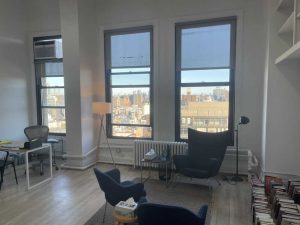
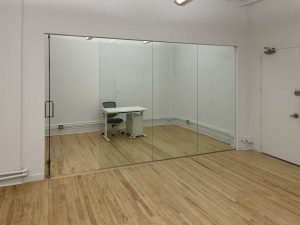
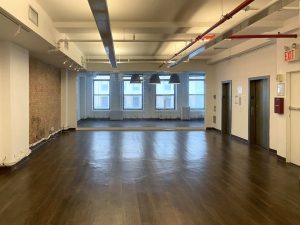
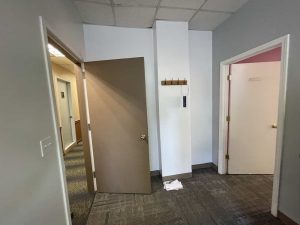
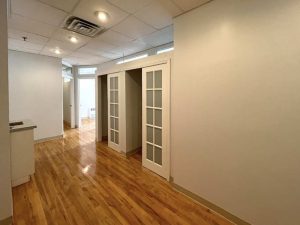
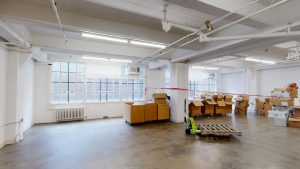
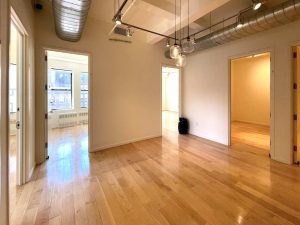
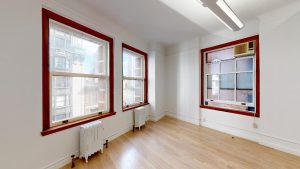
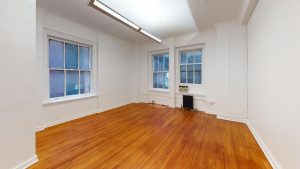
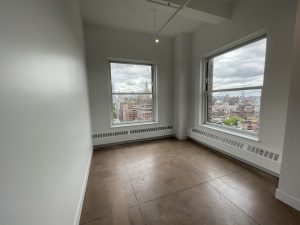
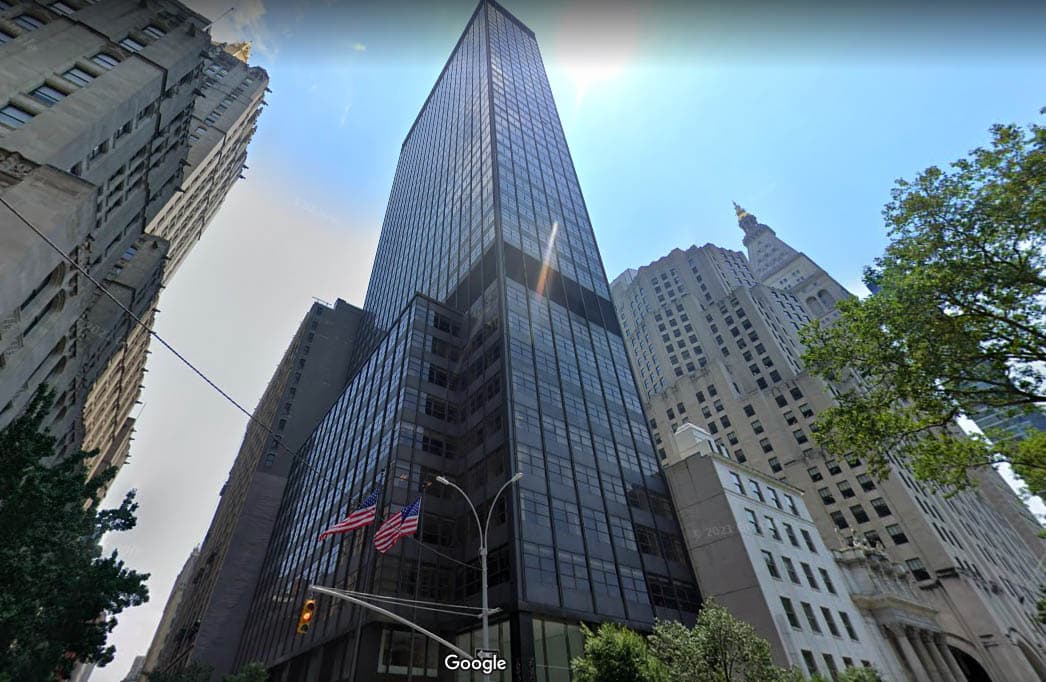
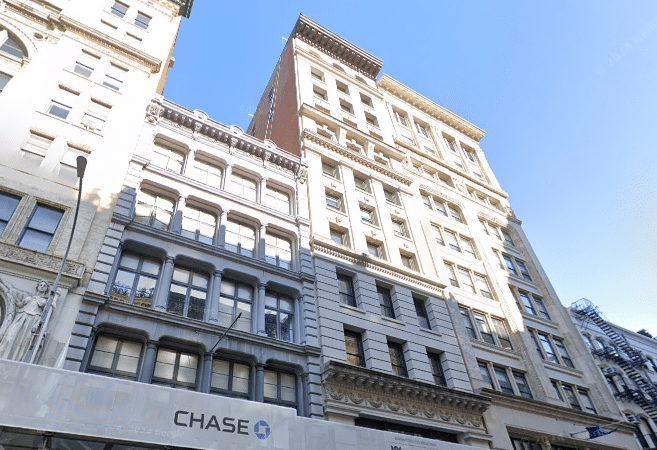
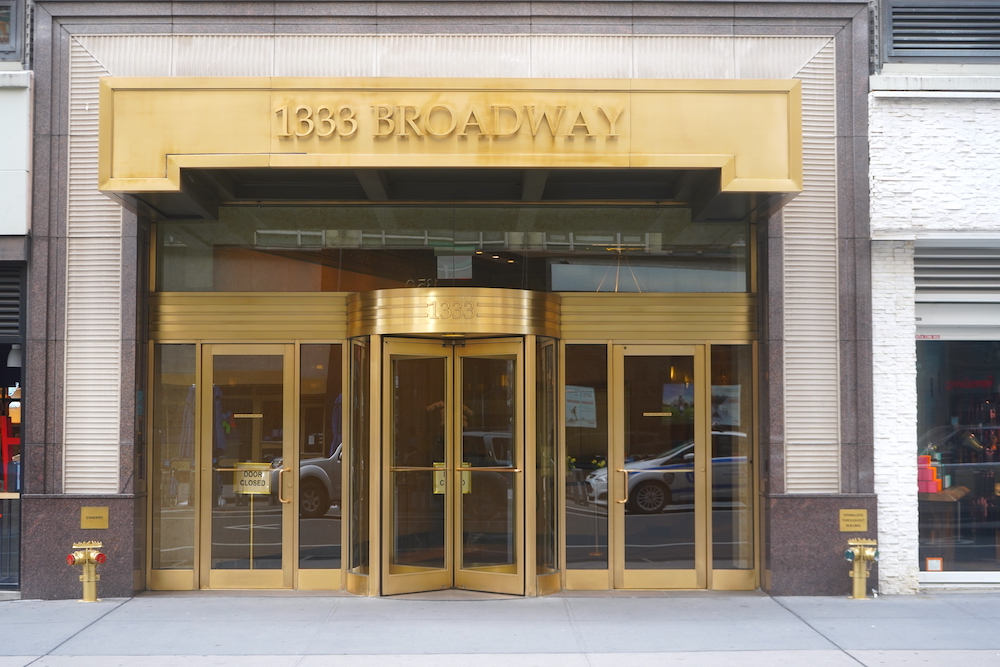
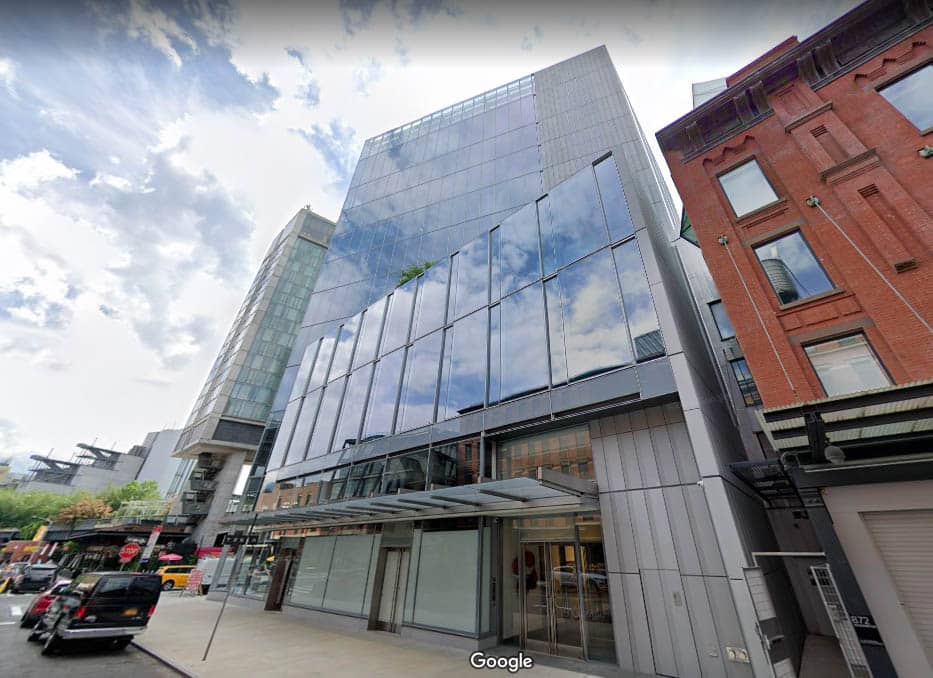
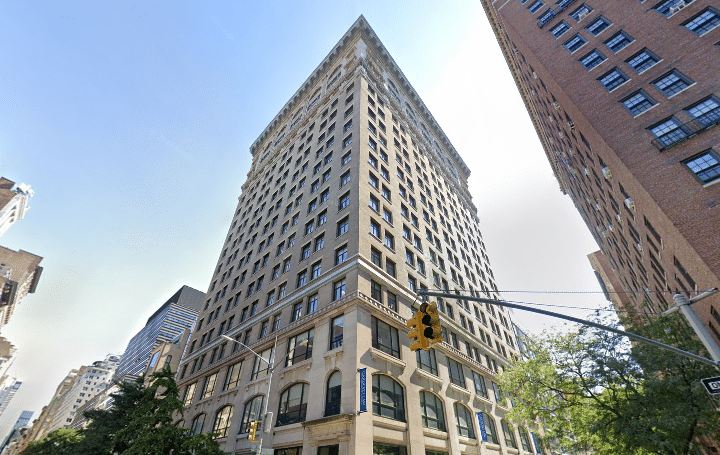
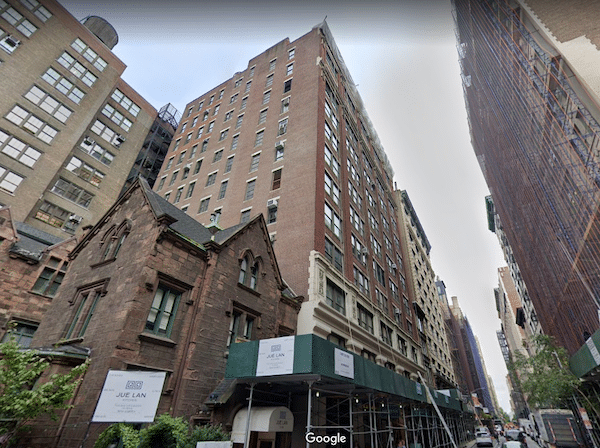
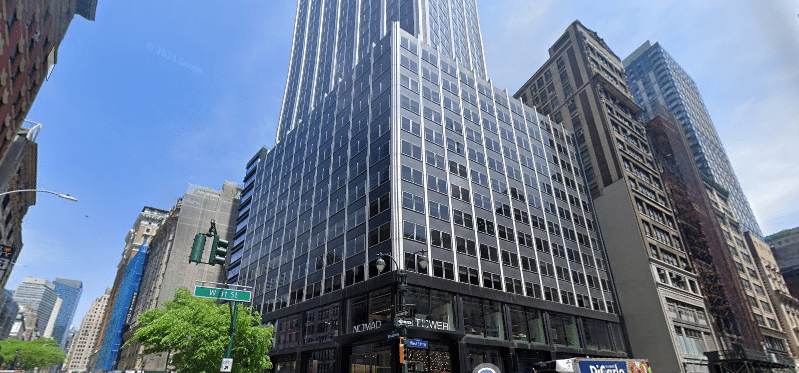
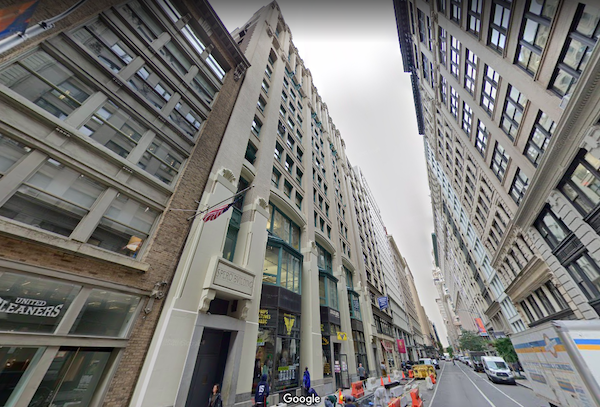
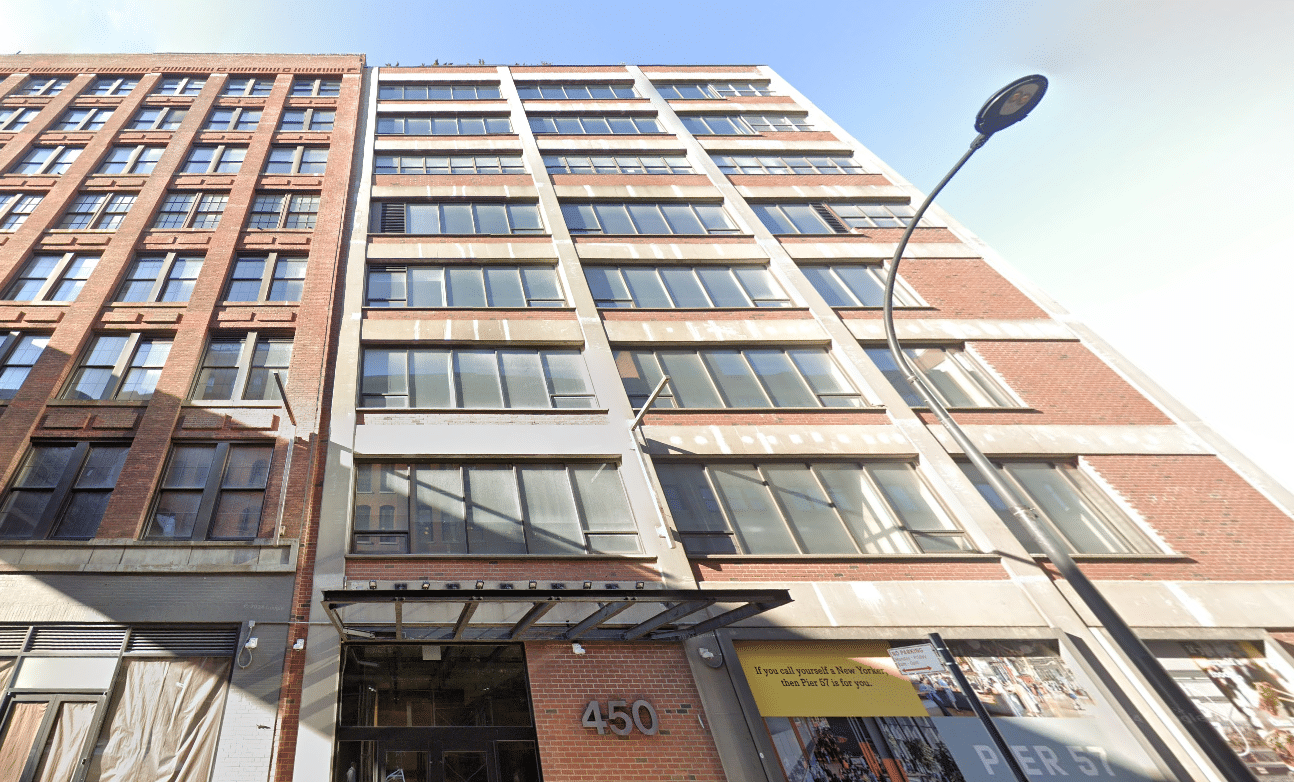
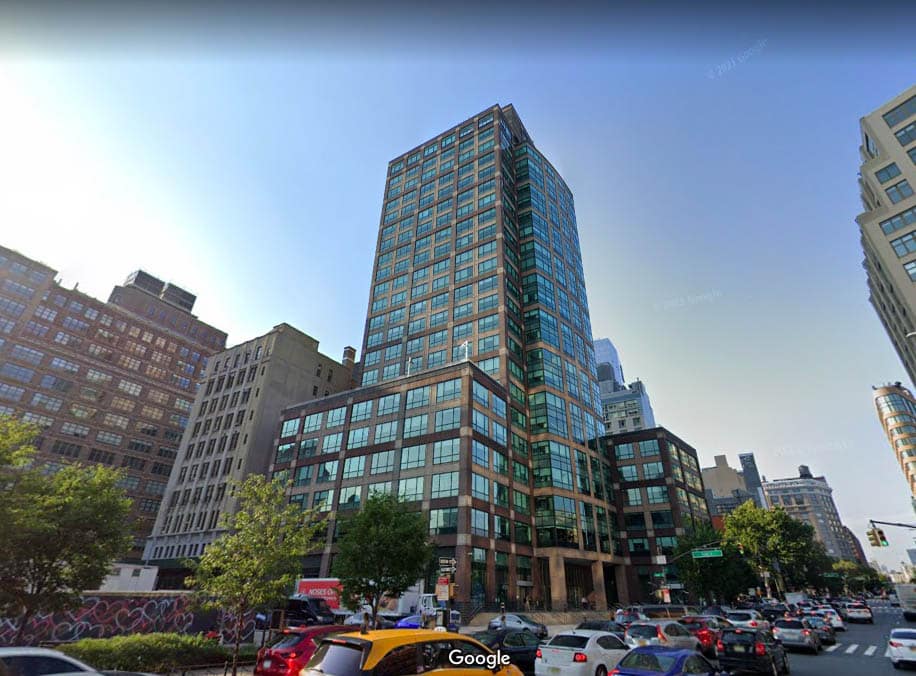
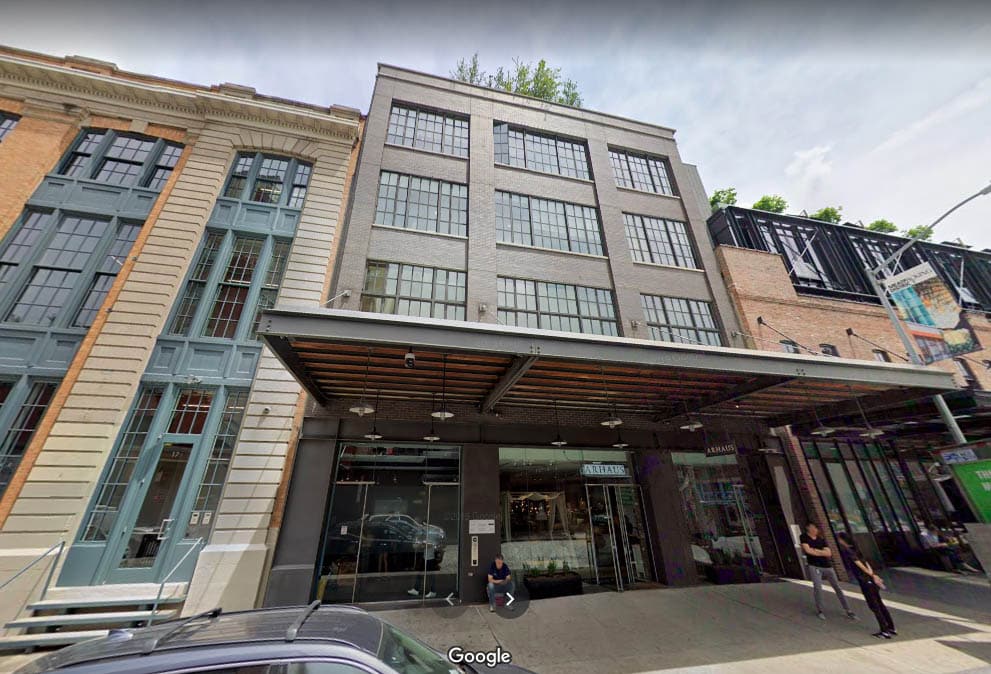
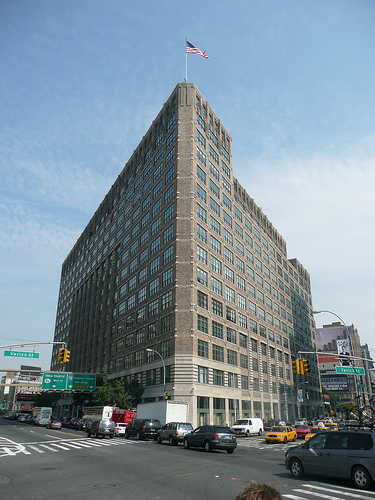
Chelsea office space is what you lease when you want loft character and a serious address without paying ...
Learn more about Chelsea


Midtown South is the most interesting office market in Manhattan right now, and it’s not close. 76 million SF of mostly converted lofts and warehouses, stretched from 40th Street down to Canal. Hudson Square. SoHo. Flatiron. Chelsea. Meatpacking. Union Square. These are not generic office submarkets. They’re former factories and printing houses turned into the most desirable workspaces in the city. Tech, AI, fashion, media, life sciences. If your business has ambition and personality, this is where you’d want to be.
Q1 2026 numbers tell the story. Leasing hit 3.0M SF, the strongest first quarter Midtown South has had since Q3 2019. Availability dropped 90 basis points to 16.9%, the lowest since Q4 2020. Asking rents averaged $88.32/SF, the second-highest level ever recorded for this market. Direct asking rents hit $90.23/SF (Newmark, Manhattan Office Market Report 1Q26, April 15, 2026). If you wanted in here cheap, you missed it.
Five years ago, this submarket was being written off. Tech tenants were giving back space, sublets were piling up, asking rents were sliding. Today? Midtown South is one of the strongest-performing submarkets in the country, full stop.
The Q1 2026 numbers are loud. Net absorption hit +641,411 SF in a single quarter, extending a positive-absorption streak that started in 2024 (Newmark, Manhattan Office Market Report 1Q26, April 15, 2026). Cushman & Wakefield’s national Q1 2026 report flagged Midtown South as one of the leading U.S. markets for absorption, with +2.7 million SF over the past four quarters (Cushman & Wakefield, Q1 2026 U.S. Office Market Stabilizes Press Release, April 2026). Savills reported Q1 2026 Midtown South leasing rose nearly 60% over the prior quarter, driven by AI activity in Park Avenue South (Savills, Manhattan Q1 2026 Office Market Report, April 2026).
For broader context: Manhattan-wide leasing hit 11.78 million SF in Q1 2026, the strongest first quarter since 2014 (Colliers, Q1 2026 Manhattan Office Market Report, April 8, 2026). Manhattan asking rents grew 2% to $77.55/SF. Manhattan availability tightened to 13.7%, the eighth consecutive quarter of holding or tightening. The whole market is moving. Midtown South is moving faster.
Broader context: our recent post on the largest Manhattan office leases of 2025.
Short answer: more than it used to. Midtown South’s total asking rent average hit $88.32/SF in Q1 2026, the second-highest figure on record (Newmark, Manhattan Office Market Report 1Q26, April 15, 2026). Direct asking rents were $90.23/SF. But “average” is hiding a huge spread. Hudson Square trophy and SoHo cast-iron can run well past the average. Herald Square Class B sits well below it. Where you land matters more than the headline number.
Premium loft inventory concentrates in Hudson Square, SoHo, the Meatpacking District, and Greenwich Village. Class A and Class B loft inventory dominates Flatiron, Chelsea, and Park Avenue / Madison Square. Value inventory is concentrated in Herald Square. Three very different worlds inside one submarket.
Quick thing worth knowing if you haven’t shopped Midtown South before: the Class A, B, C system here doesn’t work the way it does in Midtown or Downtown. Most of these buildings are former factories, printing houses, and warehouses. They were never built as offices. So a 1910 cast-iron loft in SoHo can technically be Class B but commands rent that beats a Class A tower in Midtown, because the ceiling height, the natural light, the floor plate, and the neighborhood are what tenants actually pay for. Bottom line: class describes the building, rent tier describes what tenants actually pay. Don’t get hung up on the letter.
| Submarket | Class A Profile | Class B / C Coverage | Availability | Typical Square Footage for New Leases | Tier |
|---|---|---|---|---|---|
| Greenwich Village | Premium loft (trophy)* | Limited Class B; minimal Class C | ~11 to 13% | 5,000 to 30,000 SF | Premium* |
| Gramercy Park | Premium loft | Class B inventory available | ~13 to 16% | 2,500 to 15,000 SF | Premium |
| SoHo | Class A loft | Class B inventory available | ~14 to 17% | 3,000 to 25,000 SF | Premium |
| Meatpacking District | Premium loft and trophy | Limited Class B | ~12 to 15% | 5,000 to 40,000 SF | Premium |
| Flatiron District | Class A core (AI cluster) | Class B inventory available | ~12 to 14% | 2,500 to 50,000+ SF | Mostly Class B and C |
| Park Ave / Madison Square | Class A core | Class B inventory available | ~13 to 15% | 5,000 to 30,000 SF | Mostly Class B |
| Chelsea | Class A loft | Class B inventory available | ~14 to 16% | 3,000 to 50,000+ SF | Mixed, mostly Class B and C |
| Hudson Square | Class A loft (Google anchor) | Limited Class B | ~17 to 22% | 5,000 to 100,000+ SF | Mixed |
| Tribeca | Class A loft | Class B available | ~14 to 18% | 5,000 to 50,000 SF | Mostly B |
| Union Square | Class A core | Class B inventory available | ~14 to 16% | 2,500 to 20,000 SF | Mixed, some A and B |
| Herald Square | Limited Class A | Class B and Class C dominate | ~16 to 19% | 2,500 to 25,000 SF | Value |
| Midtown South Average | Not separately published | $88.32 overall district average | 16.9% | Varies | Predominantly expensive B and more affordable C, though C can be very expensive in submarkets like SoHo or even Flatiron |
* Greenwich Village reflects a small set of trophy loft buildings rather than the broader submarket; direct asking rents for typical Class A space in the district run below the aggregate trophy figure (Metro Manhattan internal research, May 2026). Midtown South overall asking rent of $88.32/SF and 16.9% availability from Newmark, Manhattan Office Market Report 1Q26 (April 15, 2026). Submarket-level Class A profiles, Class B and C coverage descriptors, and availability ranges are Metro Manhattan internal research (May 2026); approved firms publish the Midtown South district average but do not publish per-submarket Midtown South breakouts at the granularity shown here in the named Q1 2026 reports. Hudson Square and Tribeca shown as separate rows to reflect divergent inventory profiles within the larger Hudson Square / Tribeca submarket.
Here’s something most tenants don’t realize coming in: there’s barely any traditional Class A office in premium Midtown South. These neighborhoods were manufacturing and warehouse districts. The trophy product is converted loft, and the converted loft commands stellar rents in Hudson Square, SoHo, Tribeca, the Meatpacking District, Greenwich Village, and the Flatiron District. Clay just paid $90/SF asking rent at 11 Madison Avenue for 163,000 SF (Commercial Observer, March 9, 2026, citing landlord Newmark). That’s the Flatiron pricing floor for AI right now.
Notable premium buildings include 75 Varick Street (1 Hudson Square), 32 Avenue of the Americas in Tribeca, 568-578 Broadway (Prince Building) in SoHo, 599 Broadway, 584-590 Broadway, 11 Madison Avenue, and The Flatiron Building at 175 Fifth Avenue.
The defining feature of Midtown South. Deep, deep pool of prewar loft inventory in buildings that have driven the entire Manhattan recovery story. Lee & Associates reported Class B asking rents reached record highs across Midtown South in late 2025 as leasing momentum broadened beyond trophy buildings (Lee & Associates, 2025 Q4 Manhattan Office Market Report, March 2026). Class B used to be the value play. It’s not anymore.
Notable Class B loft buildings: 601 West 26th Street (Starrett-Lehigh), 75 Ninth Avenue (Chelsea Market), 71 West 23rd Street (Masonic Hall), 113-133 West 18th Street, 395 Hudson Street, and 225 Park Avenue South (American Woolen Building). A lot of these landlords are running active capital-improvement programs and offering prebuilt, move-in-ready suites for smaller tenants. You walk in expecting a 1920s factory floor, you walk out signing a lease that looks more like the trophy tier.
On pricing, the district average was $88.32/SF in Q1 2026 (Newmark, Manhattan Office Market Report 1Q26, April 15, 2026). Class B typically prices below that average, but where depends entirely on which submarket and which building (Metro Manhattan internal research, May 2026). And by “depends,” I mean two Class B lofts a few blocks apart can quote you wildly different numbers. Touring matters more than averages here. Negotiation matters even more.
Herald Square is the value play in Midtown South. Strong pool of Class B and loft inventory suited to fashion, wholesale, and small business. Major subway connectivity at 34th Street is the underrated selling point. You’re a 5-minute walk to almost any line you need.
Approved brokerages don’t publish a Class C average for Midtown South in the Q1 2026 reports, so if anyone quotes you a single Class C number, they’re guessing. The tier description here is Metro Manhattan internal research (May 2026). For background on the classification system, see our explainer on Class A, B, and C buildings.
Here’s where most tenants leave money on the table. They negotiate the asking rent, they win a few bucks, they sign. Meanwhile, the real value lives in the free rent and TI allowance, and Midtown South concessions are still among the most tenant-favorable in Manhattan. Ranges below are typical-market figures from Metro Manhattan internal research (May 2026), based on our recent deals. Final numbers depend on credit, term, building, and how you negotiate.
| Building class | Free rent (typical) | TI allowance (typical) | Notes |
|---|---|---|---|
| Premium Class A | 10 to 14 months | $100 to $160/SF | The tightest concessions, because the landlord knows you have nowhere else to go for that quality |
| Standard Class A | 12 to 17 months | $80 to $120/SF | Good balance of trophy-adjacent address without trophy-tier economics |
| Class B | 14 to 18 months | $60 to $90/SF | Spec suites widely available. Take a 10-year term and this tier still has real leverage |
| Class C | 12 to 18 months | $40 to $70/SF | Many landlords will hand you a turnkey, fully built-out suite. Sign one month, move in the next |
Source: Metro Manhattan internal research (May 2026), based on recent Midtown South lease transactions. Figures are typical ranges for direct leases; shorter terms get proportionally smaller packages. Deal-specific concessions vary materially by landlord, tenant credit, lease term, and building.
Our deeper look at rising landlord concessions walks through how the math works.
Midtown South tenants cluster tightly by industry. AI sits in Flatiron and Park Avenue South. Fashion sits in SoHo and Meatpacking. Media spreads across Hudson Square and Chelsea. There’s a reason peers gravitate to the same blocks: clients, talent, and adjacent businesses are already there. Match your industry to the right cluster and a lot of the search narrows itself. The table is the cheat sheet.
| Industry | Best-Fit Submarkets | Inventory Type | Rent Tier | Example Buildings |
|---|---|---|---|---|
| AI / Machine Learning | Flatiron, SoHo, Hudson Square | Renovated loft and converted warehouse | Premium | 11 Madison Ave (Clay), 770 Broadway (Meta), 345 Hudson, 11 East 26th, St. John's Terminal (Google) |
| Technology / SaaS | Flatiron, Chelsea, SoHo, Hudson Square | Renovated loft and converted warehouse | Premium | 111 Eighth Ave (Google), 770 Broadway, 1 Hudson Square (75 Varick), 225 Park Ave South, 902 Broadway |
| Fintech / Trading | Flatiron, Park Ave South, Gramercy | Renovated loft and prewar tower | Mid-market to Premium | 28-40 West 23rd (Ramp), 11 Madison Ave, 1250 Broadway (Nomad Tower), 225 Park Ave South |
| Advertising / Marketing / PR | SoHo, Hudson Square, Chelsea | Cast-iron loft and converted warehouse | Mid-market to Premium | 568-578 Broadway, 32 Avenue of the Americas, 75 Ninth Ave, 770 Broadway, 345 Hudson |
| Media / Publishing / Streaming | Chelsea, Hudson Square, SoHo | Converted warehouse and renovated loft | Mid-market to Premium | 111 Eighth Ave, Starrett-Lehigh, 32 Avenue of the Americas, 770 Broadway |
| Fashion / Apparel / Beauty | SoHo, Meatpacking, Herald Square | Cast-iron loft and converted warehouse | Premium (SoHo / Meatpacking) to Value (Herald Sq) | 72 Spring Street, 495 Broadway (New Era), 75 Ninth Ave, 270 Lafayette |
| Life Sciences / Biotech | Chelsea, Hudson Square | Converted warehouse and purpose-built lab | Premium | Starrett-Lehigh, 345 Hudson, 32 Avenue of the Americas |
| Healthcare / Medical Practices | Gramercy Park, Flatiron, Union Square | Prewar loft and converted office | Mid-market | 71 West 23rd, 30-32 East 20th, 215 Park Ave South, 902 Broadway |
| Professional Services (Legal, Accounting) | Flatiron, Park Ave South, Gramercy | Prewar tower and renovated loft | Mid-market to Premium | 11 Madison Ave, 1250 Broadway, 225 Park Ave South, 902 Broadway |
| Venture Capital / Investment | Greenwich Village, SoHo, Flatiron | Boutique loft and renovated loft | Premium | 770 Broadway, 568-578 Broadway, 1250 Broadway |
| Education / Nonprofits | Union Square, Gramercy, Herald Square | Prewar loft and converted office | Value to Mid-market | 37-39 West 14th, 215 Park Ave South, 275 Seventh Ave |
| Startups / Small Business (<20 ppl) | Flatiron side streets, Gramercy, Union Square, Chelsea side streets | Prewar loft side-street inventory | Value to Mid-market | 19 West 21st (Spero Bldg), 37 West 20th, 54 West 21st, 1133 Broadway, 215 Park Ave South |
| Retail / Showroom | SoHo, Meatpacking, Chelsea, Flatiron | Cast-iron loft (ground floor) and converted warehouse | Variable | Prime SoHo cast-iron, Meatpacking ground floor, Chelsea retail corridor |
Source: Metro Manhattan internal research (May 2026).
If your last Midtown South tour was pre-2020, the picture in your head is wrong. The amenity game here has caught up to Midtown trophy. Some buildings have leapfrogged it. Three tiers to expect:
Premium and trophy tier (Google’s St. John’s Terminal, 770 Broadway, 32 Avenue of the Americas, 111 Eighth Avenue): Tenant-only amenity floors, conferencing, lounges, fitness. Rooftop gardens and outdoor terraces. On-site dining, art galleries, community spaces. Smart-building infrastructure. LEED certification. Direct access to the High Line, Hudson River Park, or major subway hubs.
Class A core (1 Hudson Square, 11 Madison Avenue, Nomad Tower, 225 Park Avenue South, 11 West 19th Street, 99 Hudson Street): Renovated lobbies, on-site fitness, real conferencing facilities, modernized mechanical systems, ground-floor retail and dining, walking-distance transit.
Class B and value tier (71 West 23rd, 113-133 West 18th, 19 West 21st, 902 Broadway, 1133 Broadway, 275 Seventh Avenue): Prewar character, big windows, tenant-controlled HVAC, attended lobbies. Increasingly common spec suites with furniture and IT cabling preinstalled, so you can move in fast.
See all Midtown South buildings or filter active listings by size and price.
Two things to know about Midtown South ownership. First, Google is by far the largest single occupier and one of the largest owners, with roughly 4M SF across St. John’s Terminal and 111 Eighth Avenue. They aren’t renting that space to you. Second, the rest of the market is split among a tight group of landlords with very different appetites. Trinity Real Estate runs the Hudson Square play. Vornado owns 770 Broadway and Meta’s HQ. Tishman Speyer and SL Green share 11 Madison and One Madison. RXR, Rudin, Rockrose, and Williams Equities each own pieces of the puzzle. Who you negotiate with matters. For background, see our overview of the biggest commercial real estate landlords in NYC.
| Landlord | Notable Midtown South Properties | Approx. Midtown South Portfolio | Typical Lease Profile |
|---|---|---|---|
| Google (occupier-owner) | St. John's Terminal (SoHo / Hudson Square), 111 Eighth Avenue (Chelsea) | ~4M SF owner-occupied | Owner-occupied |
| Vornado Realty Trust | 770 Broadway (NoHo), 280 Park Avenue South, 11 Penn Plaza adjacent | ~7M SF | 10,000+ SF |
| Tishman Speyer | 11 Madison Avenue, MetLife Building | ~5M SF | 10,000+ SF |
| Trinity Real Estate | 1 Hudson Square (75 Varick), Hudson Square portfolio (multiple buildings) | ~6M SF | 5,000+ SF |
| RXR Realty | 32 Avenue of the Americas (Tribeca) | ~3M SF Midtown South | 5,000+ SF |
| Rudin Management | 32 Avenue of the Americas (joint), Greenwich Village holdings | ~3M SF | 5,000+ SF |
| SL Green Realty | One Madison Avenue, 11 Madison Avenue, selective holdings | ~3M SF Midtown South | 10,000+ SF |
| Brookfield Properties | Limited Midtown South presence; redevelopment plays | ~1M SF | 10,000+ SF |
| The Related Companies | Hudson Square joint ventures | ~2M SF | 10,000+ SF |
| Hines / Trinity / Norges Bank (JV) | 345 Hudson Street | ~1M SF (single asset) | 10,000+ SF |
| Rockrose Development | 11 East 26th Street, 235 East Park Avenue South, Madison Square holdings | ~2M SF | 5,000+ SF |
| Williams Equities | 28-40 West 23rd Street (Ramp anchor) | ~1M SF | 5,000+ SF |
Portfolio figures are approximate. Several landlords listed (SL Green, Vornado, Brookfield, Related) have substantially larger holdings in Midtown and Downtown. Google's St. John's Terminal acquisition makes it both the largest single occupier and one of the largest owners of Midtown South office space.
Midtown South sits in the geographic middle of Manhattan, which means it’s a faster commute from almost everywhere than your team probably realizes. 17 subway lines, three PATH stations, Penn Station and Grand Central within walking distance, plus the L train pipeline from Brooklyn. If you have anyone resisting the commute, send them our Commute Calculator with their address. The numbers usually do the convincing.
| From | To Midtown South (Flatiron / Union Square) | Mode |
|---|---|---|
| Hoboken, NJ | 10 to 15 min | PATH to 14th or 23rd St |
| Jersey City (Exchange Place) | 12 to 18 min | PATH to 14th or 23rd St |
| Newark, NJ | 25 to 30 min | NJ Transit to Penn + 1 stop |
| Williamsburg, Brooklyn | 10 to 15 min | L to Union Square |
| Bushwick, Brooklyn | 20 to 28 min | L to Union Square |
| Downtown Brooklyn | 15 to 22 min | 4, 5 or R to Union Square |
| Park Slope, Brooklyn | 20 to 28 min | R to 23rd St / Union Square |
| Long Island City, Queens | 15 to 22 min | 7 to Times Sq + transfer |
| Astoria, Queens | 25 to 35 min | N or W to Union Square |
| Hicksville, NY (Long Island) | 45 to 55 min | LIRR to Penn + 1 to 2 stops |
| Stamford, CT | 55 to 65 min | Metro-North to Grand Central + 4, 5, 6 |
Midtown South’s total asking rent average was $88.32/SF in Q1 2026, the second-highest figure on record (Newmark, Manhattan Office Market Report 1Q26, April 15, 2026). Direct asking rents were $90.23/SF. Premium loft inventory in Hudson Square, SoHo, and the Flatiron District typically prices above the district average, while Herald Square and Class B side-street inventory typically price below it (Metro Manhattan internal research, May 2026).
Midtown South posted 3.0M SF of Q1 2026 leasing, the submarket’s strongest first quarter since Q3 2019, with +641,411 SF of positive net absorption (Newmark, Manhattan Office Market Report 1Q26, April 15, 2026). Cushman & Wakefield’s Q1 2026 U.S. office report identified Midtown South as one of the leading U.S. markets for absorption, with +2.7 million SF over the past four quarters ending Q1 2026 (Cushman & Wakefield, Q1 2026 U.S. Office Market Stabilizes Press Release, April 2026). Savills reported Q1 2026 Midtown South leasing rose nearly 60% over the prior quarter, driven by AI activity in the Park Avenue South submarket (Savills, Q1 2026 Manhattan Office Market Report, April 2026).
Herald Square is the most affordable Midtown South submarket, with inventory concentrated in Class B and Class C buildings (Metro Manhattan internal research, May 2026). Side streets in Chelsea, Gramercy Park, and the Flatiron District also offer Class B value in walkable, high-amenity locations.
Greenwich Village, Hudson Square, SoHo, and the Meatpacking District carry the highest aggregate rents in Midtown South (Metro Manhattan internal research, May 2026). Google’s $2.1 billion acquisition of St. John’s Terminal in 2022 cemented Hudson Square as a premium destination. The Greenwich Village aggregate reflects a small set of trophy loft buildings rather than the broader submarket.
Midtown South availability fell 90 basis points to 16.9% in Q1 2026, the lowest level since Q4 2020 (Newmark, Manhattan Office Market Report 1Q26, April 15, 2026). Q1 2026 net absorption was +641,411 SF, extending a positive-absorption streak that began in 2024. Hudson Square (21.1%) and Chelsea (19.2%) run higher availability than the district average, while Meatpacking (9.2%) and Flatiron/Union Square (13.9%) run lower (Newmark, 1Q26 Manhattan).
The vast majority of Midtown South office inventory is not publicly listed. A broker provides access to spaces that never appear on public search platforms. Beyond access, an experienced broker knows which buildings offer the strongest concessions, which landlords will fund a build-out, and where asking rents have room to move. Brokerage commissions are always paid by the landlord. The cost to the tenant is zero.
Clay signed 163,000 SF at 11 Madison Avenue in the Flatiron District at $90/SF asking rent in March 2026, with Newmark brokering the deal for landlord SL Green (Commercial Observer, March 9, 2026, citing Newmark). Savills reported that Q1 2026 Midtown South leasing rose nearly 60% over the prior quarter, driven by AI activity in the Park Avenue South submarket (Savills, Q1 2026 Manhattan Office Market Report, April 2026).
Tech and AI startups cluster in three main areas: Hudson Square (345 Hudson Street, 32 Avenue of the Americas, 75 Varick Street), the Flatiron District (11 Madison Avenue, 28-40 West 23rd Street, 11 East 26th Street, Nomad Tower at 1250 Broadway), and SoHo / Chelsea (568-578 Broadway, 770 Broadway, 111 Eighth Avenue, Starrett-Lehigh) (Metro Manhattan internal research, May 2026). Smaller startups (under 5,000 SF) often find the best value in side-street Flatiron and Chelsea buildings.
Midtown South is served by 17 subway lines across its multiple hubs. The L, 4, 5, 6, N, Q, R, and W converge at Union Square (the district’s busiest hub). The B, D, F, M, N, Q, R, and W serve 34th Street / Herald Square. PATH service to New Jersey stops at Christopher Street, 9th Street, 14th Street, 23rd Street, and 33rd Street. The L train provides direct service from Williamsburg, Bushwick, and East New York in roughly 10 to 25 minutes.
Concession packages in Midtown South are typical-market figures based on Metro Manhattan internal research (May 2026). Premium Class A leases typically include 10 to 14 months of free rent and $100 to $160/SF in tenant improvement allowances. Class B leases typically include 14 to 18 months of free rent and $60 to $90/SF TI. Class C leases typically include 12 to 18 months of free rent and $40 to $70/SF TI, with many landlords offering fully built-out turnkey suites.
Google is by far the largest single occupier, with roughly 4M SF across the St. John’s Terminal complex (Hudson Square, $2.1 billion 2022 acquisition) and 111 Eighth Avenue (Chelsea, owner-occupied). Meta is headquartered at 770 Broadway in NoHo. Other notable occupiers include Ramp (132,000 SF at 28-40 West 23rd Street, Commercial Observer, September 2024), Clay (163,000 SF at 11 Madison Avenue, Commercial Observer, March 2026), and a growing roster of AI tenants in the Flatiron and Park Avenue South sub-areas.
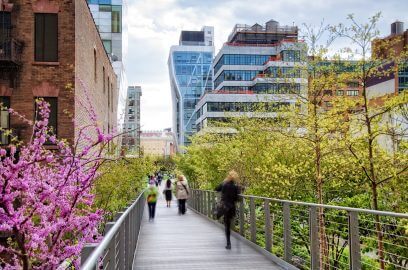
Chelsea office space is what you lease when you want loft character and a serious address without paying ...
Learn more about Chelsea
Flatiron is where the AI money is going. Not the only place, but the loudest one. For two years now the f...
Learn more about Flatiron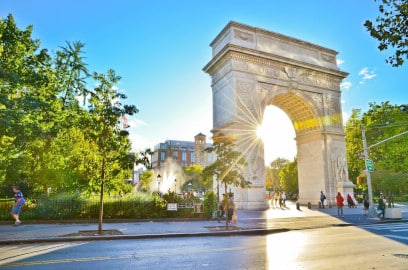
Greenwich Village is a college town that happens to have an office market, and once you look at it that w...
Learn more about Greenwich Village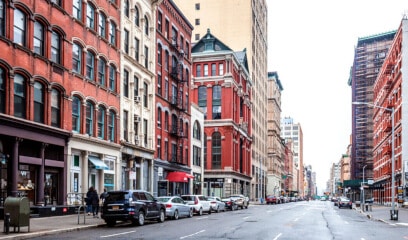
Three years ago the knock on Hudson Square was that nobody wanted it. Trinity Church and its partners had...
Learn more about Hudson Square/Tribeca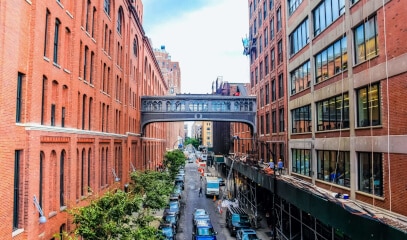
Manhattan has always handled demand the same way, which is by knocking something down and building it tal...
Learn more about Meatpacking District
Walk down Greene Street on a Saturday and you'd swear nobody could afford an office here. Every ground fl...
Learn more about Noho/Soho
Fifth and Madison are the addresses people picture when they think of a New York office. One made the adv...
Learn more about Park Avenue/Madison Square
Everybody in New York already knows how to get to Union Square. That sounds like a small thing until you'...
Learn more about Union SquareAccessibility Tools